I get asked about DIY cupping kits a fair bit. My honest answer is: for dry cupping at home, a basic silicone set on a tight calf or upper back for some quick tension relief, I don't really have an issue with it. The risk is low. Hijama is different, and I feel strongly about that because I've seen what happens when people treat it the same way.
The most common thing I see is someone who had a friend or family member try it on them. They'd watched a few videos, thought it looked simple enough, bought a kit. Some of those clients came to me with deep scratches. Some with permanent scarring. Not marks that fade in a week. Actual scarring from incisions made at the wrong depth, in the wrong place, with no understanding of what's underneath the skin.
It looks easy. It isn't. Making a clean superficial incision that draws blood without damaging the tissue below takes real training and practice. Getting it wrong doesn't just mean a bad session.
What the TikTok version leaves out
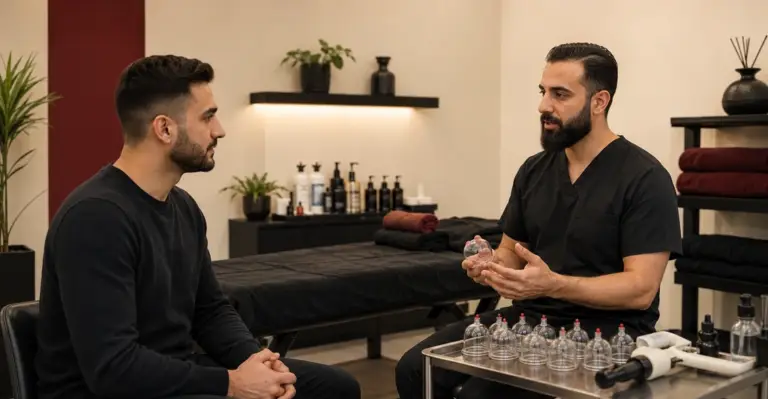
Cupping content online shows the result, not the process. The marks, the reveal, the reaction. It doesn't show the consultation beforehand, the check for contraindications, or what happens to the clinical waste afterwards.
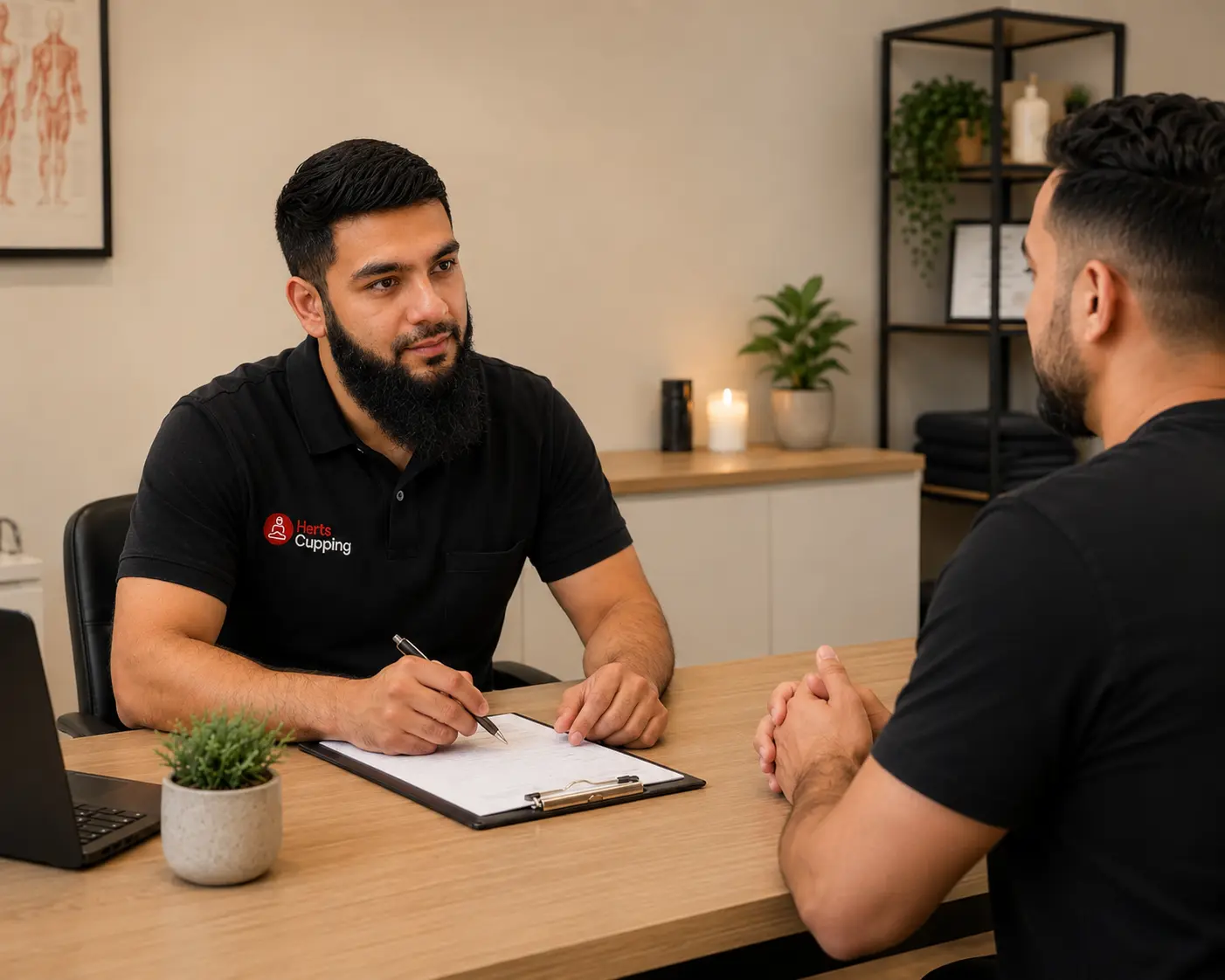
Before any Hijama session a practitioner needs to know if someone is on blood thinners, has a blood disorder, is pregnant, or has an active skin infection. A trained practitioner asks those questions before touching a cup. Someone trying it at home with good intentions usually doesn't know to ask them at all.
So what do I actually tell people who ask about DIY kits?
Dry cupping at home for quick tension relief: fine. Hijama at home: no. Not to protect the business. Because Hijama involves incisions, a sterile single-use setup, the knowledge to know when not to proceed, and the correct disposal of blood-contaminated materials afterwards. That isn't something a kit can give you.
What to check before booking Hijama anywhere
If you're booking Hijama, here are a few things worth confirming before you go ahead.
Is there a consultation before anything starts?
Every session, not just the first one. Health changes, medications change. A practitioner who goes straight to treatment without asking you anything is not following safe practice.
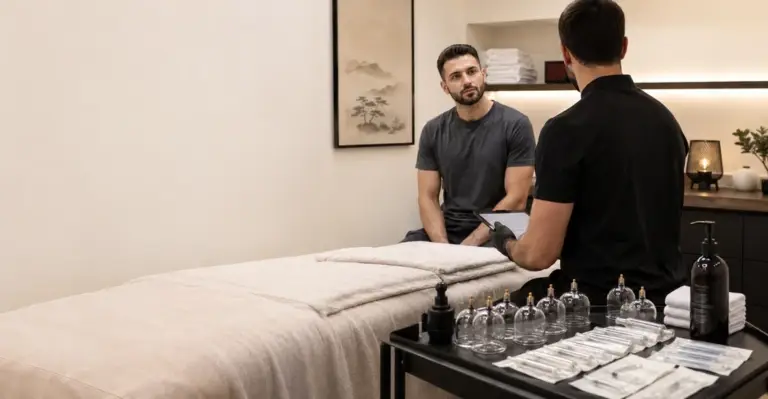
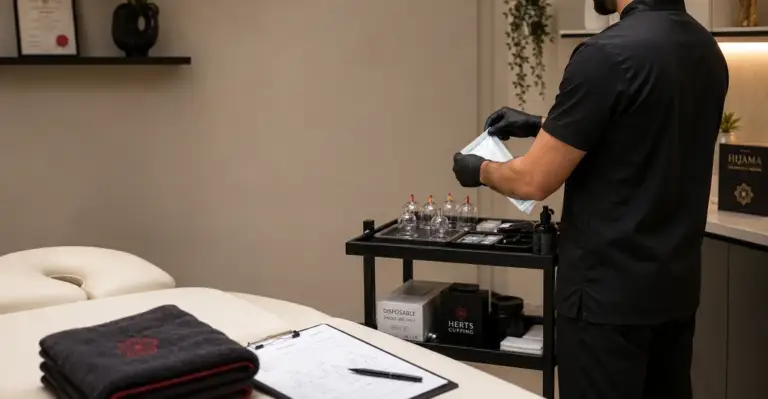
Is the equipment single-use and opened in front of you?
Every cup, every blade, every disposable. If you can't see that it's new, ask. If the answer doesn't satisfy you, don't go ahead.
How is the clinical waste handled?
After wet cupping, blood-contaminated materials need to go through certified clinical waste disposal. A bin bag is not the standard required.
Is it a private room, one client at a time?
Hijama involves a level of care that shared treatment rooms don't allow for properly.
Where Herts Cupping stands on this
Every session at Herts Cupping starts with a full consultation, uses 100% single-use sterile equipment opened in front of you, and all clinical waste goes through certified disposal. One client at a time in a private treatment room in St Albans.
If you've had a bad experience somewhere else and want to talk it through before booking, just message us on WhatsApp. Or if you're ready to book, you can do that directly on the Hijama page.
Book Your Hijama Session
Private clinic in St Albans. One practitioner, one client. Sterile single-use equipment. Sessions from £50.