
Static dry cupping
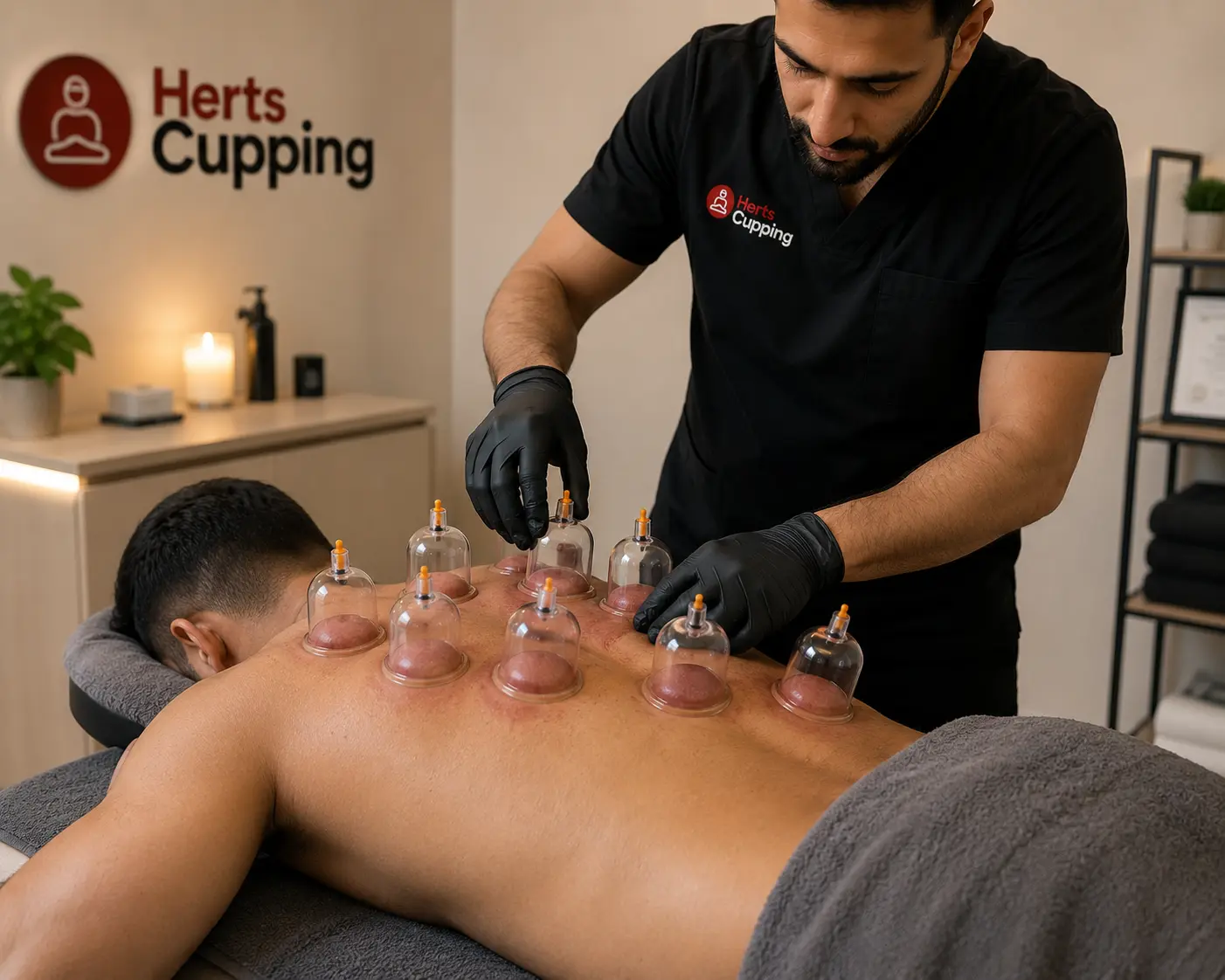
Cups stay over selected tight or restricted areas when a simple focused suction input is appropriate.
Dry Cupping · Suction Therapy · Hertfordshire
Dry cupping uses suction without scratches or blood removal. If you want wet cupping, Hijama is available as a separate or combined treatment.
Dry or wet cupping?
Dry cupping uses suction without scratches. Hijama (Wet Cupping) adds small superficial scratches and a second round of cups to draw a small amount of blood. Standalone Hijama starts from £50 and can also be combined with recovery.
New to cupping? This is the simplest entry point
If you came here after searching for massage, gym recovery or a treatment for a tight back or shoulders, dry cupping is easy to understand: the cups create controlled suction instead of pressing into the area. The skin is not scratched and no blood is drawn.
Cups can stay still, glide across a muscle or be used while you move through a controlled range. Gliding or moving cups are still dry cupping when there are no scratches or blood removal; “wet cupping” refers to Hijama. The choice depends on where the restriction appears and what you are comfortable with. The goal is not to create dramatic circles.
Book dry cupping alone from £35 when suction is the main thing you want. Choose a Recovery session from £75 when the area also needs firm hands-on work or IASTM.
How I use dry cupping differently
Static cupping has its place, but it is not the automatic routine. Where useful, the treatment can include movement so we can work with the restriction as it actually appears.
Cups stay over selected tight or restricted areas when a simple focused suction input is appropriate.
A cup glides across lubricated skin to work over a larger area such as the back, hamstrings, quadriceps or calves.
I move the area gently while suction remains in place, useful when you need to stay relaxed while we explore the range.
You perform a light guided movement while a cup is applied, useful when the restriction shows up during a specific movement rather than while lying still.
Practical guidance
These two topics are related and no longer need separate full-height sections.
Who commonly books dry cupping
Gym-goers and lifters commonly book for loaded traps, shoulders, lower back, glutes, hip flexors and hamstrings. Runners, footballers, cyclists and cricketers may use dry cupping around calves, legs, shoulders or other areas that carry repeated training demand.
Desk workers and drivers often book for neck, upper-back and shoulder tension that has built up through long periods in one position. Moving cups may be useful across a broader back area, while a more focused static or movement technique can be used around a specific restriction.
First-time clients often choose dry cupping because the skin remains intact. Returning Hijama clients may also use it between wet-cupping appointments for muscular maintenance. The aim is not to create as many marks as possible; it is to choose pressure and technique that fit the reason for booking.
Private one-to-one treatment
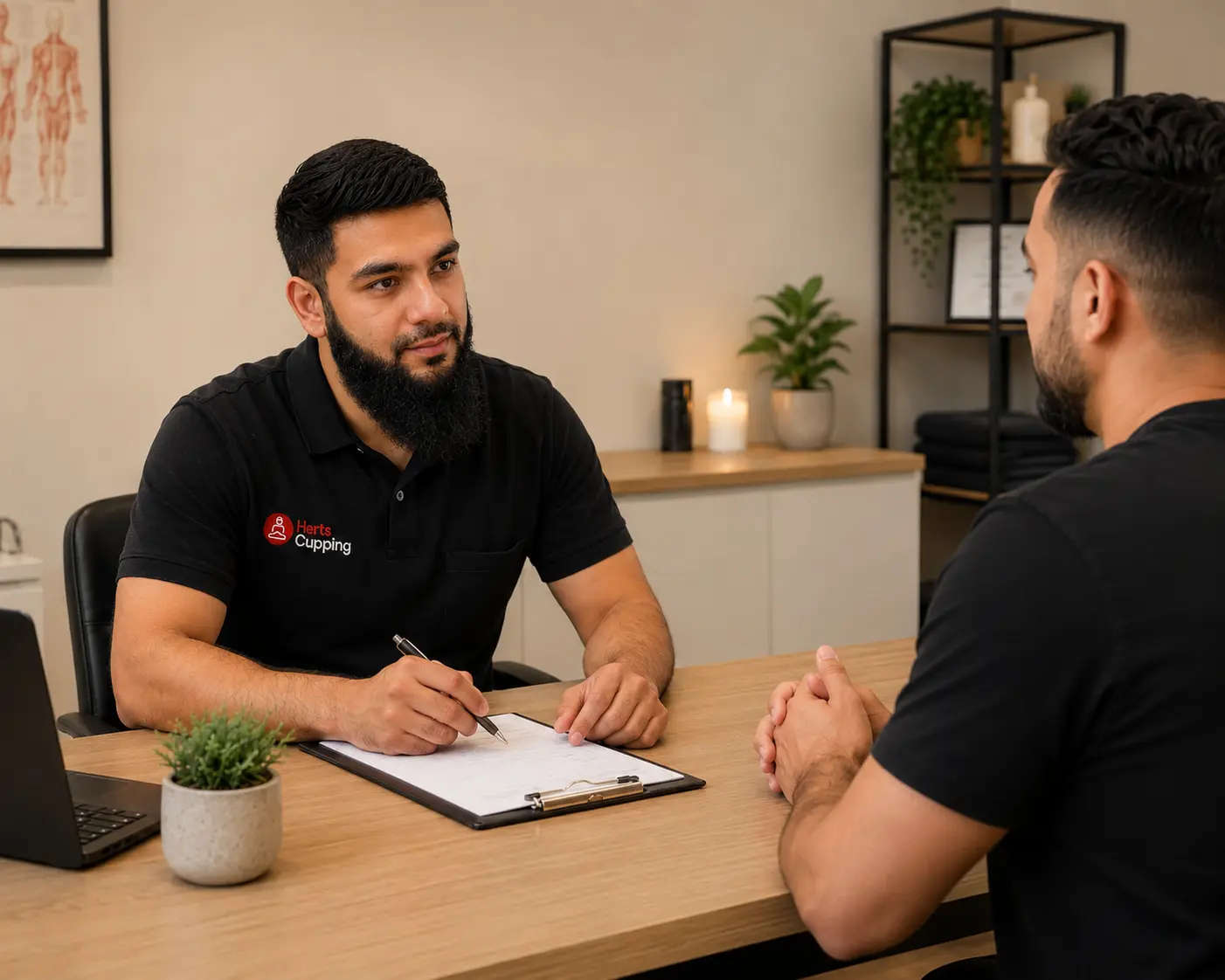
Every appointment starts with suitability and the main goal. Technique and suction are adjusted during the session rather than fixed in advance.
We discuss the area, how the tightness behaves, training or work demands, relevant health information and whether cupping is an appropriate starting point.
Static, moving, active or passive movement cupping is selected according to the area, the way restriction shows up and your comfort.
Cups are placed with adjustable suction. Pressure should feel firm rather than sharp, and it can be reduced or the technique changed at any point.
Temporary marks commonly fade over several days. You receive guidance on hydration, heat, skin care and training timing before you leave.
Choose the amount of treatment you need
A short appointment suits one or two focused areas. A longer Recovery session fits stubborn or connected muscular tension.
Static, moving or movement-led dry cupping over one or two focused areas, with consultation and aftercare.
Book dry cuppingFirm hands-on treatment with dry cupping and IASTM where the area needs more than suction alone.
Book RecoveryMarks are not a diagnosis
Do not use dry cupping instead of assessment for fresh injury, severe unexplained pain, significant swelling, numbness, weakness, loss of power, suspected fracture, infection, blood clot or rapidly worsening symptoms. Tell us about active skin problems, medication and relevant health conditions before treatment.
What the treatment can look like
The point is not to use every technique. It is to have the right option available when the area or goal calls for it.
Trusted locally
See current feedback on Google.
Common questions
No. Dry cupping uses suction only. Hijama is the separate wet-cupping treatment that includes small superficial scratches.
A cup is used while the area moves through a controlled range. Active movement means you move; passive movement means the practitioner moves the area for you.
Marks commonly fade over several days, although this varies with the person, area and suction. Moving cupping may leave lighter marks than static cups.
No. Mark colour varies and does not diagnose toxin levels, illness or treatment quality. The useful outcome is how the area feels and moves, not how dark the circles become.
Light activity may be fine, but hard training over a heavily treated area may be better delayed. We give advice based on the area, pressure and your training schedule.
Choose dry cupping if suction is the main treatment you want. Choose Targeted Recovery when the area also needs sustained hands-on work, IASTM or treatment across connected muscles.
Dry cupping, properly targeted
Tell us where the tightness appears and whether it changes with movement. We will help you choose the appropriate starting point.




