
Firm hands-on muscle work
Sustained hands-on pressure is used over tight lumbar, thoracic, hip or gluteal muscles when direct work is the best foundation for the session.
Back Tightness · Deep Tissue · Cupping · Hertfordshire
Another hands-on option for recurring back pain and muscular tightness, including when the area still feels restricted after massage, physio, osteopathy or chiropractic.
What I look for before working the sore spot
A common pattern in clinic is someone pointing to one side of the lower back while the hip, glute, hamstring or even the opposite side feels more loaded once treatment starts. Upper-back complaints can also sit alongside tight chest, shoulders or a one-sided working position.
That does not tell us the medical cause of back pain and it is not a diagnosis. It tells me that spending the whole appointment pressing one painful point may be too simplistic. I look at when the tightness appears, what movements or positions load it, what the client has already tried and which connected areas are realistically worth treating in the time booked.
Firm hands-on recovery work remains the base. Dry cupping can provide a suction-based input and IASTM may be used over a local stubborn area. Wet cupping (Hijama) can be included when you want both approaches in the same appointment and it is suitable for you.
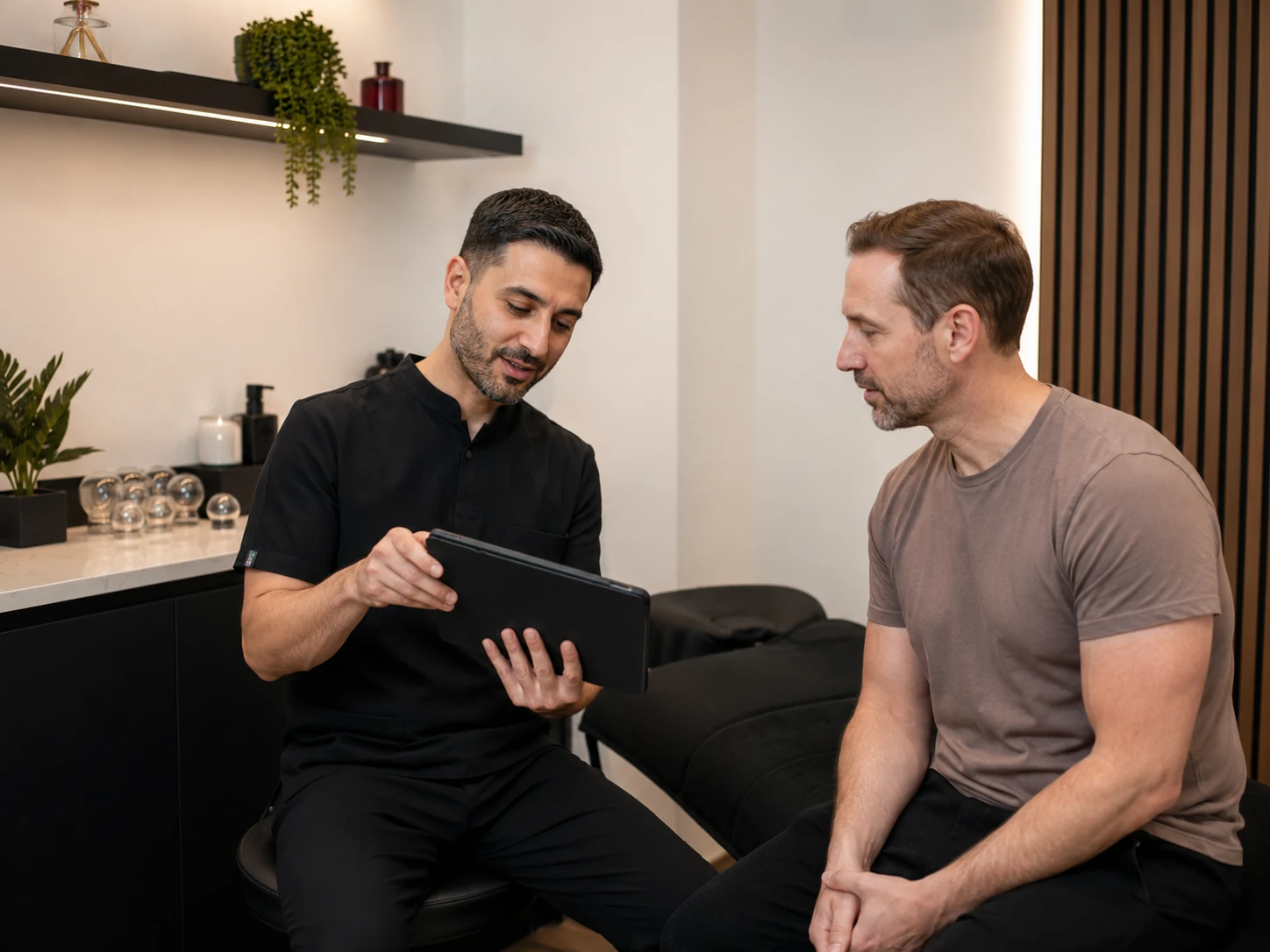
Lower-back and leg symptoms need care
Sciatica describes symptoms associated with irritation or compression of the sciatic nerve, often including pain that travels from the lower back or glute into the leg. Cupping cannot diagnose the cause, remove nerve compression or replace an assessment where neurological symptoms are present.
After appropriate assessment, some clients still carry muscular tightness around the lower back, glutes, hips, hamstrings or calves. Recovery work may focus on those soft-tissue areas and on the guarding that has built up around a settled or managed condition. We work with the muscular component, not the nerve itself.
Persistent numbness, new weakness, loss of power, worsening radiating pain, loss of coordination or changes to bladder or bowel control need urgent medical assessment. Do not book cupping first for those signs. Message us if you have already been assessed and want to check whether muscular recovery work is appropriate alongside the advice you received.
Several methods, one clear goal
Not every session uses every technique. We choose the smallest useful combination after discussing the area, history and current symptoms.
Sustained hands-on pressure is used over tight lumbar, thoracic, hip or gluteal muscles when direct work is the best foundation for the session.
Controlled suction can lift a tight area rather than compress it. Cups may stay static, move across the back or be used with gentle movement when restriction appears in a specific range.
Smooth stainless-steel tools can be used over dense or stubborn muscular areas, normally as part of a broader hands-on treatment rather than as a standalone cure.
People commonly search for Hijama, wet cupping or blood cupping for back pain. Where the pattern appears mainly muscular, Hijama can be booked alone or combined with One-Area Muscle Recovery. It is not automatically recommended for every cause of back pain.
See the treatment approach
The session does not become a checklist of techniques. We use the methods that fit the muscular pattern and the time you booked.
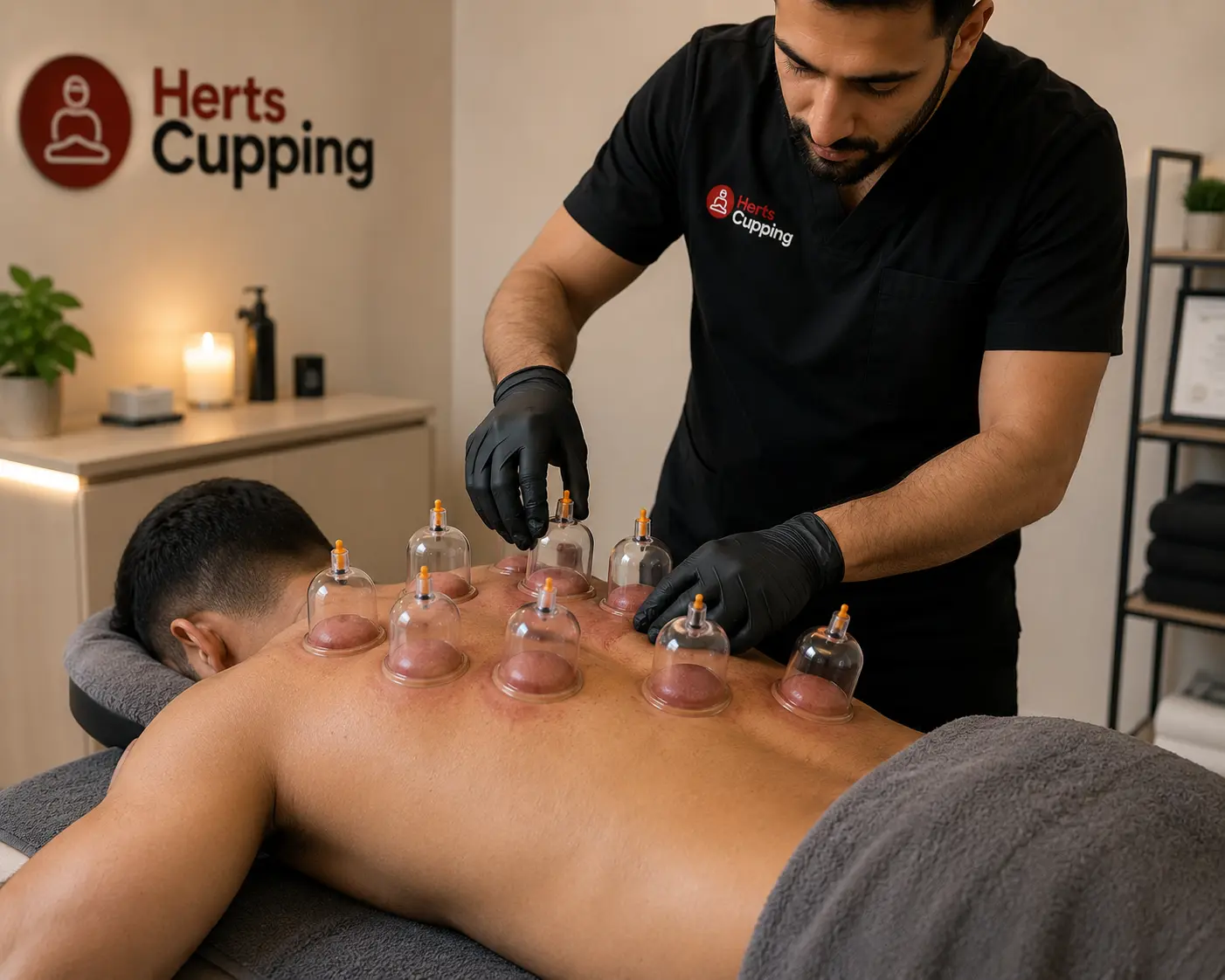
Lower, upper and linked back tension
Lower-back work may need attention around the hips and glutes when those areas feel linked. Upper-back pain may sit alongside tight traps, a stiff neck or shoulder restriction. Training-related back load may involve legs, lats or hips as well as the point that feels sore.
The goal is a more comfortable, less restricted muscular area and a clear sense of what was treated. No responsible therapist can guarantee that one session will permanently resolve long-standing back pain. Some clients notice short-term improvement; others need rehabilitation, workload changes, medical input or follow-up care.
Clients travel to the St Albans clinic from across Hertfordshire, including Harpenden, Hatfield, Welwyn Garden City, Watford, Hemel Hempstead, Stevenage and nearby areas. Travel distance does not change the suitability check: tell us about warning signs or a recent assessment before setting off.
What would I actually book?
Back tightness is one of the easiest problems to overcomplicate. The booking decision usually comes down to how many areas need meaningful hands-on time and whether you want wet cupping (Hijama) included.
Start with One-Area Muscle Recovery. It gives the session enough time to work through the main region and relevant connected muscles without rushing the rest of the body.
Choose Full Body Muscle Recovery. Ninety minutes is more useful when several connected areas genuinely need treatment time.
Choose a + Hijama option when you want hands-on muscular treatment and Hijama together. If you only want wet cupping, book standalone Hijama instead.
Tell us whether the tightness is worse after sitting, work, lifting or training; whether it stays local or travels; what you have already tried; and what you need to do in the 24–48 hours after the appointment. Those details are more useful than arriving with a self-selected technique.
Choose the treatment time first
Use 60 minutes for one main region and 90 minutes for several connected areas. Choose a + Hijama session when you want wet cupping included, or standalone Hijama when wet cupping is the whole goal.
Focused work for a pattern such as lower back and hips or upper back and shoulders, using appropriate manual work, cupping and IASTM.
Book One-Area Muscle RecoveryA focused Muscle Recovery appointment with Hijama when both muscular work and wet cupping are suitable and wanted.
Book Muscle Recovery + HijamaMore time for linked patterns such as back, neck and shoulders or back, hips and legs.
Book Full Body Muscle RecoveryThe broader combined option when several muscular areas and Hijama both need proper time.
Book Full Body Muscle Recovery + HijamaKnow when not to book first
Seek urgent medical advice for changes to bladder or bowel control, saddle numbness, new significant weakness or rapidly worsening symptoms. Medical or physiotherapy assessment should also come first for fresh trauma, fever, unexplained weight loss, severe night pain, major swelling, persistent numbness or loss of power.
Trusted locally
See current feedback on Google.
Firm deep-tissue and sports-massage-style work is usually the foundation. We may also work connected hips, glutes or upper-body areas and use dry cupping or IASTM when useful.
Use 60 minutes for one main lower- or upper-back pattern. Choose 90 minutes when hips, glutes, legs, shoulders or several connected regions also need proper time.
Yes. Choose a Muscle Recovery + Hijama session when you want hands-on muscular treatment and wet cupping together. Standalone Hijama is also available.
Radiating pain, persistent numbness, new weakness, loss of power or other neurological changes should be appropriately assessed first. We can discuss muscular recovery after assessment where suitable.
Back recovery · Hertfordshire
Where does it start, what brings it on, does it travel, and what have you already tried? That is more useful than guessing whether massage, cupping or IASTM should come first.