In this article
Stretching tight shoulders but they keep coming back? Learn why traps, neck and upper back tension often need more than stretching.
Repeated loading and movement patterns
This article focuses on why the same shoulder area can repeatedly tighten from training, desk posture or compensating elsewhere. The separate stress article focuses on tension associated with feeling wound up or unable to relax.
See the neck and shoulder treatment route ASAbdus ShahidLead Practitioner · Herts Cupping · St AlbansQuick Answer
If your shoulders keep tightening after stretching, the issue may not be simple flexibility. It may be repeated load, stress tension, soft tissue guarding, weak support from the upper back or a pattern that needs more than stretching alone.
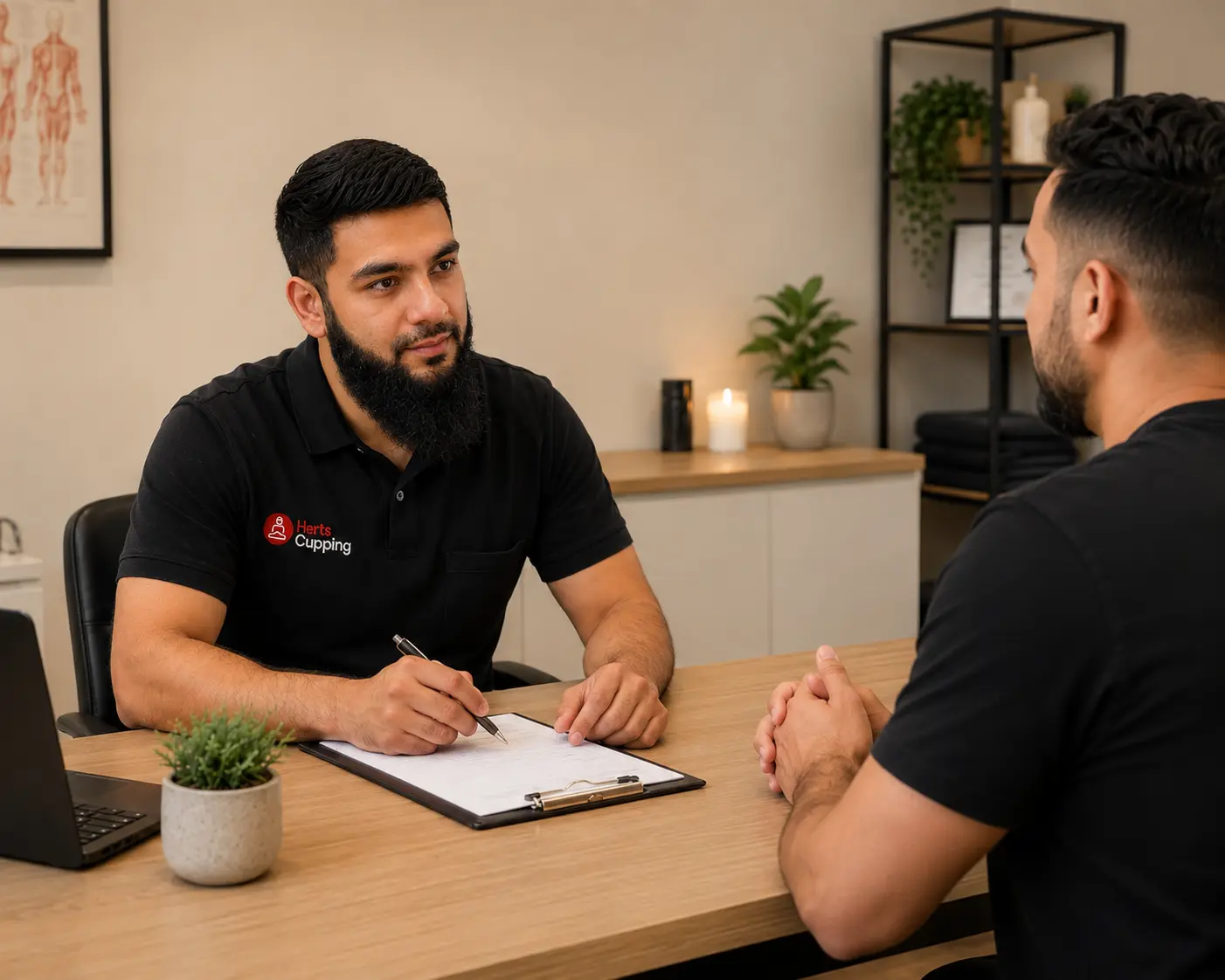
I see this all the time in clinic. Someone comes in and says their shoulders are always tight. They stretch, roll around on a ball, use a massage gun, change pillows and watch mobility videos. It helps for a little while, then the same tightness comes back.
The frustrating part is that the person is usually trying. They are not doing nothing. The problem is that stretching is often being asked to solve something it cannot fully solve on its own.
Shoulders are where a lot of daily load collects. Desk work, driving, gym training, stress, poor sleep, shallow breathing and phone posture can all show up around the traps, neck, upper back and shoulder blades.
Stretching can help, but it is not always enough
Stretching gives the body a temporary change in sensation. That can be useful. But if the tissue is tight because it is being overloaded every day, stretching alone may not change enough.
A common example is someone who sits at a laptop for hours. The shoulders round forward, the head creeps forward, the upper back barely moves and the traps stay switched on. That person can stretch at night, but the next day the same position loads the same area again.
That is why the relief does not last. The stretch has not failed. It just has not addressed the repeated pattern that keeps making the area feel guarded.
My honest view: if stretching helps for 20 minutes then everything returns, the problem is probably not solved by more stretching alone. You need to look at what keeps loading the shoulders in the first place.
What I usually see in clinic
When people say their shoulders are tight, they often point to more than one place. They might say the top of the shoulders feel heavy, the neck feels stiff, the shoulder blade feels blocked or one side feels much worse than the other.
Upper traps
The classic heavy shoulder feeling, often worse after desk work, driving, stress or upper-body training.
Base of neck
The tightness sits where the neck meets the shoulders, sometimes with pressure towards the base of the skull.
Shoulder blade area
One side feels blocked, stuck or difficult to release properly, even after stretching.
Relief that fades
Massage, stretching or a massage gun helps for a few days, then the same tightness returns.
I take that pattern seriously. If someone says the right side always feels worse, and that side also feels more restricted during treatment, that gives useful information. It is not a diagnosis, but it helps guide the session.
This is also why I do not just chase the sore spot. The place that hurts may be part of a wider upper-body pattern. The traps, neck, shoulder blade and upper back usually need to be looked at together.
Clinic Reality
Stress can sit in the shoulders
A lot of people underestimate how physical stress can become. Stress can show up as jaw clenching, shallow breathing, raised shoulders, poor sleep and constant low-level muscle tension.
Some clients do not say they are stressed. They say their shoulders never relax. That wording matters because the body can be physically holding a lot of tension even when the person sees it as normal life.
Where cupping may fit
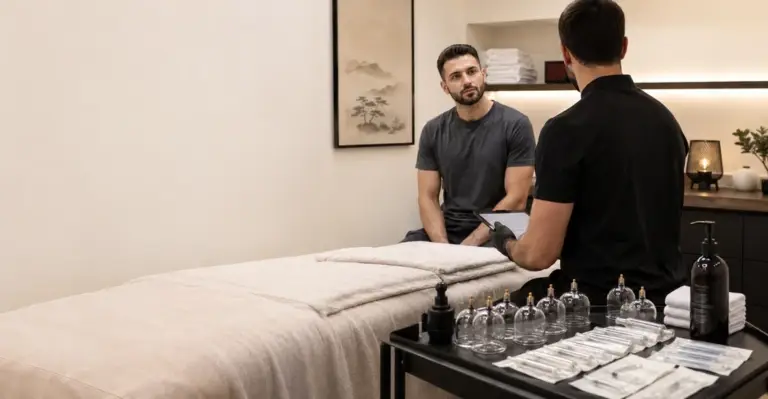
Cupping works differently from massage because it pulls the tissue up instead of pressing down into it. For shoulders that feel compressed, heavy or locked down, that suction can feel like a different type of release.
I do not present cupping as a magic fix for shoulders. It is a tool. It may help reduce muscular tension, improve how the area feels and give the body a different input. For some people, that is exactly what they need when stretching and pressure work have not been enough.
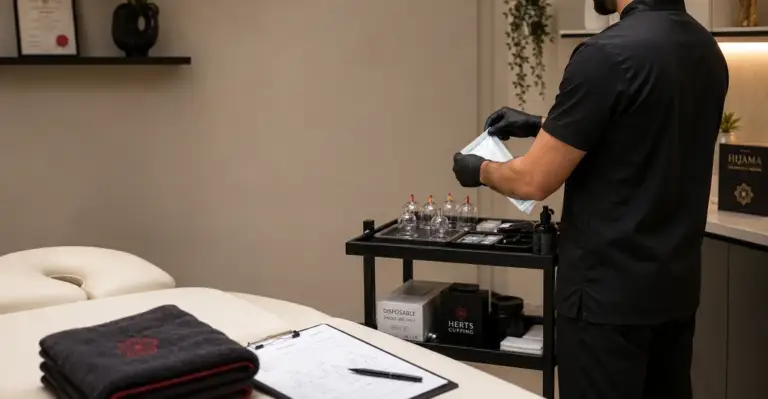
In a session, I may work around the upper traps, upper back, shoulder blades and sometimes the neck area. I do not just put cups on the one sore point and hope for the best.
When massage, IASTM or Hijama may be added
| Treatment option | Where it may fit |
|---|---|
| Deep tissue massage | Useful where pressure helps settle trigger points or dense areas of muscular tension. |
| Cupping | Useful where the area feels compressed, heavy, stuck or guarded. |
| IASTM muscle scraping | Useful where the tissue feels stubborn, ropey or slow to respond to hands alone. |
| Hijama | Considered if the client specifically wants wet cupping and is suitable after consultation. |
When shoulder tightness needs checking first
- Sharp pain after a fall, accident or sudden injury.
- Loss of strength or inability to lift the arm normally.
- Pins and needles, numbness or pain travelling down the arm.
- Chest pain, dizziness, fainting or symptoms that feel unusual.
- Pain that is getting worse despite rest or normal care.
What helps the result last longer
Treatment can make the shoulders feel easier to move, but what you do afterwards matters. If the same routine keeps loading the same area, the same tightness will often find its way back.
- Move more during long sitting days instead of trying to undo eight hours of stillness with a two-minute stretch.
- Strengthen the upper back properly instead of only stretching the neck.
- Stop working from a laptop with the screen too low for hours.
- Pay attention to stress, sleep and breathing because a tired body usually guards more easily.
- Use treatment as a window to move better, not as permission to ignore the same pattern again.
Related Pages
- Recovery Sessions for combined cupping, massage and IASTM recovery work
- Cupping Massage in St Albans for tight shoulders, neck tension and upper back restriction
- Cupping for Neck Pain if the tightness sits around the traps and neck
- Book an Appointment if you are ready to choose a session
Common questions
Why do my shoulders stay tight even after stretching?
Because the issue may not be a simple lack of flexibility. Repeated desk posture, stress, training load and soft tissue guarding can keep the shoulders tight even if you stretch regularly.
Can cupping help tight shoulders?
Cupping may help some people with muscular shoulder tension by using suction to lift and decompress soft tissue. It should be viewed as support for tightness, not a cure for a diagnosed shoulder condition.
Should I book cupping or massage?
If the area feels compressed or heavy, cupping with massage may be useful. If you are unsure, a recovery session gives more flexibility because it can include cupping, massage and IASTM where suitable.
When should I get shoulder tightness checked first?
Get checked first if there is recent injury, loss of strength, sharp pain, numbness, pins and needles, chest pain or symptoms that feel unusual.
Shoulders always feel tight?
Message us with where you feel it: traps, neck, shoulder blade or upper back. I will tell you honestly whether cupping, massage, IASTM or Hijama makes the most sense.
Book a SessionMessage on WhatsApp