
Targeted Deep Tissue
Focused work for one main region such as back, shoulders, glutes, hamstrings or calves.
£75or £95 with Hijama
Book Targeted Deep TissueCalves · hamstrings · glutes · lower back
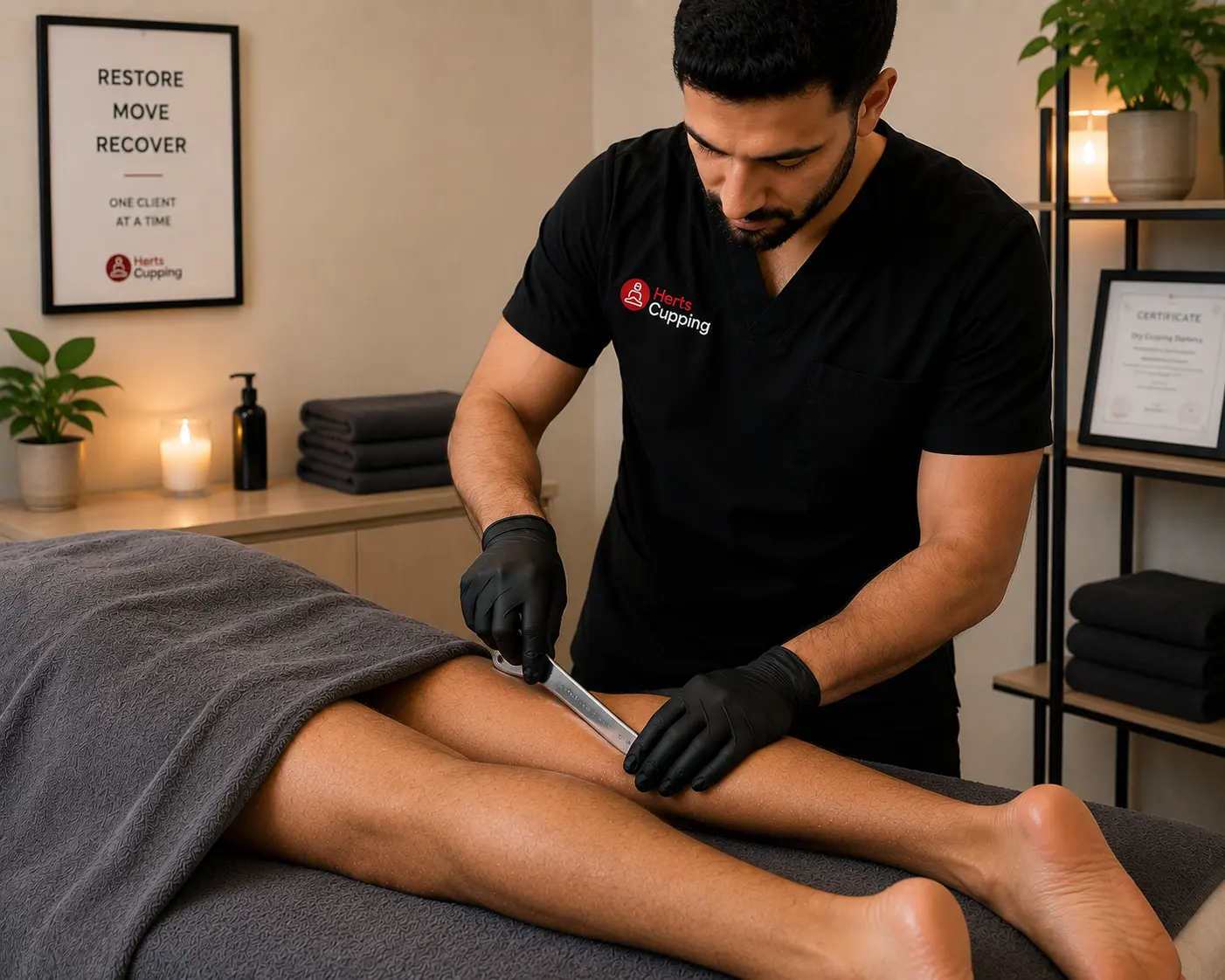
Sports recovery for runners carrying calf, hamstring, glute or lower-back load, with hands-on work, dry cupping, scraping and wet cupping (Hijama) available in one clinic.
Ready to book recovery?
You don’t need to read the whole page or decide between massage, cupping and IASTM first. Start with how much of the body needs work, then choose whether you also want Hijama.
Focused work for one main region such as back, shoulders, glutes, hamstrings or calves.
For several loaded areas, heavier training weeks or broader whole-body recovery.
Sessions
Choose the treatment around your goal rather than forcing every problem into the same method.
Broader tailored wet-cupping coverage for most clients.
Book a sessionFirm manual work, dry cupping and IASTM focused on one main area.
Book a sessionFocused hands-on muscle work for one main area with Hijama included if it’s right for you.
Book a sessionRunner-specific recovery
At first, calf, hamstring, glute and hip tightness can feel like ordinary training fatigue. As mileage, hills or speed work accumulate, the legs may stay heavy and the lower back may never fully reset before the next run.
Sports massage provides hands-on pressure and movement-based soft-tissue work. Dry cupping uses adjustable suction as a different treatment input, while IASTM provides focused tool-assisted soft-tissue work where needed. Wet cupping, also known as Hijama or blood cupping, can be booked in its own right or combined when a broader hands-on recovery session is also appropriate.
Recovery doesn’t replace training decisions
When mileage, intensity or terrain changes quickly, persistent tightness may be the first sign that recovery is no longer matching the programme. A session can work on the muscles that feel overloaded, but it can’t replace sleep, nutrition, progressive training and the decision to reduce load when pain is worsening.
Some runners report lighter legs or easier movement after cupping or Hijama. That response varies and should be judged against the next few days rather than the first hour alone. After wet cupping, strenuous exercise is normally avoided for 24 hours and the marks are allowed to settle before returning to a hard session.
Where the load usually sits
The focus changes with distance, terrain, speed work, sitting habits and what feels restricted on the day.
Repeated ground contact, hills and speed work commonly make the lower legs the first area to feel overloaded.
Long runs and faster work can leave the posterior chain feeling short, heavy or protective.
As mileage rises, glute tightness may influence how the hips and lower back feel during and after running.
Running load combined with long hours sitting can create a locked feeling through the front of the hips.
Fatigue and repeated impact may leave the back loaded even when the original pattern began in the legs.
Longer runs can tighten the shoulders and upper back as fatigue changes arm carriage and posture.
Time the treatment sensibly
Wet cupping usually needs more recovery space than a lighter dry-cupping or maintenance session.
For first-time Hijama, allow around five to seven days. If you know your response, still leave at least 48 to 72 hours.
Book after the hardest session, then avoid heavy exertion for 24 to 48 hours after wet cupping.
A lighter week gives the body more room for a combined session across calves, hamstrings, hips, glutes and back.
Deep tissue work has limits
Seek physiotherapy or medical advice for acute pain, swelling, weakness, numbness, suspected tendon or bone injury, or symptoms that worsen as you run. Treatment here supports recovery from muscular load; it doesn’t diagnose running injuries.
Client feedback
See current feedback on Google.
Before you book
If your situation isn’t covered here, message us before choosing a session.
Message us with the main area, how long it has been bothering you and what you’ve already tried. We’ll suggest the best place to start.
Yes. Use WhatsApp if you want to check suitability or choose between Hijama, cupping and a deep tissue session.
Appointments take place at our private clinic in St Albans, Hertfordshire. Sessions are one-to-one and available seven days a week.
Private clinic · St Albans
Tell us what you’re dealing with and we’ll point you to the right session.




