
Hijama for back pain and lower-back tension
Back discomfort has many causes. When the problem seems mainly muscular, some clients choose Hijama alone or combine wet cupping with focused recovery work.
Read the back pain guideHijama benefits · wet cupping · blood cupping
What are the benefits of Hijama? This evidence-honest guide explains why people choose wet cupping for wellbeing, muscular tension, sports recovery and Sunnah practice, what research can reasonably support, and what Hijama shouldn’t be claimed to treat.
Quick answer
Some people specifically search for wet cupping or blood cupping for back pain, neck and shoulder tension, headaches, sports recovery or stress-related body tension. Others book because they feel heavy or run down, want a body refresh, value Hijama as a Sunnah practice or simply prefer wet cupping as part of their wellbeing routine.
Those are valid reasons to explore the treatment, but they aren’t proof that Hijama cures a diagnosed condition. If your main goal is muscular rather than specifically wet cupping, compare Sports Massage or our Recovery sessions. For wet cupping itself, the Hijama St Albans page explains the appointment and current options.
Specific reasons people search
These are common search and booking reasons. They aren’t promises that Hijama treats every cause of pain, fatigue or illness. Use the linked guides to see where wet cupping may fit and where the limits are.
Back discomfort has many causes. When the problem seems mainly muscular, some clients choose Hijama alone or combine wet cupping with focused recovery work.
Read the back pain guideClients often ask about blood cupping for tight traps, upper-back loading and recurring neck or shoulder tension, especially when massage has only helped briefly.
Read the neck and shoulder guideSome people search for Hijama when headaches occur alongside neck or shoulder tension. Headaches and migraines have many causes, so new, severe or unexplained symptoms need appropriate medical assessment.
See headache and neck-tension guidanceSciatica is nerve-related, so we don’t claim Hijama treats the underlying cause. Our back-pain guide explains where cupping may sit when muscular tightness is also part of the picture.
Read the sciatica guidanceSome clients book when they feel physically wound up, heavy, run down or unable to switch off. They may describe the goal as stress relief, relaxation, a reset or a general body refresh.
Explore stress and body tensionLifters, footballers and active clients may use wet cupping as a standalone recovery choice or combine it with hands-on work, dry cupping and IASTM when muscular recovery is the bigger goal.
Explore sports recoveryRunners sometimes search for Hijama for calves, hamstrings, glutes, heavy legs or recovery between training blocks. Treatment still needs to fit the training schedule and symptoms.
Read the runners guideSome clients explore Hijama for personal, traditional or wellbeing reasons while going through fertility care. We don’t present cupping as a treatment for infertility and medical care remains central.
Read the fertility wellbeing guideFor many Muslims, Hijama is chosen because of its established place in authentic Islamic tradition. That religious motivation can stand on its own without attaching unsupported medical claims to the Sunnah.
Read the Sunnah Hijama guideEvidence and limits
People search for Hijama detox, wet cupping detox and body-reset treatments. We can answer those searches without pretending that blood colour or cup contents prove that named toxins have been removed.
What the evidence can and can’t say
Clinical research has looked at cupping for pain and musculoskeletal symptoms, and some reviews report short-term improvements in pain or function. Studies vary in size, quality, control groups, technique and follow-up.
It’s reasonable to say cupping may help some people with symptoms such as muscular discomfort or tension. It isn’t reasonable to turn limited evidence into claims that Hijama cures disease, removes specific toxins or treats every condition.
If a problem looks like something that needs diagnosis, imaging, urgent review or rehabilitation, we say so.
Does Hijama detox the body?
Traditional descriptions often refer to stagnant blood, cleansing or removing what the body doesn’t need. Some clients just use the word detox because they feel lighter, relaxed or refreshed afterwards.
We don’t present a cup of blood as proof that named toxins have been extracted. Your liver, kidneys, lungs and other body systems handle waste and metabolic by-products, and Hijama isn’t a medical detoxification procedure.
If your goal is a general body refresh, stress relief or feeling less physically heavy, that’s a valid wellbeing reason to discuss Hijama. Individual responses still vary.
Why clients choose it
Switch between the physical recovery context and the religious motivation without mixing one into the other.
Muscle tension and sport
The treatment decision changes when the main complaint is clearly muscular or training related.
Clients often choose Hijama around the upper back, lower back and shoulders when those areas feel loaded or tight.
Runners and gym clients sometimes use wet cupping around the legs as part of a wider recovery routine between training blocks.
If the same area repeatedly tightens, hands-on work, IASTM and dry cupping may be more useful than simply adding more Hijama cups.
Targeted Recovery + Hijama combines focused muscular work and wet cupping in the same appointment when both approaches are appropriate.
A recovery treatment isn’t a sports-injury clinic. Significant injury, neurological symptoms or unexplained pain needs the right assessment first.
Sunnah-based wellbeing
That religious motivation should be respected without attaching claims to the Prophet ﷺ that he didn’t make.
Cupping is mentioned positively in authentic hadith, including Sahih al-Bukhari 5680 and 5681. We keep those references separate from modern medical claims.
The 17th, 19th and 21st of the Hijri month are reported in Sunan Abi Dawud 3861, graded Hasan by Al-Albani. We publish the corresponding Gregorian dates each month.
Hijama being a Sunnah doesn’t justify unseen diagnoses, invented rituals or telling someone that marks prove sihr, jinn or a specific illness.
May be a reasonable choice when
Check first or avoid when
What to expect afterwards
You don’t need a complicated “detox protocol”. Focus on basic aftercare and how you feel.
Drink normally, eat normally and give yourself a quieter evening if you feel tired after the session.
Follow the shower and wound-care guidance given in clinic. Avoid unnecessary rubbing or picking at the treated skin.
Avoid strenuous training for around 24 hours, especially after broader wet-cupping coverage.
Marks commonly fade over several days. If something feels unusual or you’re concerned, contact us rather than guessing from social media.
Trusted locally
See current feedback on Google.
Hijama sessions
Every Hijama appointment includes consultation, tailored point selection, sterile single-use equipment and aftercare. We don’t force every client into the same number of cups.
Useful for a small number of points, a focused area or clients who specifically want limited coverage.
Book Starter HijamaAllows a broader tailored point selection while keeping the session focused on the reason you booked.
Book Signature HijamaFor clients who want more extensive wet-cupping coverage across multiple suitable areas.
Book Advanced HijamaCommon searches and questions
If your situation is more specific, message us before booking. WhatsApp chat is available 24/7.
People commonly book for muscular tightness, sports recovery, relaxation, stress-related body tension, a general body refresh, Sunnah wellbeing or because they specifically prefer wet cupping. Results vary and Hijama isn’t a cure-all.
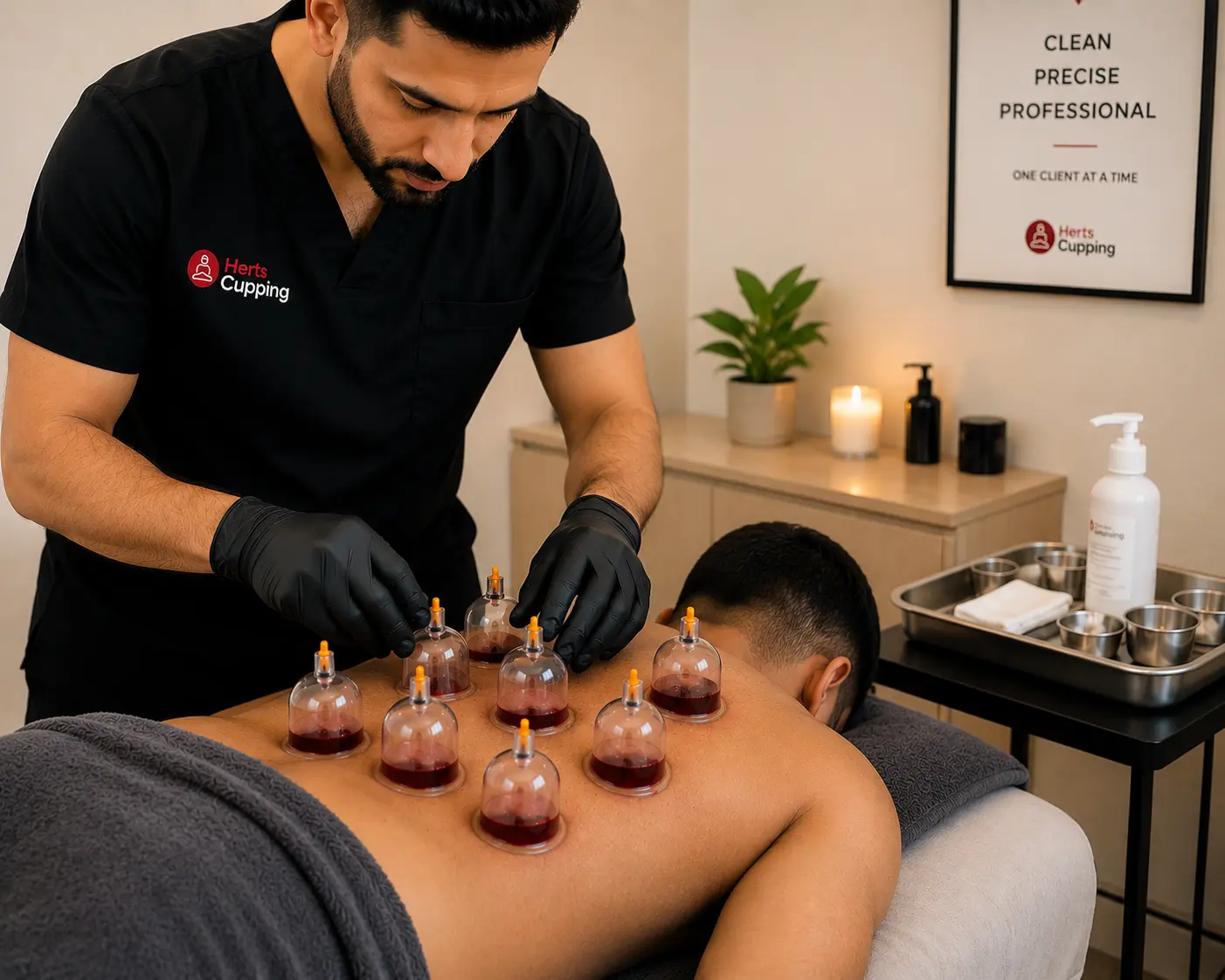
Hijama is a form of wet cupping and is also commonly called blood cupping. Some people search for bloodletting or blood letting, but those are broader historical terms that can describe different practices. Our Hijama method uses suction, small superficial scratches to the skin surface and controlled blood removal.
Many clients choose it for back tightness or discomfort, but severe, unexplained or worsening back pain needs appropriate assessment. If the problem is mainly muscular, combined recovery work may be more useful.
Neck, shoulder and upper-back tension are common reasons people ask about wet cupping. Where the problem is muscular, Hijama may be used alone or alongside focused recovery work.
Some clients ask about Hijama when headaches occur with neck and shoulder tension. Headaches and migraines have many possible causes, so new, severe, changing or unexplained symptoms need medical assessment.
Sciatica is usually related to nerve irritation, so we don’t claim Hijama treats its underlying cause. Where muscular back, hip or leg tightness is also present, we can explain whether cupping has a useful supporting role.
Some clients feel physically wound up, heavy, run down or unable to switch off and want a general wellbeing session. They may describe the goal as relaxation, stress relief, a reset or a body refresh. That’s a subjective wellbeing aim, not treatment for a mental-health condition.
Some active clients use wet cupping as part of a recovery routine. It can also be combined with manual therapy, movement-based dry cupping and IASTM where that better matches the muscular presentation.
Detox is a common search and traditional description, but we don’t use blood colour or cup contents as proof that named toxins have been removed. Some clients just use the word to describe feeling lighter or refreshed after treatment.
Hijama is established in authentic Islamic tradition. We cite authentic references and avoid turning weak or cultural claims into religious certainty.
There’s no universal schedule. Some clients book around Sunnah dates, occasional wellbeing or a specific recovery goal. We don’t recommend unnecessary frequent sessions.
No. It can be a personal wellbeing or recovery choice, but it shouldn’t replace appropriate diagnosis, prescribed treatment or urgent medical assessment.
Private clinic · St Albans
Choose the coverage you want, or message first if you want help deciding whether wet cupping or a combined recovery session fits your goal better.


