In this article
Acute conditions come on suddenly and are usually short-term. Chronic conditions last longer and often need ongoing management. Hijama may support muscle tension, heaviness and recovery where it is suitable, but it should not be used as a replacement for medical treatment, especially with severe, unexplained or actively...
What Is an Acute Condition?
An acute condition usually starts suddenly and lasts for a short time. A sprained ankle, sudden back spasm, infection, fresh injury or recent strain would all sit in this category.
With acute issues, the key question is safety. Is there swelling? Heat? Severe pain? Loss of movement? Numbness? A fall or trauma? If there is, you should be assessed by a GP, physiotherapist or urgent care service before booking any bodywork.
Where Hijama May Fit With Acute Issues
Hijama is not something I would use directly on a fresh injury, inflamed area, open wound or suspected structural issue. But once the acute stage has settled, some people use cupping or Hijama to support the surrounding muscular tension that remains afterwards.
For example, after a back spasm has calmed down, the surrounding muscles may still feel guarded and tight. In that situation, a carefully chosen recovery session may make sense if there are no red flags.
What Is a Chronic Condition?
A chronic condition is longer-term. It may last months or years, and it may need ongoing support. Examples include chronic back pain, arthritis, diabetes, autoimmune conditions or long-standing stiffness.
With chronic conditions, Hijama is not a cure. It does not replace medication, physiotherapy, specialist care or medical monitoring. But some clients use it as part of their wider wellbeing or recovery routine, especially when muscular tension, heaviness or stiffness is part of the picture.
Where Hijama May Fit With Chronic Issues
In long-standing tension patterns, the body often adapts around discomfort. Muscles tighten. Fascia becomes restricted. Movement changes. That is where cupping, massage, Hijama or IASTM may be useful as supportive work.
The goal is not to treat the diagnosis itself. The goal is to support the surrounding soft tissue and help the body feel less restricted where appropriate.
My approach: I do not treat diagnosed medical conditions. I work with soft tissue, tension, recovery and general wellbeing. If your symptoms need medical care, I will tell you that before taking a booking.
When You Should Not Book Hijama First
- Severe or worsening pain
- Recent injury, fall or accident
- Numbness, weakness or loss of control
- Fever, infection or feeling seriously unwell
- Unexplained swelling, redness or heat
- Known blood disorder or blood-thinning medication
- Uncontrolled chronic condition
- Symptoms that have not been medically assessed
How We Screen Before Treatment
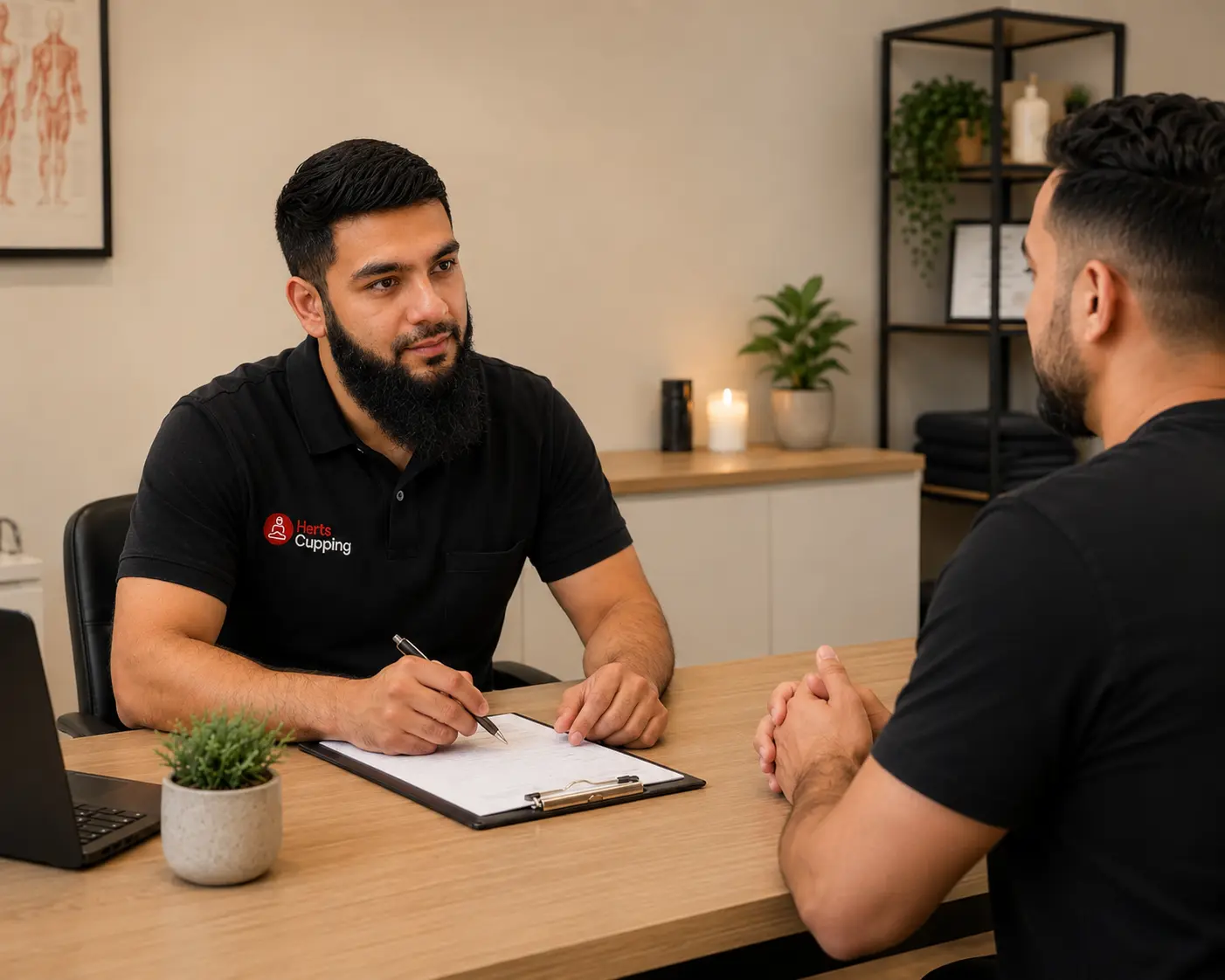
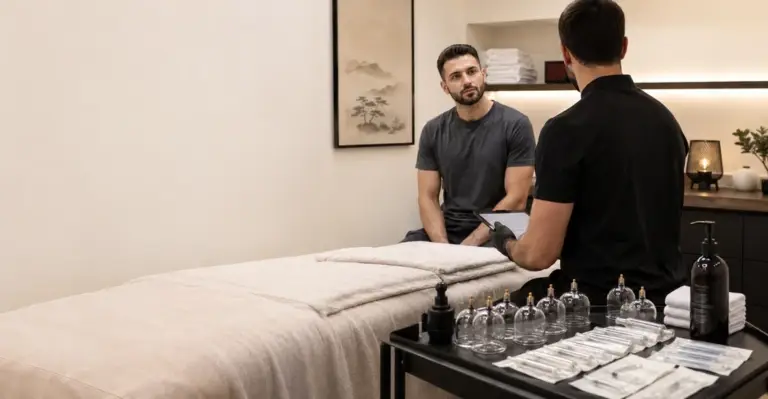
Every session starts with a conversation. I ask what you are dealing with, how long it has been there, what has been tried before, what medication you take and whether you have any relevant diagnosis.
If Hijama is not suitable, I will say so. Sometimes dry cupping or massage is more appropriate. Sometimes the right answer is to speak to your GP first.
Final Answer
Hijama may support some people with muscular tension, heaviness and recovery linked to both short-term and long-term issues. But it should be used sensibly, not as a cure and not as a shortcut around medical care.
The safest approach is simple: get assessed when needed, be honest about your health history, and choose a practitioner who will tell you when not to book.
Related Pages
- Benefits of Hijama - evidence, safety and what to expect
- Hijama in St Albans - private one-to-one wet cupping sessions
- Cupping and massage treatment - combined recovery sessions
- Sports recovery therapy - for gym-goers, runners and active clients
Common Questions
Can Hijama help acute conditions?
Hijama may support comfort and recovery around short-term muscular tightness or minor soft tissue strain where it is suitable, but it should not be used for acute injuries that need medical assessment, severe pain, infection, fracture or unexplained symptoms.
Can Hijama help chronic conditions?
Hijama does not cure chronic health conditions. Some people use it as complementary support for muscle tension, heaviness, stiffness and general wellbeing alongside their usual care.
Should I book Hijama during a flare-up?
Usually no. If symptoms are actively flaring, severe, hot, swollen, infected or unstable, speak to your GP or specialist before booking.
Is Hijama a replacement for medical treatment?
No. Hijama is a complementary therapy. It does not replace diagnosis, medication, physiotherapy, urgent care or specialist treatment.
How do you decide if someone is suitable?
We screen every client before treatment, including medical history, medication, symptoms and what they want from the session. If Hijama is not suitable, we will say so.
Ask Before Booking
If you are unsure whether Hijama is suitable for your situation, message us first and I will give you an honest answer.
Book a Session Message on WhatsApp