In this article
Abdus ShahidLead Practitioner · Herts Cupping · St Albans Stress lives in the body: cupping for the tension you keep ignoring Quick Answer Stress does not only sit in your head. It often...
Physical tension rather than a mental-health treatment claim
This article focuses on the muscular side of stress, such as loaded shoulders, neck tightness and a body that feels difficult to relax. It does not present cupping as treatment for anxiety or another mental-health diagnosis.
See the stress-related body tension route → AS Abdus ShahidLead Practitioner · Herts Cupping · St AlbansQuick Answer
Stress does not only sit in your head. It often shows up as tight shoulders, heavy traps, neck stiffness, jaw tension, upper back pressure, poor sleep and a body that feels switched on all the time. Cupping may help some people with the physical side of stress by easing tight, guarded areas and supporting relaxation. It is not a cure for stress, anxiety or burnout, but it can be a useful reset when the body is carrying the load.
A lot of people do not book cupping because they think they have a dramatic injury. They book because their body feels heavy, tight and worn down, and they are tired of pretending it is normal.
That is the part people miss with stress. It is not always panic, worry or being visibly overwhelmed. Sometimes it looks like walking around with shoulders up by your ears, a stiff neck every morning, pressure between the shoulder blades, headaches that creep in after long screen time, or a lower back that feels switched on even when you are resting.
In clinic, clients rarely say, “I need help with stress.” They usually say, “My shoulders are always tight”, “my upper back feels blocked”, “I cannot relax properly”, “massage helps but it comes back”, or “I feel like my body is holding everything.” That is the version of stress-related tension I am talking about here.
The bit most people get wrong about stress tension
People often treat stress tension like it is imaginary because there was no one big injury. That is a mistake. A body can become tight from repeated load without a dramatic event.
Long work days, sitting, driving, poor sleep, emotional stress, training, dehydration and not moving enough can all stack up. None of them may feel like a serious trigger on their own. Together, they can leave the body feeling guarded and restricted.
My honest view: stress tension is not “just in your head”. But cupping is not a magic answer either. The best results usually come when treatment helps the body calm down, while you also start fixing the routine that keeps loading it up.
Where I normally see stress stored in the body
Everyone is different, but certain areas show up again and again. The pattern is usually easy to recognise once the client describes their daily routine.
Upper traps
The classic “shoulders up by the ears” feeling. Often linked with desk work, pressure, driving and not fully switching off.
Neck and base of skull
Common when stress combines with screen posture. This can feel like stiffness, pulling, heaviness or pressure around the head and neck.
Between the shoulder blades
A lot of clients describe this as a blocked or heavy feeling. It often builds quietly from sitting, shallow breathing and rounded posture.
Lower back
Stress can make the whole body feel guarded. Some people feel it more in the lower back, hips or glutes, especially after long sitting.
How cupping may fit when stress is showing physically
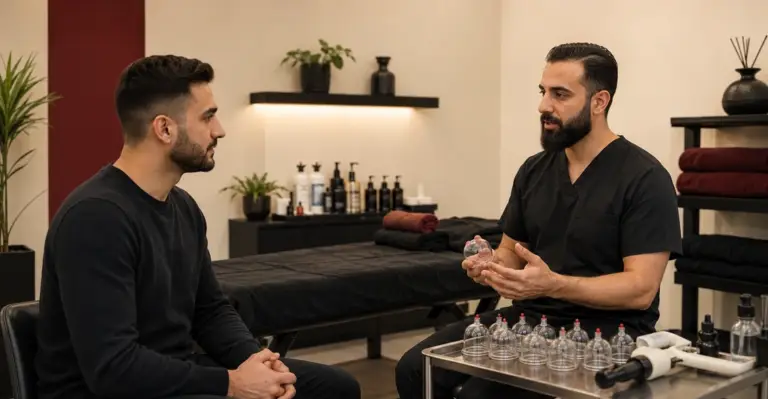
Cupping uses suction to lift and decompress soft tissue. That is different from massage, which presses down into the tissue. For people who feel tight, compressed or heavy, the lifting effect of cupping can feel like the body is finally getting some space.
With stress-related tension, the aim is not to “treat stress” as a condition. The aim is simpler: work on the areas that are physically holding tension and help the body feel less restricted.
- Upper back cupping may help that heavy, loaded feeling across the traps and shoulder blades.
- Neck and shoulder work may support easier movement where stress and posture have built up tightness.
- Cupping with massage can work well when the body feels guarded and pressure alone keeps wearing off.
- Hijama may be considered if you specifically want wet cupping and are suitable after screening.
Clinic Reality
Sometimes the body is not injured. It is overloaded.
This is the main difference. Injury usually has a clearer story: a lift, a fall, a twist, a sports incident, a sudden sharp pain. Stress-related body tension is usually slower. It creeps in through routine.
That is why people often say they have “not done anything” even though their body feels wrecked. They have done plenty. They have just not counted work stress, poor sleep, sitting, driving and constant tension as load.
What I check before treating it as stress tension
I do not like guessing. If someone tells me they are stressed and their body hurts, I still want to understand what is actually going on. Stress can make muscles feel tight, but not every symptom should be blamed on stress.
| What I ask | Why it matters |
|---|---|
| Where exactly do you feel it? | Stress tension is often patterned. Upper traps, neck, jaw area, upper back and lower back are common, but the exact area matters. |
| When does it get worse? | Desk work, driving, poor sleep, training and stressful periods can all point towards load-related tension. |
| Does anything ease it? | If movement, heat, massage or rest helps, it often behaves more like muscular tension. If nothing changes it, we need to be more cautious. |
| Are there any red flags? | Chest pain, shortness of breath, sudden weakness, numbness, fainting, fever or severe headaches are not “just stress” until checked properly. |
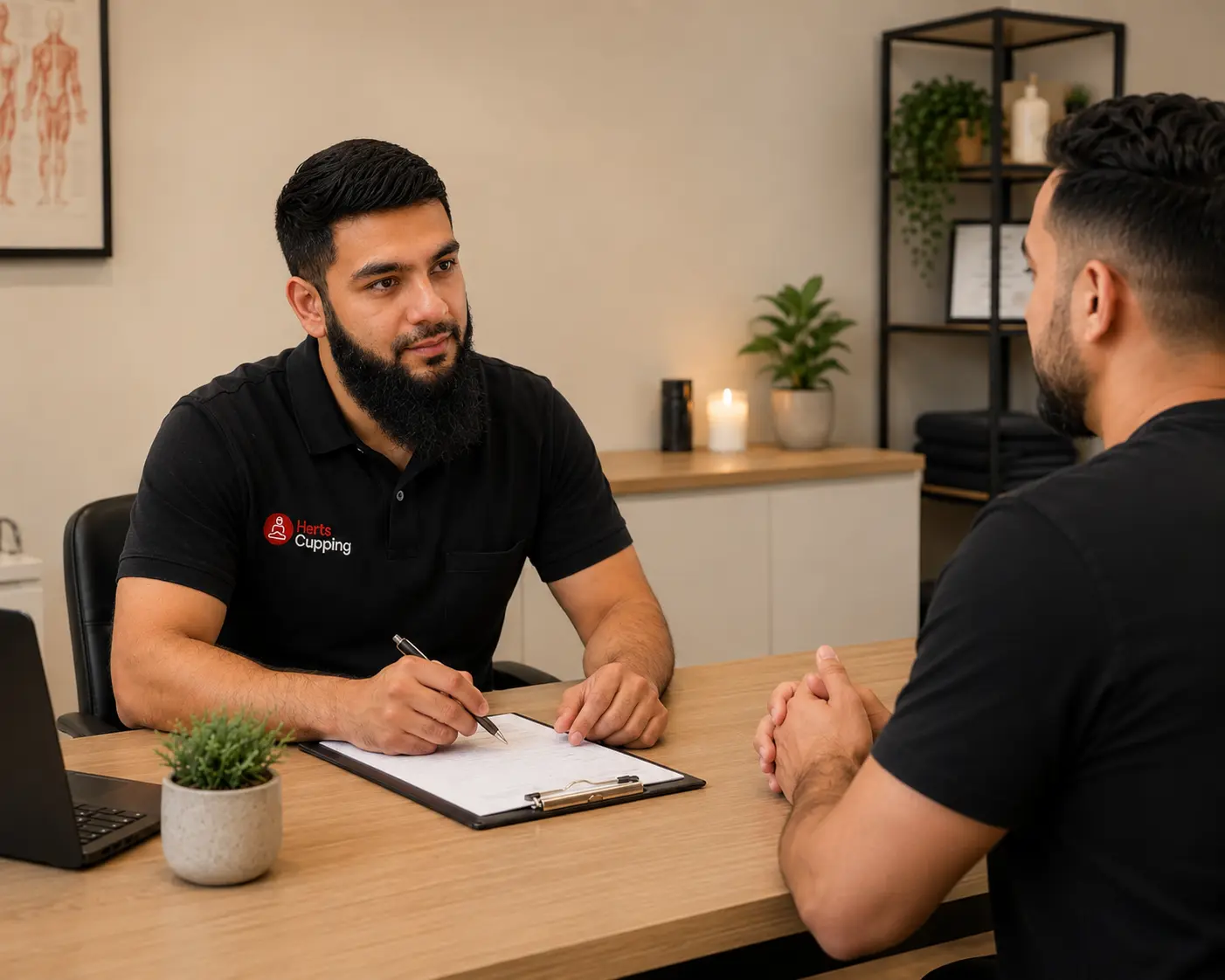
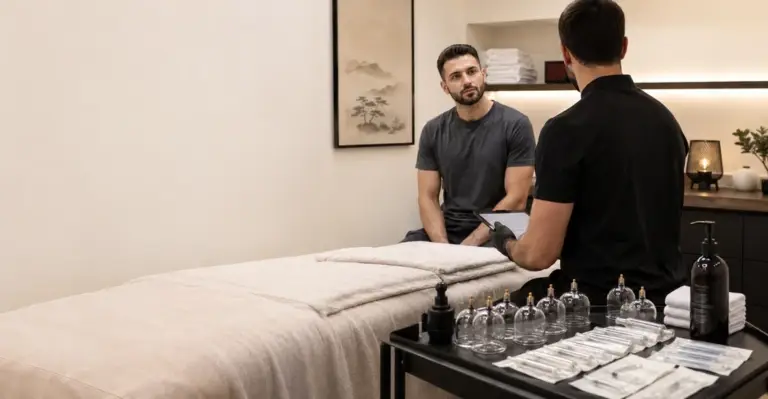
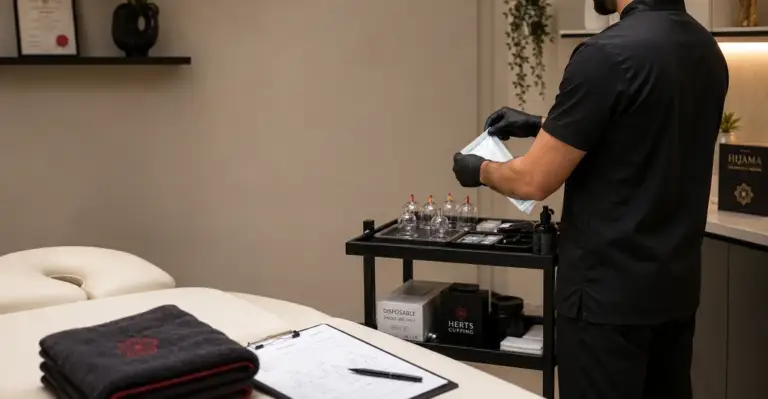
What a session usually looks like
For stress-related body tension, I usually keep the approach simple. The session should calm the body down, not batter it into submission.
- Quick consultation: we look at where the tension sits and what is loading it up.
- Targeted work: usually upper back, traps, shoulders, neck base or lower back depending on your symptoms.
- Cupping pressure adjusted: strong enough to be useful, not so strong that you are fighting the treatment.
- Massage or IASTM where needed: if the issue feels layered or stubborn, cupping can be combined with manual work.
- Aftercare: hydration, rest, avoiding overloading the area and noticing what triggers the tightness again.
Which session should you actually book?
If the issue is mainly tight shoulders, upper back heaviness, neck stiffness or that physically wound-up feeling, a targeted recovery session is usually the better starting point than jumping straight into full-body treatment.
If you specifically want Hijama for Sunnah practice or traditional wet cupping, that can be discussed, but it still needs to be suitable. Not everyone needs wet cupping for stress-related tension. Sometimes dry cupping, massage and IASTM make more sense.
Simple rule: if the problem feels muscular and localised, start targeted. If the whole body feels run down and tight, consider a wider recovery session. If you are unsure, message first and explain what you are feeling.
When cupping is not the answer
This part matters. Stress can cause physical symptoms, but physical symptoms should not always be dismissed as stress. Get medical advice first if you have:
- Chest pain, shortness of breath or a racing heartbeat that concerns you.
- Dizziness, fainting, sudden weakness, numbness or neurological symptoms.
- Severe headaches or a new headache pattern.
- Fever, night sweats, unexplained weight loss or feeling seriously unwell.
- Pain that is worsening, unusual, spreading or not behaving like normal muscular tightness.
If the main issue is anxiety, depression, panic, burnout or ongoing mental health difficulty, cupping should not be treated as the solution. Speak to your GP or a qualified mental health professional. Cupping may support the physical tension for some people, but it is not mental health treatment.
What helps the results last longer
Treatment can make the body feel lighter, but if the same routine keeps overloading the same area, it will usually come back. The goal is not just to feel better for a day. The goal is to understand what keeps feeding the tension.
- Move every 30 to 60 minutes if you sit for long periods.
- Stop treating sleep as optional if your body already feels overloaded.
- Walk more, especially after long desk days.
- Hydrate properly, especially if you train or drink a lot of caffeine.
- Use heat on tight, guarded areas if it feels helpful.
- Do not keep smashing the gym if your body is already shouting at you.
Related Pages
- Cupping therapy in St Albans for dry cupping, fire cupping and suction therapy
- Cupping massage in St Albans for combined cupping and recovery work
- Hijama in St Albans for wet cupping and Sunnah Hijama
- Sports recovery therapy for training-related tightness and poor recovery
- Desk-work neck and back pain if sitting is your main trigger
- Cupping for neck pain for tight traps and neck stiffness
- What we treat for a wider guide to common reasons clients book
Common questions
Can cupping help with stress-related body tension?
Cupping may help some people with the physical side of stress, such as tight shoulders, heavy traps, neck stiffness and upper back tension. It does not remove stress from your life and should not be presented as a treatment for anxiety or mental health conditions.
Where do you place cups for stress tension?
It depends where the client holds tension. Common areas include the upper back, traps, shoulders, base of the neck and sometimes the lower back. Placement should be based on consultation, movement, tenderness and the areas the client actually feels.
Is Hijama better than dry cupping for stress tension?
Not automatically. If the main issue is physical tension and recovery, dry cupping with massage or IASTM may be the better starting point. Hijama can be considered where the client specifically wants wet cupping and passes suitability checks.
Can stress tension come back after cupping?
Yes. If the same stress, posture, sleep and workload patterns stay in place, the body can tighten again. Cupping may help the body feel lighter or less restricted, but recovery habits still matter.
When should I avoid cupping and seek medical advice first?
Seek medical advice first if you have chest pain, shortness of breath, fainting, sudden weakness, numbness, severe or unusual headaches, fever, unexplained weight loss, night sweats, worsening pain or symptoms that do not feel like normal muscular tension.
Feel like your body is carrying stress?
Message us with where you feel it: neck, shoulders, upper back, lower back or full-body heaviness. I will tell you honestly whether cupping, Hijama or a recovery session makes more sense.
Book a Session Message on WhatsApp