
Sahih al-Bukhari 5680
“Healing is in three things…”
Ibn ‘Abbas رضي الله عنه narrated the well-known report mentioning honey, cupping and cauterisation, with the Prophet ﷺ prohibiting cauterisation for his followers in that wording.
Read sourceAuthentic sources · Hijama · Prophetic medicine
A source-led guide separating established Hijama evidence, disputed timing reports and modern claims so you can see what is strong and what is not.
Strongest starting point
These references establish that cupping was known, used and spoken of positively by the Prophet ﷺ.
Sahih al-Bukhari 5680
Ibn ‘Abbas رضي الله عنه narrated the well-known report mentioning honey, cupping and cauterisation, with the Prophet ﷺ prohibiting cauterisation for his followers in that wording.
Read sourceSahih al-Bukhari 5681
The following narration again mentions cupping among the three forms of healing in this chapter. Numbering can vary between editions, which is why citing the collection and hadith number helps.
Read sourceSahih al-Bukhari 5696
Anas رضي الله عنه reports that the Prophet ﷺ was cupped and spoke positively of cupping among treatments. The narration also records that the cupper was paid.
Read sourceThe religious case for Hijama does not depend on exaggerated internet claims. Authentic sources are already strong enough without adding things that cannot be verified.
The 17th, 19th and 21st
Sunan Abi Dawud 3861 reports from Abu Hurayrah رضي الله عنه a narration about cupping on the 17th, 19th and 21st. Sunnah.com records it as Hasan according to Al-Albani.
Other leading hadith scholars held that no sound marfu‘ report fixes a preferred cupping date, while some scholars accepted or strengthened the 17th/19th/21st reports. Jami‘ at-Tirmidhi 2051 is itself an example of grading differences between authorities.
Our clinic position is simple: if you personally value those dates, you can choose them. Hijama is not restricted to them, and we will not tell you another day is invalid, useless or something you should avoid.
Where the Prophet ﷺ was cupped
Sunan Abi Dawud 3860 reports that the Prophet ﷺ was cupped at the two veins at the sides of the neck and on the upper back/shoulder area. Sunnah.com records this narration as Sahih according to Al-Albani.
That does not create a universal “one point for every disease” map. A hadith reporting where cupping occurred is not the same as a modern diagnostic chart assigning every organ or illness to a dot on the body.
In clinic we respect established Sunnah context while also considering safe anatomy, your reason for booking and how many areas genuinely need treatment.
Read Sunan Abi Dawud 3860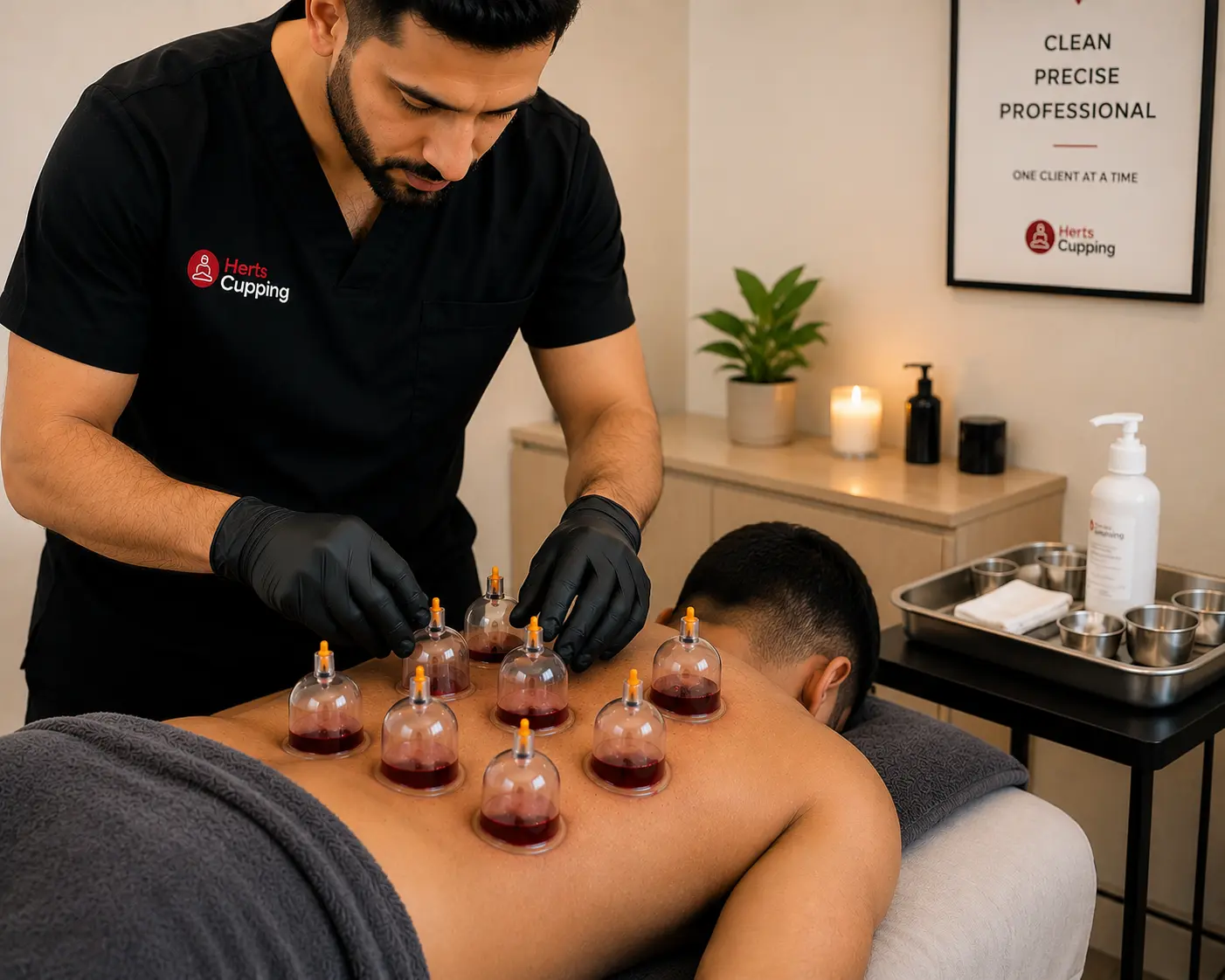
Not every quote online is equal
Religious content deserves the same care we expect from clinical claims.
“A hadith says” is not enough. Where possible we provide the collection and reference number.
If a narration is Hasan, Da‘if or graded differently by scholars, that should not be hidden from the reader.
A Prophetic recommendation does not give us permission to invent a biochemical mechanism or promise a cure for a modern diagnosis.
Popular claims about exact days, colours, blood texture or unseen causes are not automatically Sunnah because they circulate in Muslim communities.
What these narrations establish
The Prophetic tradition gives Hijama a clear religious place. Good practice is to preserve that while remaining truthful about what a modern practitioner can know.
Authentic narrations show that cupping was used and positively mentioned in the Prophetic period.
We do not attribute claims about “toxins”, blood chemistry or specific disease mechanisms to the Prophet ﷺ unless such wording is actually established.
Being a Sunnah does not remove ordinary responsibilities around hygiene, suitability, blood-thinning medication or seeking medical care when needed.
How this changes a clinic session
When a client books for Sunnah Hijama, we understand that the religious intention matters. We can respect the Sunnah intention and, if you personally follow the 17th, 19th and 21st reports, discuss those commonly chosen dates. We also make clear that scholars differed over the strength of the timing reports and that Hijama can be booked on any suitable day.
We still begin with screening, use sterile single-use equipment, select points safely and give practical aftercare. We do not add invented rituals, claim access to the unseen or promise that every physical problem will be cured because Hijama appears in hadith.
That combination of religious respect and professional restraint is the standard we aim for.
Common questions
These are the practical questions clients ask most often. If your situation is more specific, message us before booking.
Yes. Sahih al-Bukhari includes several narrations about cupping, including 5680, 5681 and 5696.
Sunan Abi Dawud 3861 reports those dates and Sunnah.com shows it as Hasan according to Al-Albani. Other hadith scholars did not accept a sound marfu‘ report fixing preferred cupping dates, so there is a genuine grading difference. We present the dates as an optional preference for clients who follow that view, not as the only valid time for Hijama.
No. Different narrations have different chains and grades. A careful page should name the source and grading rather than treating every quote online as equally strong.
Sunan Abi Dawud 3860 reports cupping at the two veins at the sides of the neck and the upper back/shoulder area, and Sunnah.com shows the narration as Sahih according to Al-Albani.
No. Authentic religious evidence for the practice should not be converted into an unrestricted clinical claim for every diagnosis.
Yes. Hijama can be booked on any suitable day of the week or month. Some clients choose the 17th, 19th or 21st because they follow the reports about those dates, while scholars differ over how firmly those timing reports are established. Missing those dates is not a reason to put off Hijama.
Collections can be presented using different numbering systems or editions. We use the current Sunnah.com reference number and name the collection to make verification easier.
Private clinic · St Albans
If you want to book specifically for a Sunnah date or ask which references we follow, message us before choosing a slot.