
Firm hands-on muscle work
The starting point for most sessions. Sustained hands-on pressure is focused on the loaded region rather than following a light generic sequence.
Sports Recovery · Hertfordshire
Recovery built around training load, combining hands-on work, dry cupping, IASTM and wet cupping (Hijama) when appropriate.
This is where sports recovery differs from a routine massage
Many clients find us while searching for sports massage. That is a sensible entry point, but two people with the same "tight hamstring" search may need very different sessions. A runner in a high-mileage week, a footballer between matches, a lifter after a heavy hinge block and a cricketer carrying repeated bowling or batting load are not asking the body to do the same thing.
Firm hands-on treatment is usually the foundation. The practitioner then decides whether another input is worth adding. Dry or movement cupping may suit an area that feels restricted under suction or movement. IASTM can be used over a stubborn local region. Percussion can prepare a broader muscle group. Wet cupping (Hijama) gives you an option beyond massage-only recovery. It can be booked alone or combined with 60- or 90-minute Muscle Recovery so both forms of treatment happen in one visit.
The most important question is often not "which technique is strongest?" but "what do you need to perform tomorrow, this weekend or next week?" Depth, coverage and timing should fit the training calendar instead of creating avoidable soreness before an important session.
We also check the wider loading pattern. The side that feels tight is not always the only side carrying extra work. That is practitioner observation, not injury diagnosis. Fresh injuries, significant swelling, loss of power, persistent numbness or worsening symptoms need appropriate assessment first.
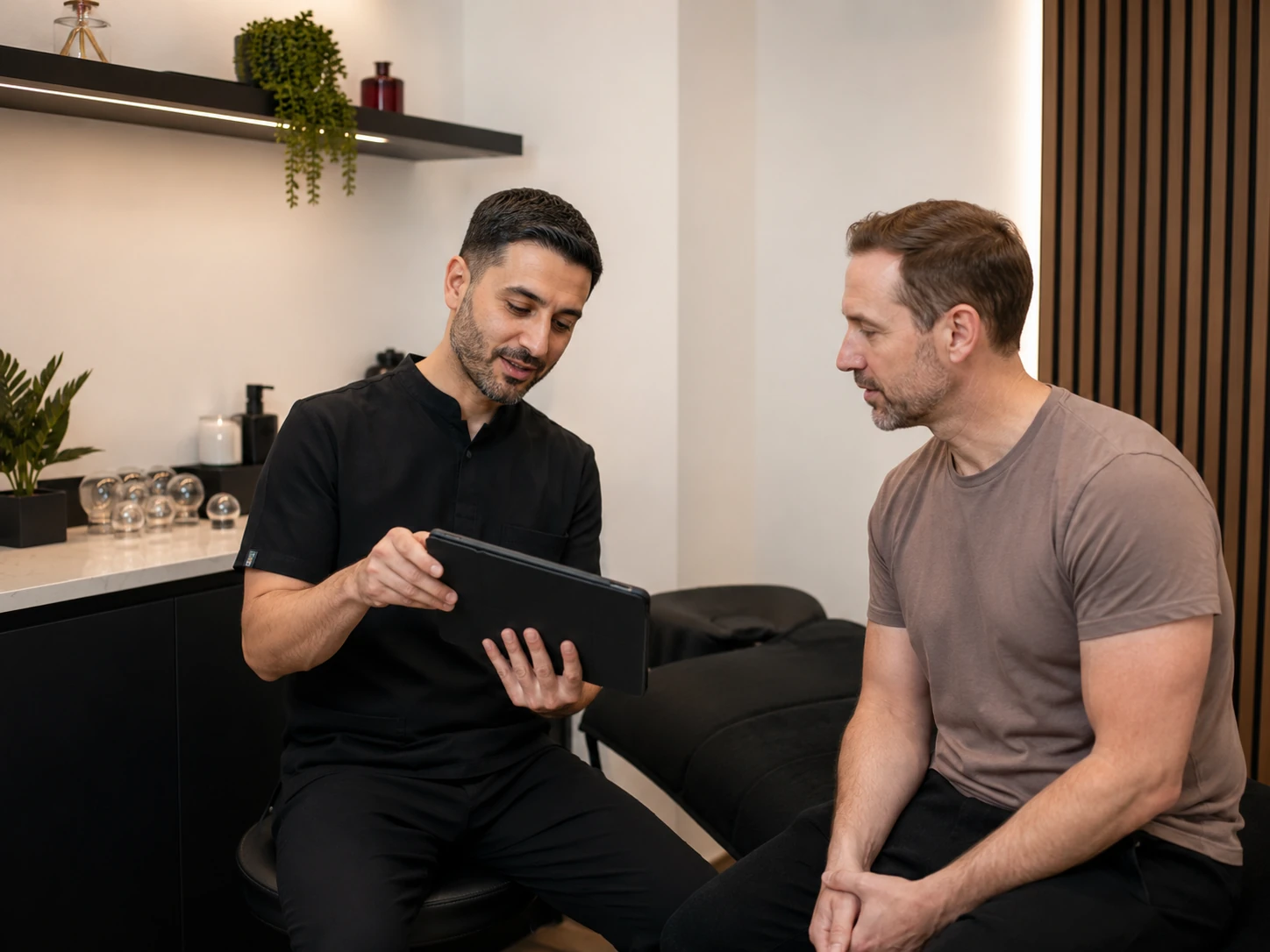
The method follows the problem
The advantage is not using more techniques. It is being able to change the treatment input when the athlete, area or timing calls for it.
The starting point for most sessions. Sustained hands-on pressure is focused on the loaded region rather than following a light generic sequence.
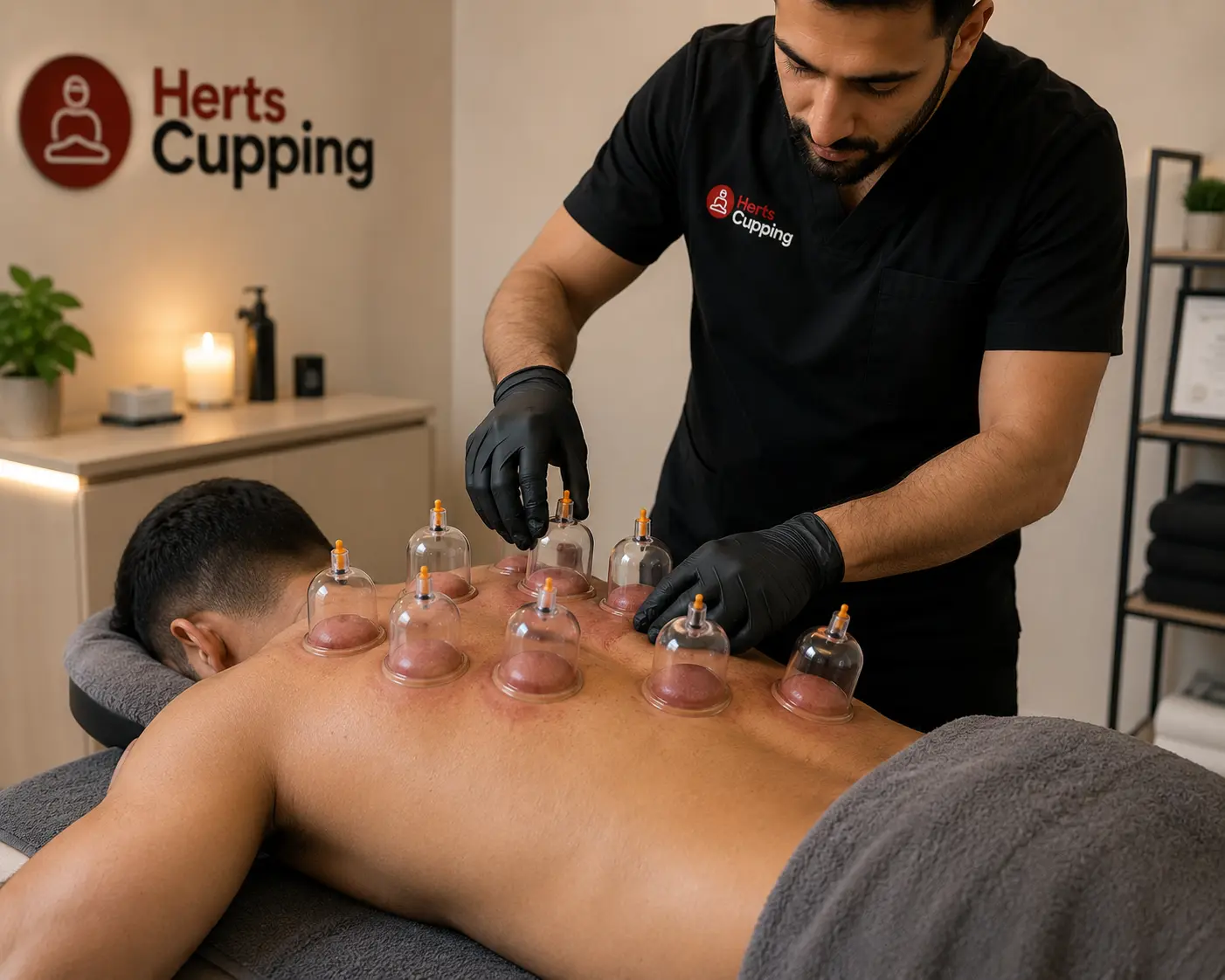
Suction gives a different input from massage. Cups may remain static, move across a larger area or be combined with controlled movement when appropriate.
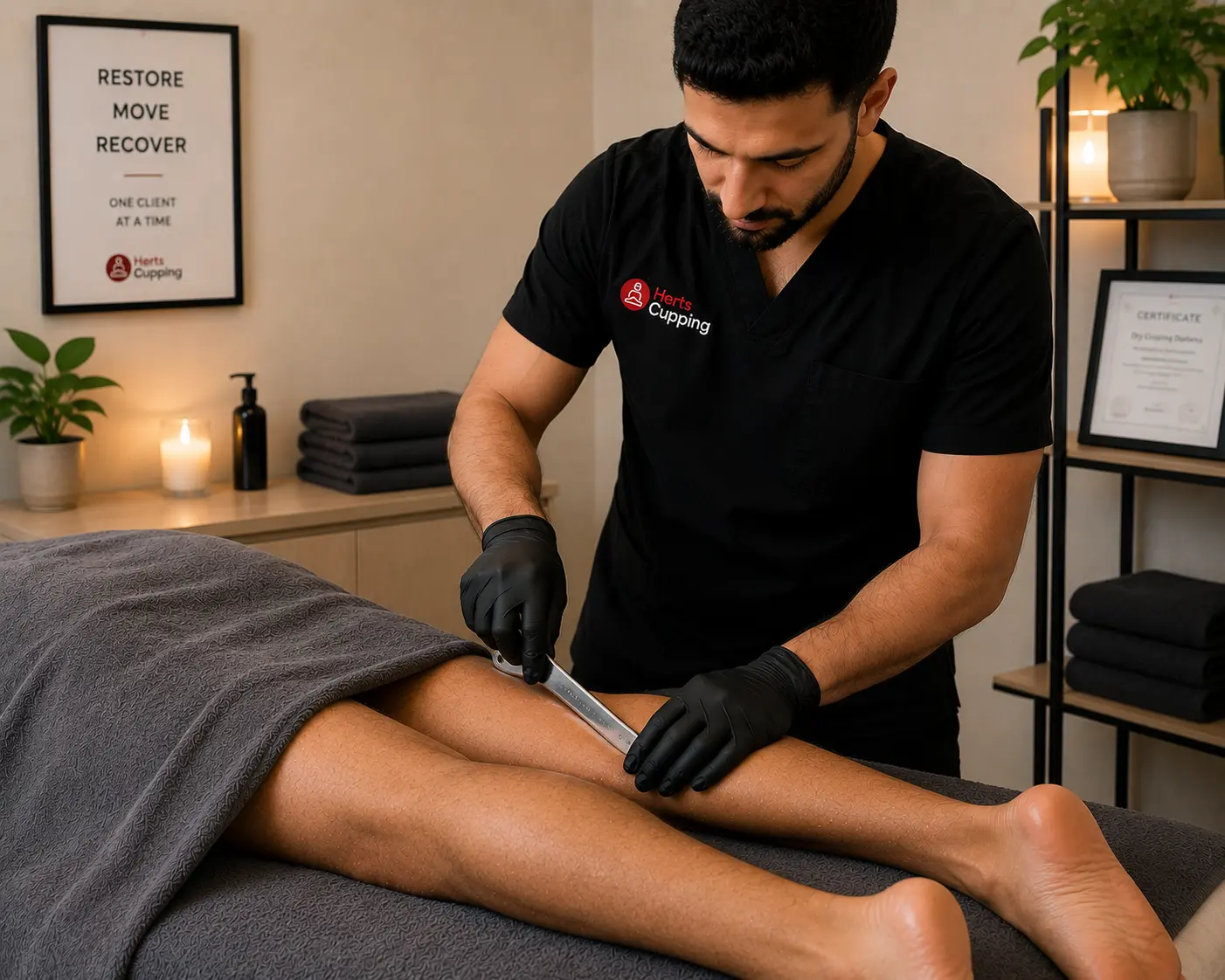
Tool-assisted work gives another way to work a stubborn local region, commonly around heavily loaded calves, hamstrings, quads, shoulders or lats.
Useful for preparing or settling a broader muscle group. It supports the session rather than replacing skilled hands-on work.
Wet cupping can sit alongside hands-on recovery when you want both in one appointment. The 60-minute combined session includes up to 5 wet-cupping cups; the 90-minute version includes up to 10.
What this means in practice
If you have a race, match or heavy training session close by, the useful choice may be less depth, fewer areas or no unfamiliar cupping at all. During a deload or after a hard block, the same client may have more room for deeper work across several connected regions.
The aim is to leave the body better prepared for the plan ahead, not to prove how much pressure you can tolerate.
Plan treatment around the calendar
The closer you are to competition, the more conservative the treatment normally becomes. Stronger work belongs where the body has time to settle.
Use focused work to manage familiar tightness without overloading the body between matches, runs or hard training days. Keep the area and intensity specific.
A broader session can address the areas that accumulated load through competition, mileage or repeated training once acute injury has been ruled out.
This is often the best time for deeper work across several connected areas before the next training phase builds.
Avoid introducing unfamiliar deep work or strong cupping immediately before an important event. Discuss the date, visible marks and normal training response first.
Choose recovery when training load is showing up in the muscles
Runners: calves, hamstrings, glutes, hips and lower back may carry repeated mileage. See the runners guide.
Lifters and gym clients: traps, lats, shoulders, hips, glutes and lower back often reflect pressing, pulling, squatting and hinging volume. See gym recovery.
Cricketers: shoulders, side body, lower back, hamstrings and calves can carry repetitive bowling, batting and fielding load. See the cricket guide.
Football and field sport: heavy legs, quads, adductors, hamstrings, calves and hips may need attention between matches or training blocks.
Familiar post-training heaviness and muscular tightness can suit recovery work. Sharp pain, a fresh strain, instability, significant swelling or loss of power does not. Recovery also sits alongside sleep, nutrition, sensible training management, strength work and physiotherapy rather than replacing them.
Choose one main area or several
Start with coverage, then decide whether to include wet cupping. Standalone wet cupping (Hijama) remains available from £50 when that is the complete treatment you want.
Focused hands-on muscle work for one main area, with dry cupping, movement cupping, muscle scraping or a massage gun used where useful.
Book One-Area Muscle RecoveryA combined appointment when one muscular focus and Hijama both matter.
Book Muscle Recovery + HijamaMore time for multiple loaded areas after a hard block, event or accumulated training demand.
Book Full Body Muscle RecoveryThe most comprehensive combined session when broad muscular work and Hijama both need proper time.
Book Full Body Muscle Recovery + HijamaWhat the treatment can look like
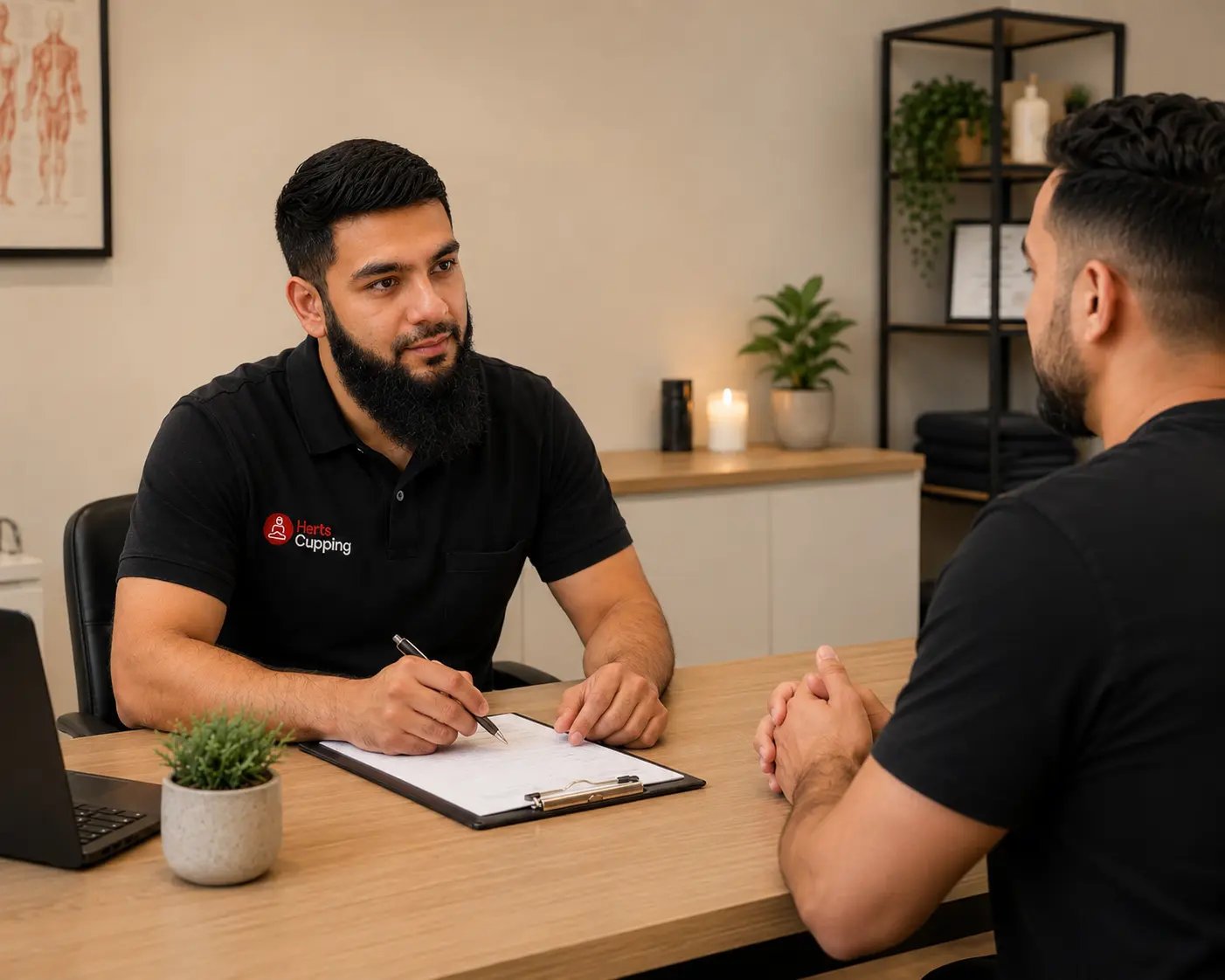
The point is not to use every technique. It is to have the right option available when the area or goal calls for it.
Trusted locally
Current Google feedback is shown below.
Common questions
Based in St Albans and serving active clients across Hertfordshire.
Firm sports-massage-style work is usually the foundation. The wider recovery session can also use dry cupping, IASTM or percussion where useful.
No. We do not diagnose sports injuries or prescribe rehabilitation. If you need injury assessment, weakness testing or a rehab plan, a sports therapist or physiotherapist may be the better first route.
Yes. The + Hijama sessions combine Muscle Recovery with wet cupping. Choose standalone Hijama when wet cupping itself is the whole treatment you want.
Tell us your sport, next hard session or event and whether you want a lighter maintenance appointment or deeper work. Treatment depth should fit the training calendar.
Train hard. Recover deliberately.
Tell us your sport, the main tight areas and the timing of your next hard session or event. We will help you choose the right coverage.




