
One main muscular area
60 min · £75Book RecoveryRecovery
Best when the physical tension is mainly in one region such as neck, shoulders or upper back.
Stress-related body tension · wellbeing · Hertfordshire
Body-focused treatment for physical tension linked with stress, with hands-on work, cupping and wet cupping (Hijama) available where appropriate.
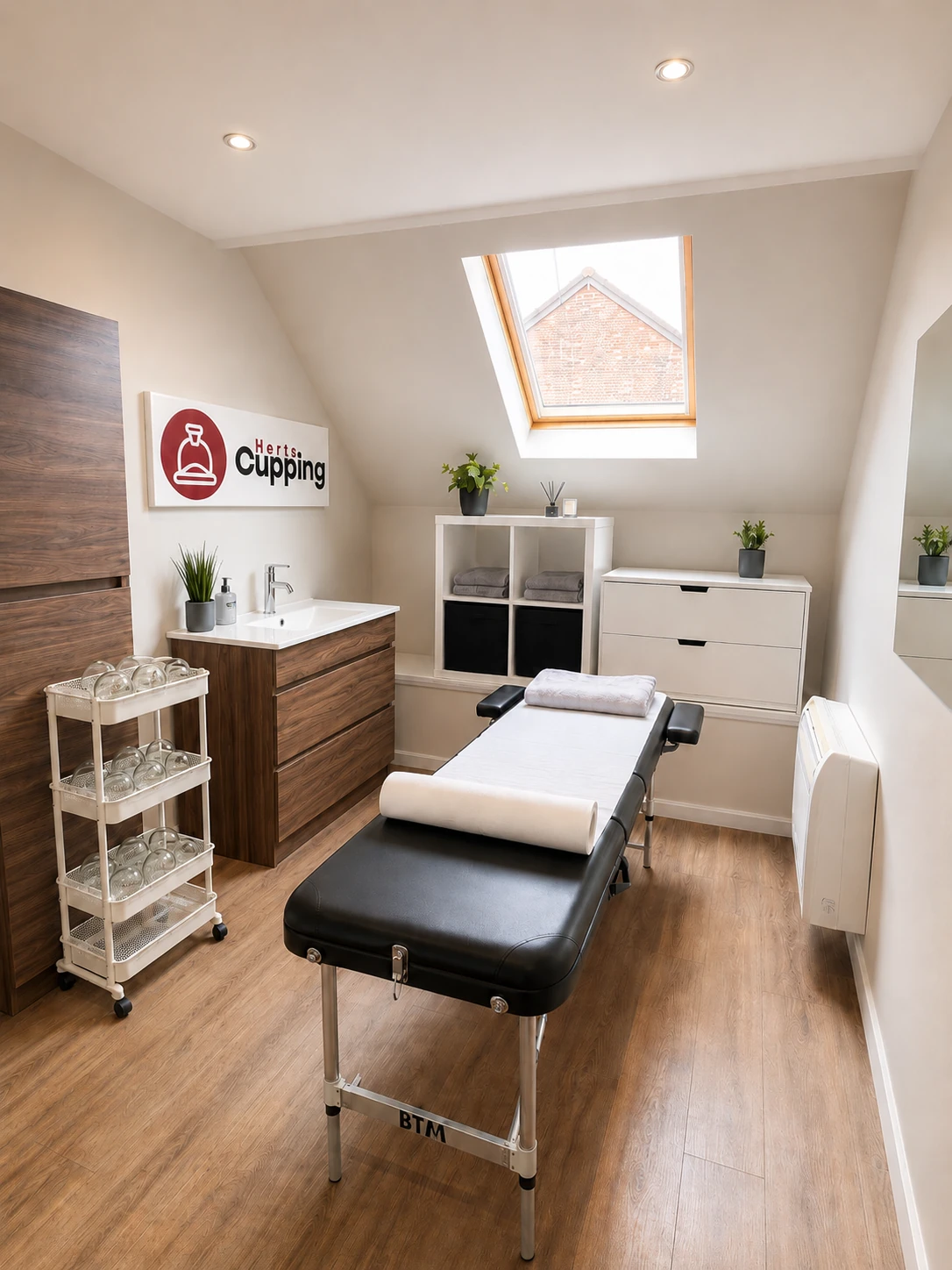
Wet cupping option
Hijama is wet cupping. Choose it on its own, or book Targeted Recovery + Hijama (£95) or Full Body Recovery + Hijama (£135) when you want hands-on recovery and wet cupping in the same appointment. You do not need to be Muslim to choose Hijama.
What should I book?
Hijama is wet cupping, also commonly called blood cupping. It can be chosen as a standalone wellbeing option by anyone. These are the three main places to start.
Best when the physical tension is mainly in one region such as neck, shoulders or upper back.
For focused hands-on work when you want hands-on recovery and wet cupping (Hijama) in the same appointment.
Choose this if you want wet cupping itself during a demanding period, feel physically wound up or run down, or just want a general wellbeing reset. Some clients describe the aim as stress relief, relaxation, a detox-style refresh or feeling lighter. We don’t present Hijama as treatment for a mental-health condition or as a medical detox.
See more specific reasons people search for Hijama and wet cupping.
Does this sound familiar?
Busy weeks often show up physically before people think of them as a treatment problem. The useful question isn’t whether “stress caused everything”. It’s whether the muscular tension you’re feeling is something a hands-on appointment may reasonably support.
“My shoulders are always up here.” is one of the most common descriptions we hear from clients who have spent weeks working, driving, training or sleeping poorly.
Shoulders that never dropUpper traps and upper back feel active even when you’re sitting still.
Waking up already tightNeck, jaw or back feels loaded before the day has properly started.
End-of-week tensionYour body feels more wound up by Thursday or Friday than it did at the start of the week.
Rest doesn’t feel like restYou sit down, but the body still feels braced, heavy or uncomfortable.
Why stress can feel physical
When life stays busy, people often spend long periods with shoulders elevated, jaw clenched, breathing shallowly or sitting in one position. Muscles that rarely get a chance to relax can start to feel sore, heavy or restricted.
That doesn’t mean every headache, pain or sleep problem is caused by stress. It means physical tension can sit alongside a demanding period and may be worth addressing in its own right.
Important: Hijama, cupping and hands-on treatment are complementary physical therapies. They aren’t treatments for anxiety, depression or other mental-health conditions.
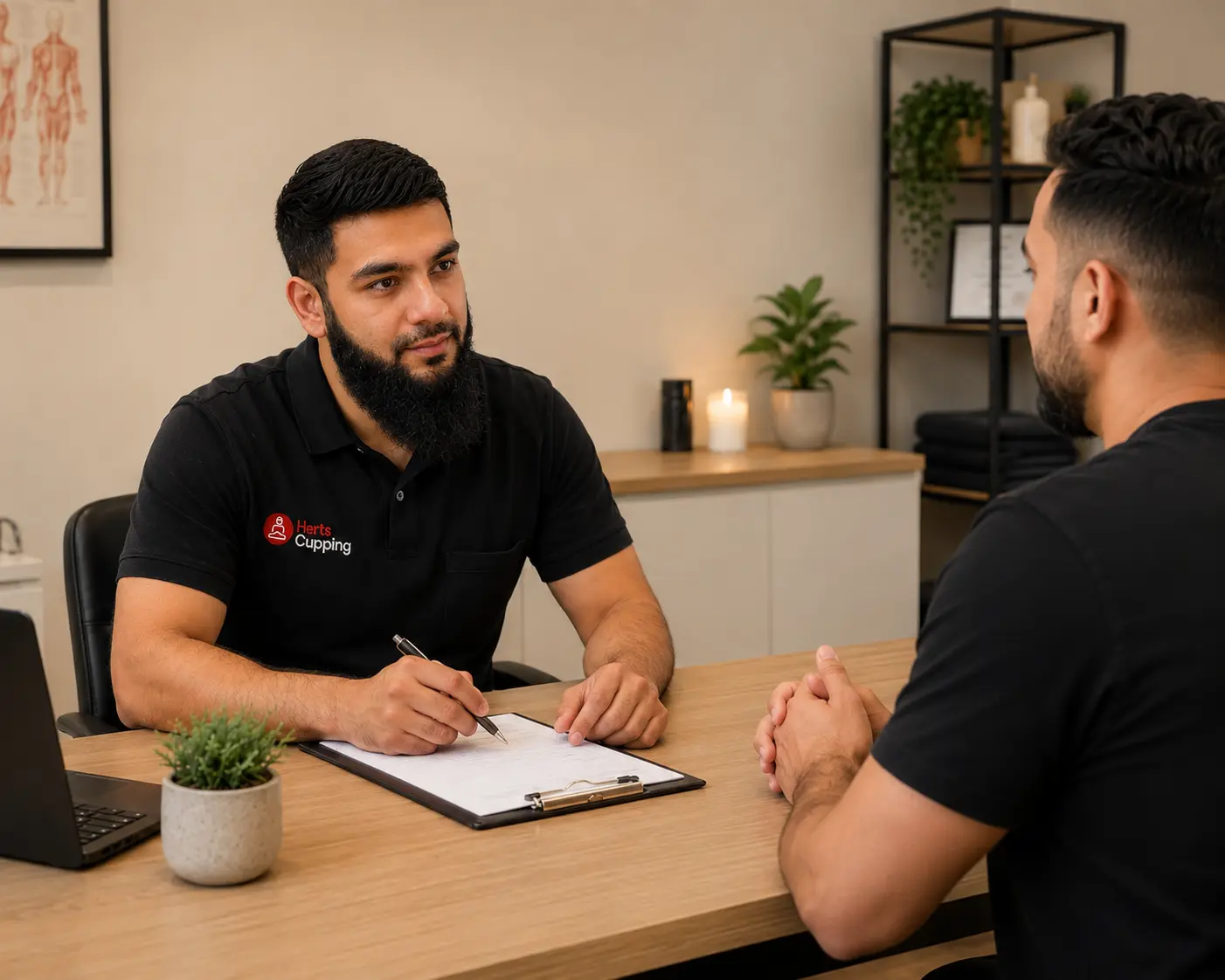
The environment matters too
One client is treated at a time in a private room. You can ask for minimal conversation, keep your phone away and use the appointment as protected time.
Hands-on work can feel firm over loaded muscles. Dry cupping feels like controlled pulling. Hijama involves suction, brief superficial scratches and reapplication of the cups. Every stage is explained before it happens.
Some clients describe feeling lighter, looser or more relaxed. Others mainly notice the treated area feels different. Cupping marks and mild temporary soreness are possible, and results vary.
Recent client feedback
Live Google feedback is shown rather than edited wellbeing testimonials.
Where this isn’t the right answer
Hijama, cupping and hands-on treatment aren’t substitutes for mental-health care or medical assessment.
Speak to a GP or appropriate professionalFor diagnosed anxiety or depression, worsening low mood, panic symptoms, chest pain, fainting, unexplained breathlessness or other concerning symptoms.
Book physical treatment when the goal is physicalIf the main issue is ordinary muscular tension during a demanding period, we can discuss whether a recovery or Hijama session is a reasonable complementary option.
Common questions
Open only what matters to you.
Some clients say they feel more relaxed, lighter or looser after treatment, but responses vary. We don’t guarantee relaxation, sleep or mood outcomes.
No. We need enough conversation to understand your health history and treatment goal, but after that you can ask for a quiet session with minimal small talk.
Choose Recovery when direct muscular tension is the main issue. Choose Hijama when wet cupping itself is part of what you want. Combined options are available.
Some medication can change suitability, particularly blood-thinning medication. Message first with the medication name if you’re unsure.
Private clinic · St Albans
Choose Recovery when the issue is mainly physical tension. Choose Hijama when wet cupping itself is part of what you want.




