In this article
The latissimus dorsi is a large muscle linking the upper arm into the back and trunk. When it is heavily loaded, some people notice restriction around the shoulder, side of the back or pelvis. That does not make the lat the cause...
The short answer
The lats do more than pull the arm down. Because the latissimus dorsi connects the upper arm into a broad area of the back and trunk, a heavily loaded lat can influence how the shoulder, ribcage and trunk feel during movement. Some clients also notice tension extending towards the lower back or pelvis.
That does not mean every shoulder, hip or back problem is caused by “tight lats”. The useful point is that the body works in connected regions, so treating only the exact spot someone points to can sometimes be too simplistic.
What the lat actually does
The latissimus dorsi is a large back muscle that attaches to the upper arm. It contributes to movements such as pulling the arm down and back and is heavily involved in many gym and sport movements.
Pull-ups, rows, climbing, swimming, heavy carries and some forms of lifting can all load the lats. So can repeated work overhead or pulling tasks in manual jobs.
Because it spans a large area, people do not always describe lat tension as “my lat hurts”. They may point to the back of the shoulder, side of the ribcage, upper back or lower side of the trunk instead.
Why the lats can affect how the shoulder feels
If the lat has been heavily trained or is feeling short and loaded, overhead movement can feel restricted. Some clients describe difficulty reaching comfortably overhead or a pulling sensation through the side of the back.
That can make the shoulder itself feel like the obvious problem. In clinic, it is useful to check whether the shoulder complaint changes when the wider lat and trunk region is addressed.
This is not a diagnostic test. Shoulder pain can come from many structures, and weakness, trauma or persistent loss of function may need physiotherapy or medical assessment.
Why the lower back or hip can enter the conversation
The lat has broad connections through the trunk. In real movement, the shoulder does not operate independently from the ribcage, spine and pelvis. A loaded lat can therefore be part of a wider feeling of restriction through the side of the back.
Some gym clients notice this during deadlifts, rows, overhead pressing or rotation. Others feel one side of the lower back working harder while the shoulder on the same or opposite side also feels restricted.
That does not prove the lat is pulling the pelvis out of place. It simply means we should look at the movement pattern rather than blaming the nearest painful spot.
Training patterns that commonly load the lats
- high-volume pull-ups or lat pulldowns;
- heavy rowing volume;
- deadlifts and strong bracing through the upper body;
- climbing and swimming;
- repeated overhead work;
- large upper-body sessions with limited recovery between them.
The question is not whether these exercises are bad. It is whether the total load fits the recovery available.
What I look at in a client with shoulder and lat tightness
I want to know when the restriction appears and what movement exposes it. Is overhead reach the problem? Pulling? Pressing? Hinging? Sitting? Does the lat feel tight only after training or all day?
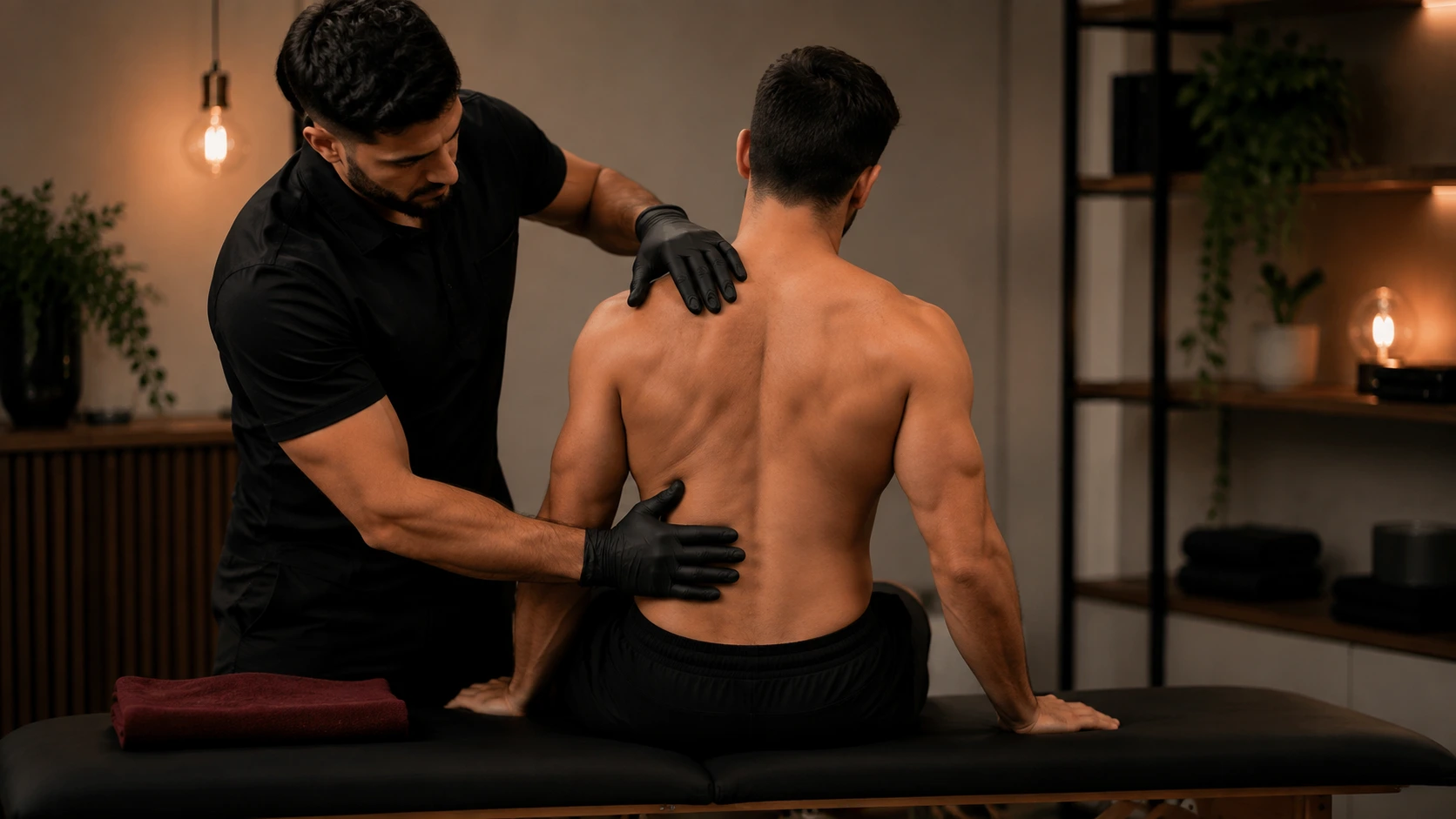
I also check the surrounding areas. The shoulder blade, upper back, chest and opposite side can all change how the movement feels. A useful session may therefore spend time away from the exact point the client initially identified.
For gym clients, the Gym Recovery page explains how the training split is used to guide treatment.
Why stretching the lat is not always the whole answer
A lat stretch can feel excellent because it creates a strong sensation through a large area. That does not mean more stretching is always needed. If the muscle is repeatedly loaded through training or work, the same tight feeling may return as soon as the workload returns.
Some people also force overhead stretches into pain because they assume every restriction needs to be stretched aggressively. If a movement is painful, weak or unstable, assessment may be more appropriate than simply pulling harder.
How treatment can be approached
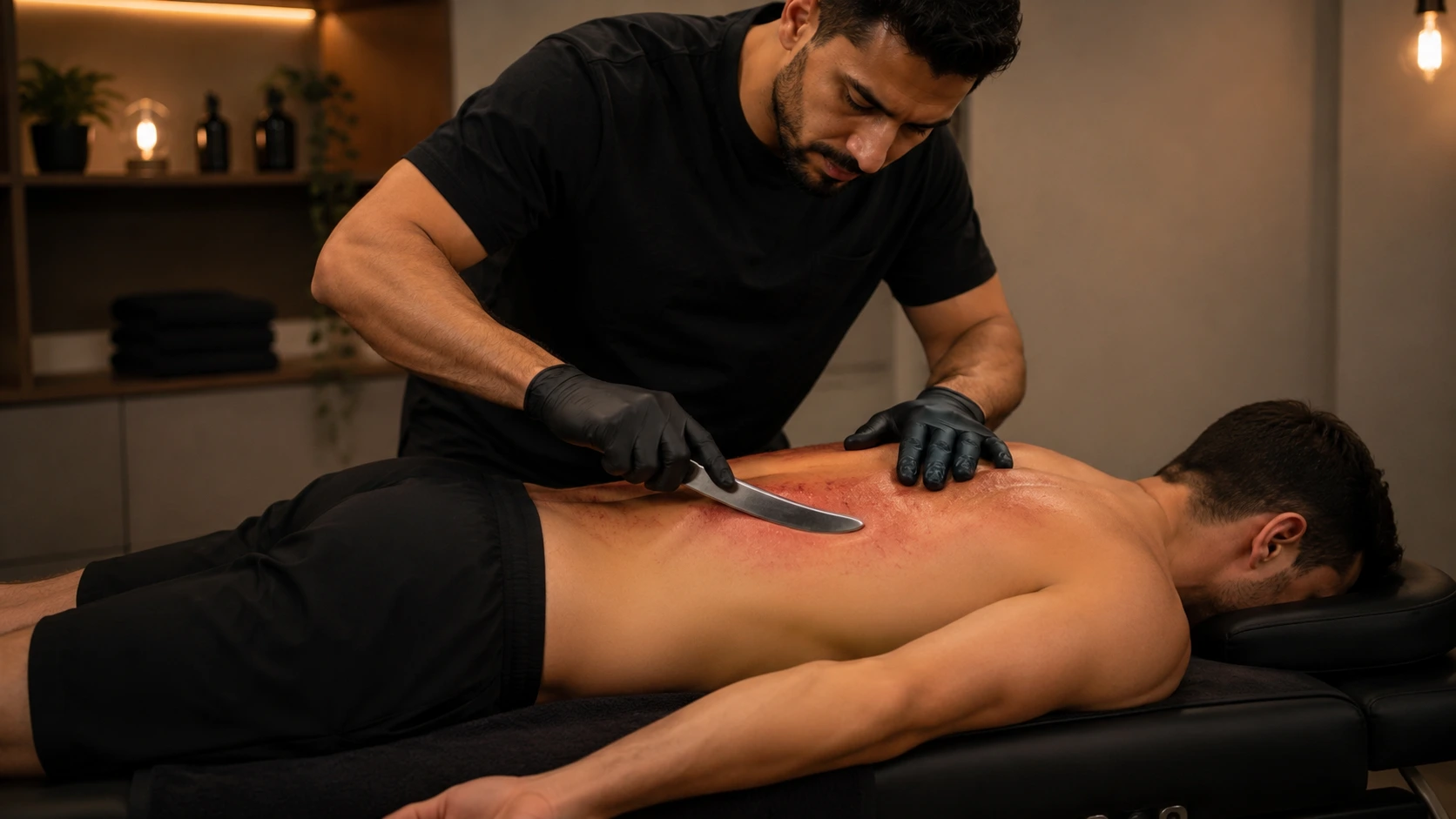
Hands-on work can address the lat and surrounding back muscles directly. Dry cupping can provide a suction-based input where more compression is not useful. IASTM can be used on smaller stubborn regions when appropriate.
The treatment does not have to use every method. The aim is to choose enough input to create a useful change without turning the appointment into a demonstration of techniques.
For several connected training areas, a Sports Recovery session gives more time than a very short standalone treatment.
Why one side can feel tighter
Dominance, unilateral work and previous discomfort can make one lat or shoulder region feel different from the other. If you always row stronger with one side, carry a bag on the same shoulder or rotate the same way at work, the asymmetry may become more noticeable.
Our guide on why one side feels tighter explains how compensation and repeated workload can influence that pattern without turning it into a diagnosis.
When shoulder or back symptoms need assessment first
Persistent weakness, loss of power, a major recent injury, significant swelling, repeated giving way, new numbness or tingling, severe night pain or symptoms that are progressively worsening should be assessed appropriately.
Muscle Recovery is for suitable muscular tension and overload. It is not a replacement for diagnosis or rehabilitation where those are needed.
Common questions
Can tight lats cause shoulder pain?
A loaded or restricted lat can influence how shoulder movement feels, but shoulder pain has many possible causes. It should not automatically be blamed on one muscle.
Can the lats affect hip movement?
The lat connects broadly into the trunk, so some people notice linked tension through the side of the back and pelvis. That is a movement relationship, not proof that the lat has displaced the hip.
Should I stretch or book treatment?
If comfortable stretching and movement help, keep them simple. If the tightness keeps returning and behaves like muscular overload, Muscle Recovery may be useful. Pain, weakness or loss of function may need assessment first.