In this article
One side feeling tighter does not automatically mean that side is the only problem. Dominance, training, work habits, previous pain and compensation can shift load across the body. The sore side is a clue, not the whole assessment.
The short answer
One side can feel tighter because the body is not used symmetrically. Most people have a dominant hand, preferred leg, favourite carrying side, repeated work position or training pattern. Previous discomfort can also make you protect one side and ask the other to do more.
The important part is not deciding which side is “bad”. It is understanding what each side is being asked to do and whether the tightness behaves like normal muscular load or something that needs proper assessment.
Dominance is normal, but repetition can make it noticeable
Perfect symmetry is not realistic. You may kick with one foot, write with one hand, hold a phone on one side, carry tools with the same arm or always rotate towards one screen. Those small preferences become thousands of repetitions over time.
In the gym, the same thing happens. One leg may take more work in a squat. One arm may lead during pressing or pulling. A runner may naturally load one side differently. None of that automatically means injury, but it can help explain why one side feels more worked.
Previous pain can create compensation
If one side has been sore for weeks or months, people often change how they move without deliberately choosing to. They may shorten a stride, shift weight, avoid reaching or use the opposite side more for everyday tasks.
That can create a confusing situation where the original painful side still gets attention, but the opposite side has quietly accumulated extra workload. This is why treating only the side a client points to can sometimes miss part of the picture.
One of the most useful clinic questions is not “which side hurts?” but “what has the other side been doing while you protect it?”
The side that changes colour is not automatically the injured side
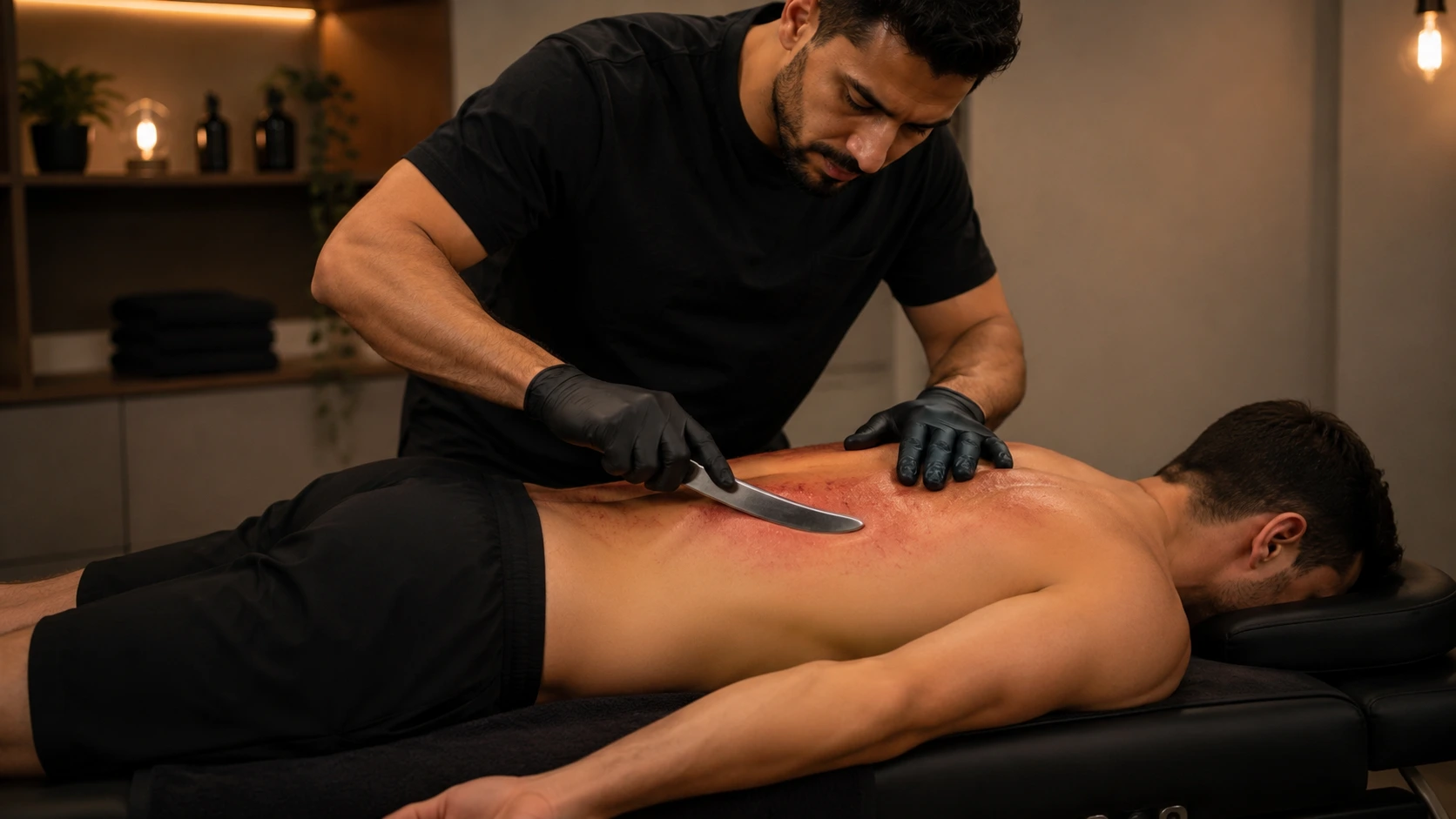
During IASTM muscle scraping or cupping, one side may become redder or mark more quickly than the other. That visual difference can be interesting, but it is not a diagnostic test.
I have seen clients arrive complaining mainly about one side while the opposite side shows the more obvious skin response during scraping. A reasonable explanation can be that the other side has been working harder or responding differently, but the colour alone cannot prove compensation, tissue damage or the cause of pain.
The same rule applies to cupping marks. Darker does not mean worse, and lighter does not mean normal.
Work habits can create very specific asymmetry
Desk work is a good example. One screen may sit to the side. The mouse is usually in the same hand. A phone may be held between one shoulder and the ear. A driver may rotate in one direction repeatedly. A barber, chef or tradesperson may spend hours using one arm for the same task.
These are not dramatic movements, but they are repeated for long periods. If treatment ignores what the person does for the other 40 or 50 hours of the week, the session can only do so much.
Training asymmetry can be more obvious under fatigue
A movement may look fairly even at the start of a session and become less even as fatigue builds. This is one reason a general “I stretch both sides equally” approach does not always solve the problem.
Training history matters. Have you recently increased volume? Changed shoes? Returned after injury? Added unilateral work? Started playing more football or running more hills? The answers help make sense of when the tightness appears.
What I check before deciding what to treat
I want to know where the tightness is felt, what movements bring it on, whether the issue is new or long-standing and what the person needs to do after the appointment. I also check whether one main area is enough or whether connected regions need attention.
For example, somebody describing one-sided lower-back tightness may also have significant glute, hip or lat load. That does not mean those structures caused the pain. It means they are relevant regions to consider within a muscular recovery session.
Our Sports Recovery sessions are built around that wider pattern rather than a fixed treatment sequence.
Why more pressure on the tighter side can backfire
A tight-feeling side can also be sensitive, tired or guarding. If the practitioner responds by simply using maximum pressure, the area may become more irritated without solving anything.
Sometimes the better choice is less pressure, a different method such as dry cupping, work around the area or more time on the side that has been compensating. The treatment intensity should be productive, not a test of pain tolerance.
What you can observe yourself
You do not need a complicated mobility screen. Notice ordinary patterns:
- Do you always stand with weight on one leg?
- Do you carry a child, bag or tools on the same side?
- Does one shoe wear differently?
- Does one side fatigue first in single-leg or single-arm training?
- Does the tightness appear after work, after training or first thing in the morning?
- Did the asymmetry start after an old injury?
These observations are useful information for a practitioner. They are not self-diagnoses.
When one-sided symptoms need assessment first
New weakness, persistent numbness, loss of power, marked swelling, significant trauma, changes in bladder or bowel control, severe unexplained pain or symptoms that are rapidly worsening need appropriate assessment rather than routine muscle work.
If it behaves like ordinary training or work-related tightness, a focused Muscle Recovery session can be a sensible starting point.
Common questions
Does one tight side mean I have a muscle imbalance?
Not necessarily. “Muscle imbalance” is often used too broadly. Dominance, workload, fatigue and previous discomfort can all make one side feel different without proving a specific diagnosis.
Should the practitioner treat both sides?
Sometimes. The main complaint still matters, but checking the opposite side can be useful when the history suggests compensation or asymmetric workload.
Why did the opposite side go red during scraping?
Skin response can differ between sides because of pressure, sensitivity and local response. It may fit a workload pattern, but redness alone cannot diagnose compensation or injury.