In this article
Abdus Shahid Lead Practitioner · Herts Cupping · St Albans 10 Ways Hijama Cupping Can Help You Feel Better Quick Answer Hijama helps many clients feel lighter, looser and more relaxed, especially when...
Reported experiences rather than an evidence review
This older article now focuses on the ways clients commonly describe feeling after Hijama. For the evidence, safety, limitations and who should avoid wet cupping, use the dedicated Benefits of Hijama guide.
Read the evidence and safety guide → AS Abdus Shahid Lead Practitioner · Herts Cupping · St AlbansQuick Answer
Hijama helps many clients feel lighter, looser and more relaxed, especially when they are dealing with muscular tension, heaviness, training load or general stiffness. It is also an important Sunnah practice for many Muslim clients. It should not be presented as a cure, a medical detox, or a replacement for medical care. Results vary from person to person.
Hijama cupping therapy is a traditional wet cupping practice where cups create suction on the skin and tiny superficial scratches allow a small amount of blood to be drawn. Many people book it because they feel tight, heavy, restricted or run down. Others book it because it is part of their Sunnah practice.
I want to be clear from the start. Hijama has real value for many people, but it should not be exaggerated. I do not describe it as a cure for illnesses. I do not describe it as a medical detox. I describe it as a traditional complementary therapy that supports recovery, wellbeing and physical tension for many clients when used properly.
10 Realistic Ways Hijama Can Help
The points below are based on common client experiences, traditional use and the way cupping affects soft tissue. They are common outcomes and client-reported benefits, but they are not guaranteed for every person.
1Supports muscle tension relief
Many clients come in with tightness around the back, neck, shoulders or legs. The suction from cupping lifts and decompresses tissue, which can feel different to massage because it works by pulling tissue upward rather than pressing down into it.
2Helps many clients feel lighter
One of the most common things people say after Hijama is that they feel lighter or less heavy. This is one of the most common client-reported experiences, especially after back, shoulder or upper body sessions.
3Supports recovery from training load
Gym-goers, runners and active clients often use Hijama as part of a wider recovery routine. It is often used for the feeling of heaviness, tightness and restriction that builds up from repeated training, especially when combined with dry cupping, massage or IASTM.
4Supports local blood flow
Cupping increases local blood flow towards the treated area. This is part of why the marks appear and why the area can feel different afterwards. This is useful to understand clearly: increased local circulation can support recovery and tissue response, but it does not mean Hijama cures medical conditions.
5Helps with physical stress tension
Stress often shows up physically as tight traps, stiff shoulders, headaches, jaw tension or upper back heaviness. Hijama is not a treatment for anxiety or mental health conditions, but some clients find that releasing physical tension helps them feel calmer and more settled.
6Supports Sunnah-based wellbeing
For Muslim clients, Hijama is not only physical. It is also connected to the Sunnah of the Prophet Muhammad ﷺ. Many clients book because they want to practise Hijama in a private, respectful and hygienic clinic setting.
7Can be targeted to specific areas
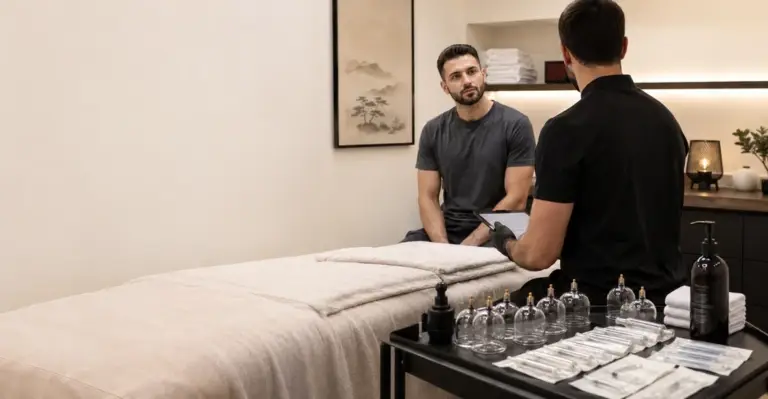
Hijama does not need to be random or general. The session can be focused on the areas that actually feel restricted, such as upper back, lower back, shoulders, hamstrings or calves. A short consultation helps decide where the cups should go.
8May help when massage alone has not shifted the issue
Massage presses down into tissue. Cupping lifts tissue upward. For some people, that different mechanism is exactly what they have been missing, especially when tightness keeps returning in the same place.
9Encourages better body awareness
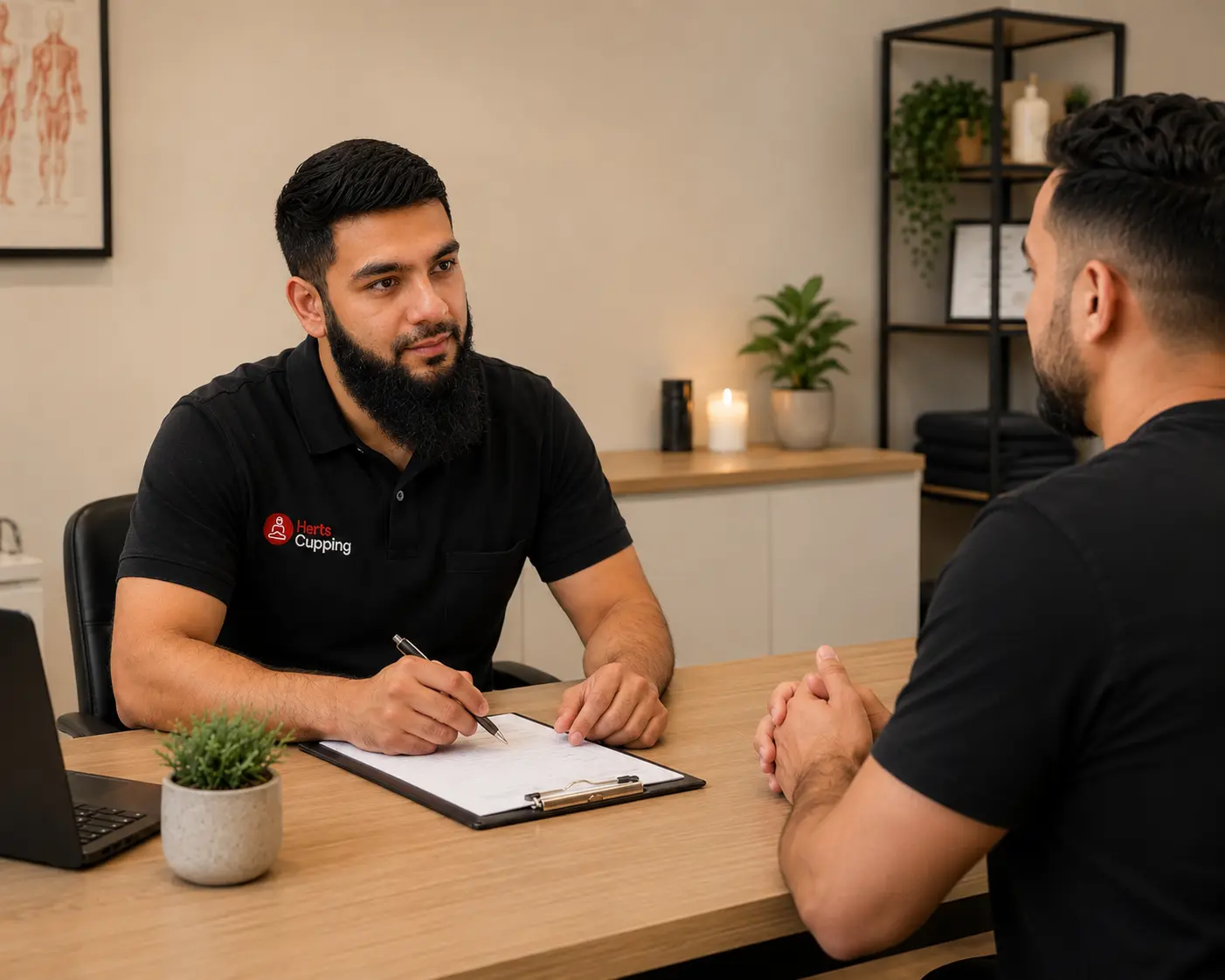
A proper Hijama session includes a conversation about what you are feeling, where tension sits, what you have tried before and how your body responds. That awareness often helps clients make better choices around recovery, rest and training.
10Can be part of a wider wellbeing routine
Hijama works best when it sits alongside the basics: sleep, hydration, movement, sensible training and medical care where needed. It is not a magic fix, but for many people it is a valuable part of their routine.
What I Would Not Claim About Hijama
This is important because a lot of online Hijama content goes too far. I would not say Hijama cures illnesses, removes every toxin, fixes the immune system, treats asthma, treats digestive disease, cures skin conditions or replaces a GP, physiotherapist or specialist.
There are traditional explanations around stagnant blood and release. I respect that language. But in modern health terms, the body already has organs responsible for processing waste. So I avoid making medical detox claims. Hijama does not need exaggerated claims to be beneficial.
My approach: respect the tradition, explain the treatment clearly, keep the clinic standards high and avoid claims that cannot be backed up.
What Hijama Is Most Commonly Used For Here
At Herts Cupping in St Albans, most people book Hijama for one of five reasons:
- Sunnah Hijama practice
- Back, neck or shoulder tension
- General heaviness or feeling restricted
- Training recovery and sports-related tightness
- Wanting a deeper option than dry cupping or massage
If something sounds medical, severe, unexplained or worsening, I will always tell you to speak to a healthcare professional first. Hijama can support general wellbeing, but it is not a diagnostic or medical treatment service.
Hijama vs Dry Cupping
Dry cupping uses suction only. No incisions. Hijama is wet cupping, where tiny superficial scratches are made and a small amount of blood is drawn into the cups.
Dry cupping
Best for first-timers, gym recovery, general tightness and people who want suction therapy without incisions.
Hijama
Best for clients seeking wet cupping, Sunnah practice, deeper traditional treatment or a more complete cupping session.
Is Hijama Right for Everyone?
No. Hijama may not be suitable for people on blood thinners, people with bleeding disorders, severe anaemia, active infection, certain skin conditions, uncontrolled diabetes, pregnancy unless appropriately assessed, or anyone who feels unwell on the day.
That is why suitability screening matters. If I think Hijama is not right for you, I will say so. Sometimes dry cupping, massage, IASTM or simply speaking to your GP first is the better answer.
Related Pages
- Hijama in St Albans - session options and what to expect
- Benefits of Hijama - evidence, safety and suitability
- Dry cupping vs Hijama - how to choose the right session
- Cupping vs sports massage - suction versus pressure explained
- Book an appointment - view available sessions
Common Questions
What are the main benefits of Hijama cupping?
People commonly book Hijama for muscle tension, general heaviness, Sunnah practice, recovery support and a sense of relaxation. Results vary, but these are exactly the reasons many clients continue to book it. Hijama should not be described as a cure for medical conditions.
Does Hijama remove toxins?
In traditional Hijama language, people often speak about stagnant blood and release. In modern health terms, Hijama should not be described as a medical detox. The body already has organs that process waste. Hijama is better understood as a traditional wet cupping therapy that supports wellbeing and recovery for many clients.
Can Hijama help with pain?
Hijama is commonly used by people with general muscular tension or tightness, especially around the back, neck and shoulders. It is not a replacement for medical diagnosis or treatment, especially for severe, unexplained or worsening pain.
Is Hijama good for stress?
Many clients feel calmer or more relaxed after Hijama. It can help with physical tension linked to stress, but it should not be presented as a treatment for anxiety, depression or any diagnosed mental health condition.
Is Hijama Sunnah?
Yes. Hijama is an established Sunnah practice in Islamic tradition. Many Muslim clients book Hijama for religious and traditional reasons as well as general wellbeing.
Book Hijama in St Albans
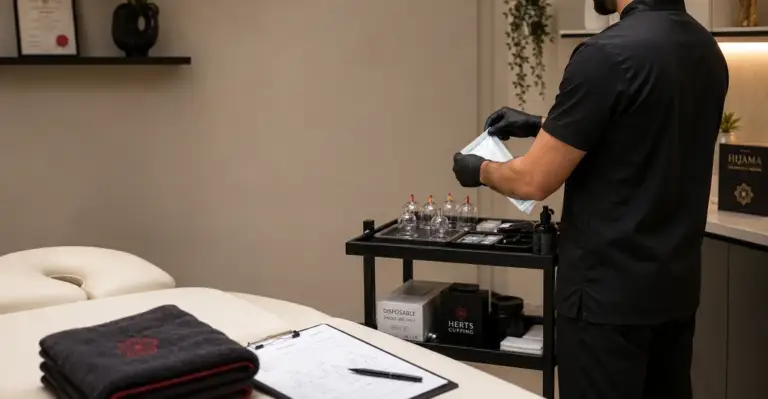
Private one-to-one Hijama sessions with clear advice, sterile single-use equipment and honest suitability checks.
Book a Session Message on WhatsApp