In this article
Abdus Shahid Lead Practitioner · Herts Cupping · St Albans Hijama and Cupping for Neck Pain in St Albans Quick Answer Cupping is commonly used for recurring neck tension because it lifts and...
Wet cupping for neck and shoulder tension
This article is now the Hijama-specific explainer. For the broader St Albans treatment route covering hands-on recovery, dry cupping and IASTM, use the dedicated Neck & Shoulder page.
See the neck and shoulder treatment guide AS Abdus Shahid Lead Practitioner · Herts Cupping · St AlbansQuick Answer
Cupping is commonly used for recurring neck tension because it lifts and decompresses soft tissue rather than pressing down into it. For long-standing neck tightness, Hijama may offer a deeper wet cupping option where suitable. Neck pain linked to injury, numbness, weakness, pins and needles, balance changes, fever or severe headache should be assessed medically first.
Neck pain is one of the most common reasons people come to Herts Cupping. Usually it has been there for weeks or months. It comes and goes, or sits in the same spot no matter what has been tried.
Massage helps for a few days. Stretching helps temporarily. Then the same stiffness is back. In many cases, the issue is not only the surface muscle. The deeper connective tissue and fascial restriction are still holding the pattern.
Why Neck Pain Keeps Coming Back
The neck rarely works on its own. It is connected to the upper back, shoulders, base of the skull, traps, jaw and posture. If one area becomes restricted, the surrounding areas start compensating.
This is why people often feel pain in one specific neck spot, but the real pattern includes the upper traps, shoulder blades and upper back. Treating only the painful point can give short-term relief, but the wider tension pattern stays in place.
How Cupping Reaches What Massage Does Not
Massage compresses tissue from above. Cupping does the opposite. It lifts and decompresses tissue using suction. That difference matters for neck pain because a lot of recurring stiffness sits in the fascial layer, not just the surface muscle.
For chronic neck tension, this lifting effect can shift tightness that standard pressure work has not fully moved. Many clients describe it as a deep release without the same heavy pressure of massage.
Where Hijama Fits
Hijama goes further than dry cupping. It uses the same suction, then tiny superficial scratches are made and the cups are reapplied to draw a small amount of blood from the treated area.
For neck and upper back tension that has been sitting for months, Hijama can be useful where suitable. It is not about treating a medical neck condition. It is about working through long-standing tension, heaviness and restricted tissue in a more complete way.
At Herts Cupping: we do not rush straight into wet cupping around the neck. We assess the pattern first and decide whether dry cupping, Hijama, IASTM or manual therapy makes more sense.
Neck Pain and Tension Headaches Often Come Together
A lot of recurring tension headaches start in the neck, not the head. The sub-occipital muscles at the base of the skull and the upper traps tighten under sustained posture, screen time, stress or training load. That tightness can refer pain upwards into the head.
When the neck and upper back are treated together, the result is often better than treating only the head or only the neck. They are connected, so the session needs to respect that connection.
What This Is Commonly Used For
- Stiff neck with restricted rotation, especially in the morning
- Upper trap tension that builds through the week
- Neck pain from desk work or long periods of screen time
- Headaches starting at the base of the skull or behind the eyes
- Shoulder and neck tightness from training or carrying load
- Upper back tightness that pulls into the neck
When Neck Pain Needs Medical Advice First
Cupping and Hijama are not appropriate for every type of neck pain. If your neck pain is acute, followed a recent injury, or is accompanied by worsening numbness, weakness or pins and needles into the arm, speak to your GP before booking.
NHS Inform also advises urgent GP advice if neck pain is linked with worsening numbness, pins and needles or weakness in the arms, balance or walking problems, or a severe headache. NHS guidance also says neck pain or stiffness that does not go away after a few weeks should be assessed.
Do not book bodywork first if you have severe neck pain after an injury, arm weakness, worsening numbness, balance changes, fever, feeling very unwell, or a sudden severe headache. Get medical advice first.
Hijama or Dry Cupping for Neck Pain?
| Option | Best for | How I usually position it |
|---|---|---|
| Dry cupping | First-timers, general neck tightness, no scratches | A good starting point for neck and upper back tension |
| Hijama | Long-standing tension, Sunnah practice, deeper wet cupping | Useful where suitable after screening and consultation |
| Targeted Deep Tissue | Neck, shoulder and upper back patterns together | Best when the issue is connected to posture, training or multiple areas |
What a Session Looks Like
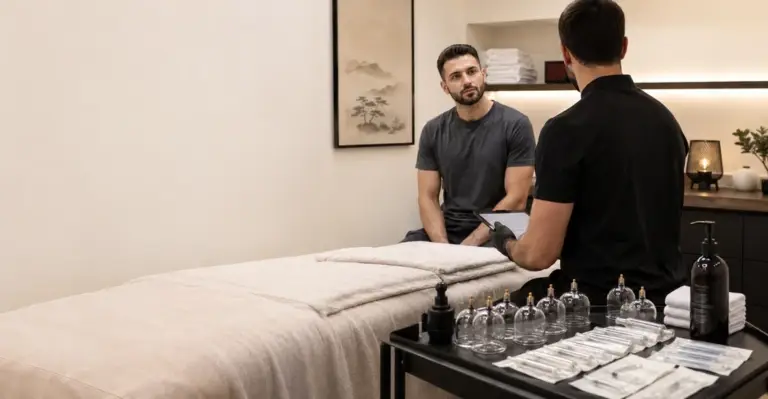
Every session starts with a consultation. I ask where the pain sits, how long it has been there, what triggers it, what has helped before and whether there are any red flags that need medical attention first.
For recurring neck tension, the session usually focuses on the neck, upper traps, upper back and shoulder blade area together. Depending on suitability, this may involve warm-up massage, dry cupping, Hijama, IASTM muscle scraping or a combined recovery session.
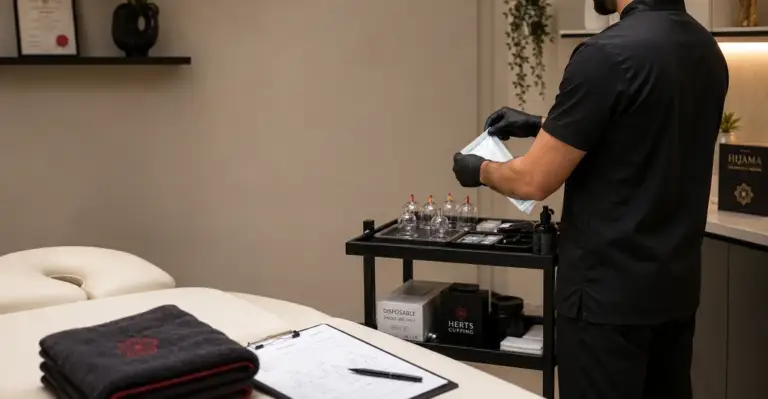
Private clinic in St Albans. One client at a time. All Hijama equipment is sterile and single-use.
Related Pages
- Hijama in St Albans - session options and what to expect
- Cupping and massage treatment - combined recovery sessions
- IASTM muscle scraping - targeted soft tissue work
- Cupping vs sports massage - how suction differs from pressure
- Book an appointment - view available sessions
Common Questions
Can cupping help neck pain?
Cupping is commonly used for neck and upper back tension because it lifts and decompresses soft tissue rather than pressing down into it. It is most suitable for muscular tightness and posture-related stiffness, not serious or unexplained neck pain.
Is Hijama suitable for neck pain?
Hijama may be suitable when neck pain is linked to long-standing muscular or fascial tension. It should not be used directly on areas that need medical assessment, and every client is screened first.
When should I see a GP for neck pain?
Seek medical advice if neck pain follows an injury, is severe, does not improve after a few weeks, is linked with worsening numbness, pins and needles or weakness in the arm, balance problems, fever or a severe headache.
Should I book dry cupping or Hijama for neck tension?
Dry cupping is usually a good starting point for first-timers. Hijama may be more suitable for long-standing tension or clients specifically seeking wet cupping or Sunnah practice.
Do neck pain and tension headaches connect?
They often can. Tension around the upper traps, base of the skull and upper back can refer pain upwards into the head. That is why the neck and upper back are usually treated together.
Book Neck Pain Support in St Albans
Not sure whether to book Hijama, dry cupping or a recovery session? Message us and I’ll point you to the right option.
Book a Session Message on WhatsApp