In this article
To find a good Hijama or cupping practitioner near you, look beyond price and distance. Check hygiene, consultation, training, reviews, communication, aftercare and whether the practitioner makes realistic claims. For Hijama wet cupping, sterile single-use equipment, proper screening and safe disposal matter even more because the treatment involves...
Start with the type of cupping you actually want
Before choosing a practitioner, make sure you understand what service you are booking. People often use the word cupping for everything, but the treatments are not all the same.
Dry cupping
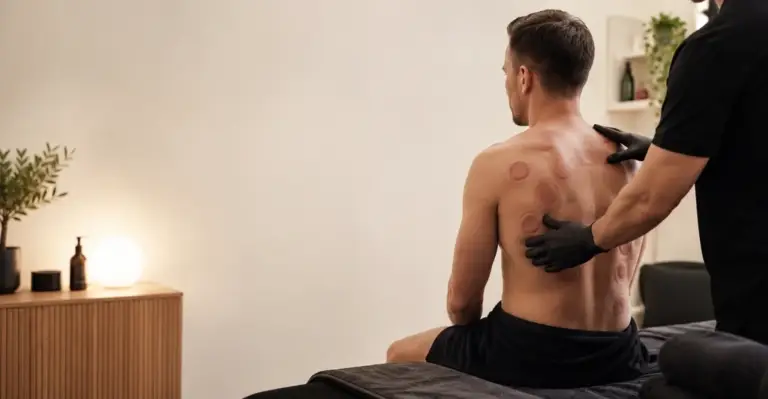
Suction only. no scratches and no blood. Often used for muscle tension, recovery and tight areas.
Fire cupping
Glass cups and heat are used to create suction. Traditional in style, but still a dry cupping method.
Hijama wet cupping
Suction plus small superficial scratches to the surface of the skin. This requires stricter hygiene, screening and aftercare.
Deep tissue sessions
Cupping may be combined with massage, IASTM scraping and, where suitable, Hijama.
If a practitioner cannot clearly explain the difference between these, that is not a good sign. You should never feel like you are booking something without understanding what will happen.
Check the hygiene before anything else
This is the biggest point for me. A treatment room can look nice online, but hygiene is about systems, not just aesthetics.
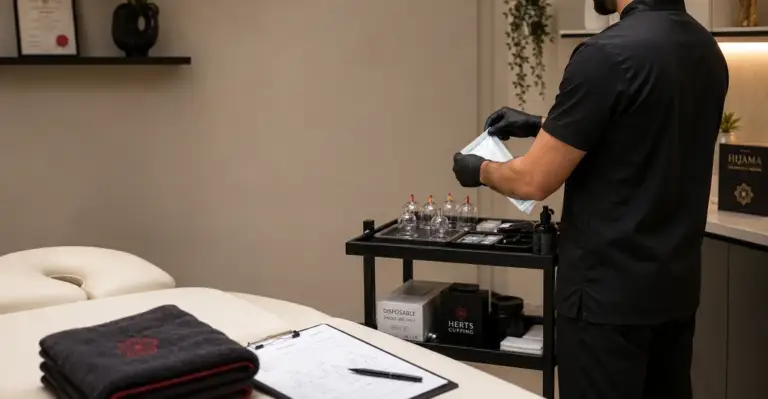
For Hijama, ask whether cups, blades or lancets are sterile and single-use. They should not be reused between clients. The skin should be prepared properly, the practitioner should use gloves, surfaces should be clean and used sharps should be disposed of safely.
Simple rule: if a practitioner gets defensive when you ask about hygiene, do not ignore that. Clean practice should be easy to explain.
A good practitioner should screen you first
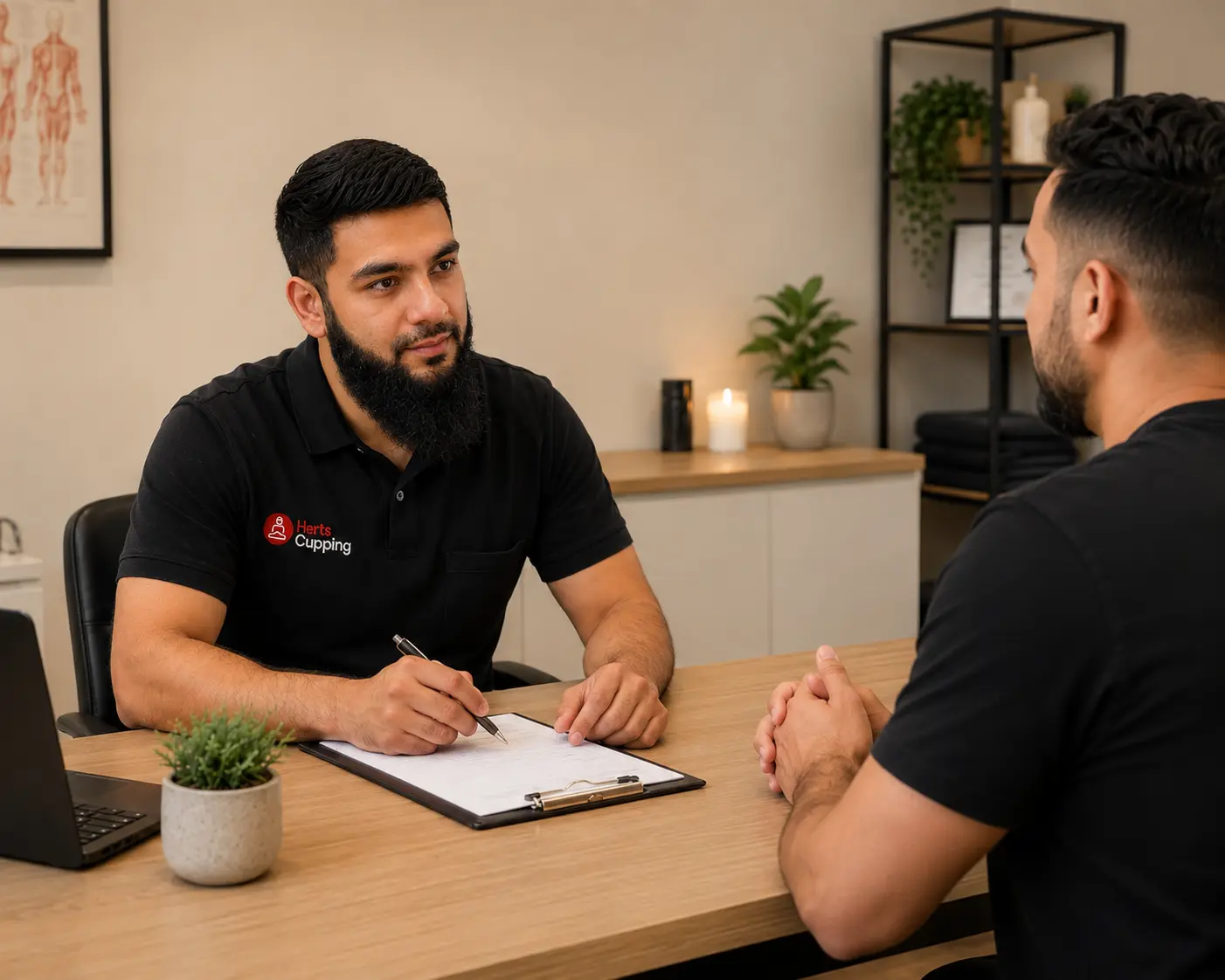
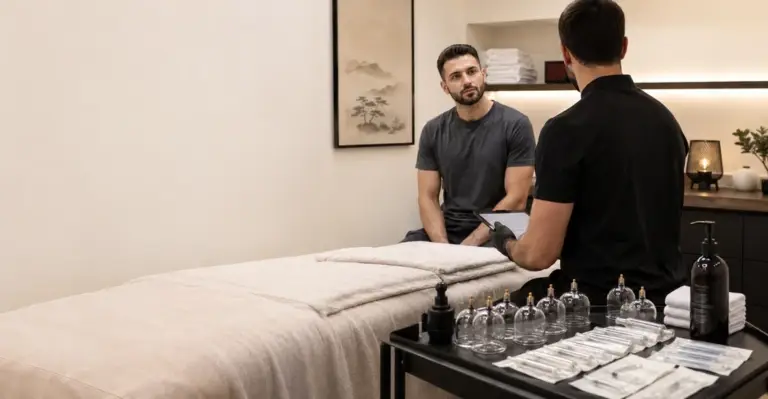
Cupping is not suitable for everyone at all times. Hijama especially needs proper screening. A practitioner should ask about your health, medication and why you are booking before they start treatment.
- Are you taking blood-thinning medication?
- Do you faint easily or feel light-headed with blood?
- Do you have anaemia, bleeding issues or active infection?
- Are you pregnant or could you be pregnant?
- Do you have skin irritation, wounds or active skin problems in the area?
- Have you recently had surgery, injections or a significant injury?
If none of these questions are asked, I would be cautious. Proper screening is not there to make the process complicated. It is there to protect you.
Read the reviews properly
Reviews matter, but do not just look at the number. Read what people actually say. The most useful reviews usually mention details such as cleanliness, explanation, comfort, professionalism, privacy and how the client felt during and after the session.
A review saying “everything was explained clearly and the clinic was very clean” tells you more than a vague review that only says “good service”. You are looking for patterns. If multiple people mention the same good points, that is usually a positive sign.
Be careful with miracle claims
Hijama is a Sunnah practice and many people benefit from it physically. Cupping may support muscle tension, recovery and general wellbeing. But it should not be sold as a guaranteed cure for every condition.
Be careful if someone claims cupping will cure serious illness, diagnose your internal health from cup marks, remove every toxin, fix long-standing pain in one session, or replace medical care. That kind of language might sound confident, but confidence is not the same as competence.
Clinic Reality
The safest practitioner is not always the one who says yes to everything
A professional practitioner should be willing to say no, delay treatment or advise medical review when needed. That is not bad service. That is judgement.
If your symptoms are severe, worsening, unexplained or linked to a known medical issue, cupping may still have a place later, but it should not replace the right assessment.
Questions to ask before booking
You do not need to interrogate someone, but a few simple questions can tell you a lot.
| Question | What a good answer sounds like |
|---|---|
| Do you screen clients before Hijama? | Yes. We ask about medication, health conditions, suitability and what you are booking for. |
| Is your equipment single-use? | For Hijama, any sharps must be sterile and single-use. Cups should be clean and handled safely. |
| What should I expect afterwards? | They should explain marks, soreness, tiredness, hydration, shower guidance, exercise and when to contact them. |
| Which session is right for me? | They should ask about your goal first, then recommend Hijama, dry cupping or a recovery session based on that. |
Do not choose only by price
Price matters. I understand that. But with Hijama and cupping, the cheapest option is not always the best value.
A proper session includes consultation, preparation, clean equipment, treatment time, aftercare and the judgement to know when something is not suitable. If a session is extremely cheap, ask yourself what may be missing. Is it rushed? Is screening included? Is the setup professional? Are you getting aftercare?
That does not mean expensive automatically means better. It means price should be considered alongside standards. I explain this more fully in our guide to how much cupping costs in the UK.
For clients in St Albans and Hertfordshire
If you are searching for Hijama near St Albans, cupping near me, cupping therapy in Hertfordshire or a professional cupping clinic outside London, the same checks still apply. Location helps, but standards matter more.
Herts Cupping is based in St Albans and sees clients from Harpenden, Hatfield, Hemel Hempstead, Watford, Borehamwood, Potters Bar, Welwyn Garden City, Radlett and surrounding areas. Sessions are private, one-to-one and built around the reason you are booking, not a rushed template.
If you want Sunnah Hijama or general wellbeing, you may want our Hijama service. If your issue is muscular, training-related or keeps returning, you may be better suited to a cupping and recovery session. If you are unsure, message first and explain what you are dealing with.
Quick checklist before you book
- They explain the type of cupping clearly.
- They screen you before treatment.
- They use clean, appropriate equipment.
- They do not make exaggerated medical claims.
- They have genuine reviews with specific details.
- They explain aftercare properly.
- You feel comfortable asking questions.
- They are willing to say when cupping is not suitable.
Related reading
- Cupping therapy in Hertfordshire
- Hijama in St Albans
- How much does cupping cost in the UK?
- What are the downsides of cupping therapy?
- Book a session
FAQs about choosing a Hijama or cupping practitioner
How do I find a good Hijama or cupping practitioner near me?
Look for a practitioner who explains the treatment clearly, screens you properly, uses clean equipment, avoids exaggerated claims, has genuine reviews and gives clear aftercare. For Hijama, sterile single-use equipment and safe disposal are especially important.
What should I check before booking Hijama?
Check whether the practitioner asks about medication, blood-thinners, fainting history, pregnancy, skin conditions and general suitability. They should explain the process, possible marks, aftercare and when Hijama should be avoided.
Are reviews important when choosing a cupping practitioner?
Yes. Reviews help you understand how previous clients experienced the service. Look for reviews that mention cleanliness, explanation, professionalism, comfort and whether the client felt looked after.
Should I choose the cheapest cupping practitioner?
Not automatically. Price matters, but the cheapest option is not always the best choice. A proper session includes consultation, setup, treatment time, clean equipment and aftercare. Very cheap sessions can sometimes be rushed or poorly explained.
What are warning signs of a poor cupping practitioner?
Warning signs include no consultation, vague answers about hygiene, reused equipment, pressure to book repeated sessions, miracle claims, no aftercare guidance and dismissing safety questions.
Want to check what session is right for you?
Book online, or send a WhatsApp message first if you are unsure whether Hijama, dry cupping or a recovery session makes most sense.
Book Online WhatsApp Us