In this article
Abdus Shahid Lead Practitioner · Herts Cupping · St Albans Hijama for Back Pain Quick Answer Hijama may help with recurring back tension, stiffness and heaviness because it works differently from massage. Massage...
Hijama-specific back guidance
This article focuses on when someone specifically wants Hijama for a tight or uncomfortable back. The main Back Pain page is the broader local route covering massage-led recovery, dry cupping and IASTM as well.
See the main back-pain treatment guide AS Abdus Shahid Lead Practitioner · Herts Cupping · St AlbansQuick Answer
Hijama may help with recurring back tension, stiffness and heaviness because it works differently from massage. Massage presses into the tissue. Dry cupping lifts and decompresses it. Hijama goes a step further by using wet cupping with small superficial scratches to the surface of the skin to support a deeper release. It is not suitable for every type of back pain, so proper screening matters.
Most people searching for Hijama for back pain already know the basics. They have tried massage. It helped for a few days, then the pain came back. They want something that goes deeper.
Hijama does go deeper. That is not a marketing line. It works differently from dry cupping and differently from massage, and for recurring back pain specifically, that difference matters.
Why Hijama Works Differently for Back Pain
Dry cupping lifts and decompresses the tissue. That alone can shift tension that massage has not moved. Hijama goes a step further. small superficial scratches to the surface of the skin are made, and the cup draws out a small amount of blood from the area.
In traditional Hijama practice, this is understood as helping release built-up stagnation and pressure. In modern terms, I would describe it more carefully as wet cupping that combines suction, local tissue decompression and a controlled superficial bloodletting process. Either way, the effect is different from simply pressing into the muscle.
For back pain that keeps returning in the same spot, this deeper release is often what clients are looking for. The surface muscle gets worked by standard treatment. Hijama may help address the layer underneath it.
The Sunnah Basis for Hijama on the Back
Hijama is a Sunnah of the Prophet Muhammad ﷺ. It is mentioned in authentic narrations and has long been practised by Muslims as part of wellbeing and self-care.
The back, upper back and between the shoulder blades are among the traditional areas people commonly associate with Sunnah Hijama. They are also among the most common reasons people come for Hijama today.
For clients following Sunnah practice, a back session can cover both the traditional points and the areas where physical tension is sitting. The spiritual and physical intentions can be present in the same session.
What Types of Back Pain May Respond to Hijama?
Hijama is most relevant where the issue feels like recurring tension, stiffness, heaviness or restriction rather than a new injury or serious medical problem.
- Lower back tension that keeps returning after massage or physio
- Upper back and between-the-shoulder-blades tightness
- Back tightness linked to training load or physical work
- Long-standing stiffness with no clear structural cause
- Sunnah Hijama on traditional back points
- General heaviness or restriction across the back
Important: Hijama is not suitable for all types of back pain. If your pain is acute, severe, accompanied by numbness or weakness in the legs, linked to an injury, or related to a diagnosed structural condition, speak to your GP or physiotherapist before booking.
What Is Included in Every Session?
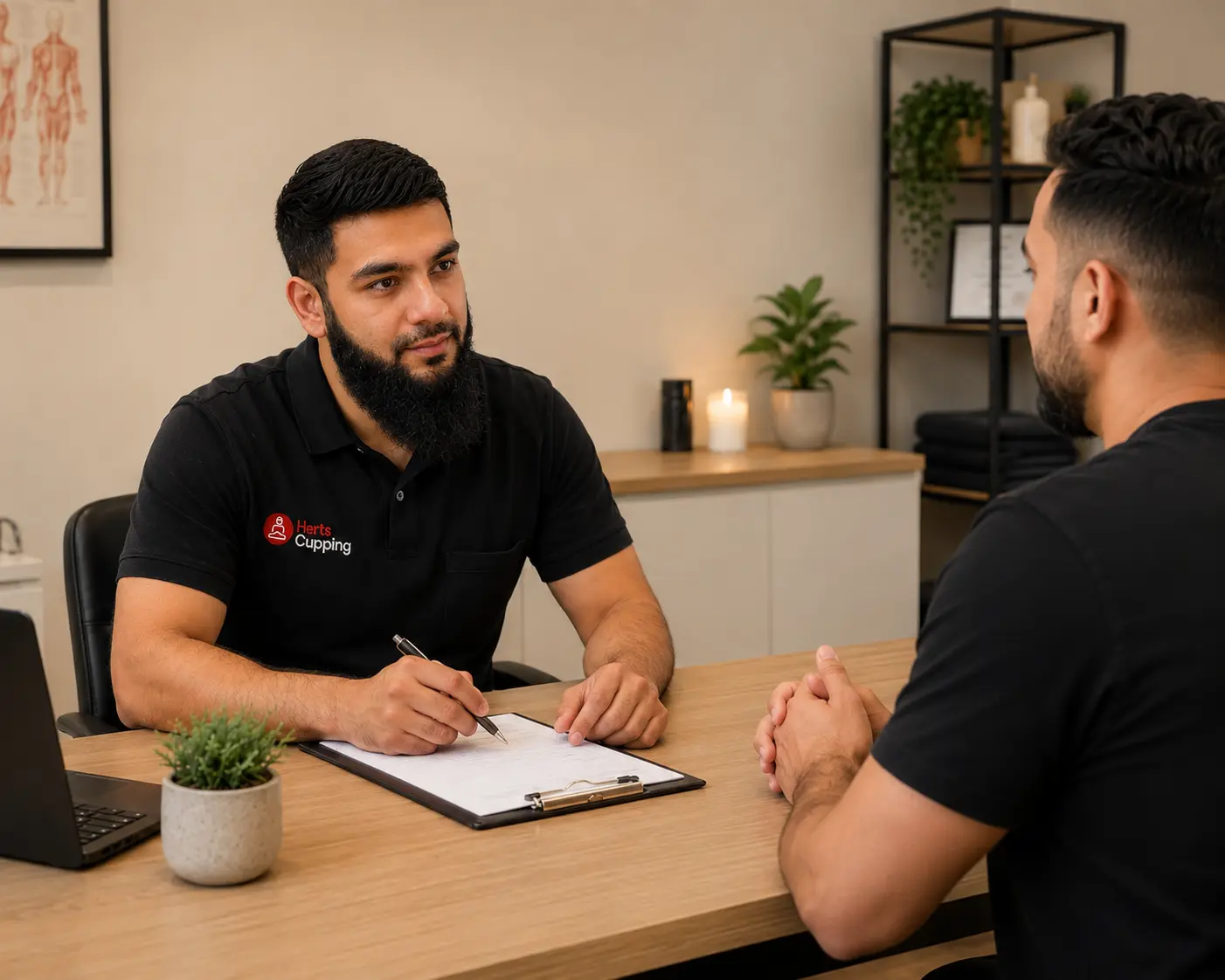
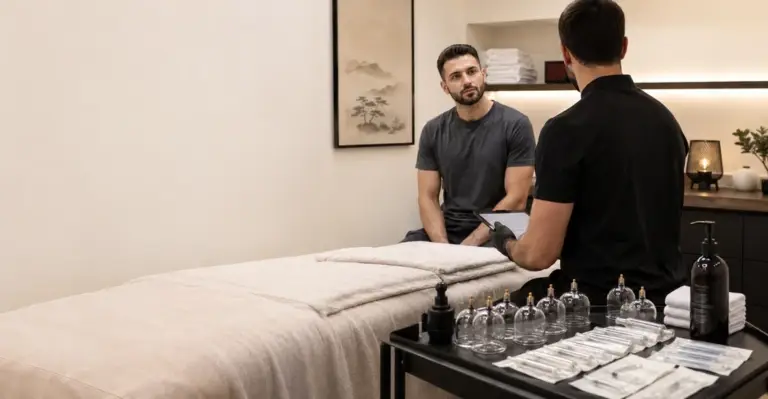
Every session starts with a consultation. For back pain, I will ask where it sits, how long it has been there, what makes it worse, what helps, and what you have already tried. The session is built around that.
We start with a warm-up massage to ease the tissue before the Hijama points are worked. Free dry cups are also placed on adjacent tight areas where suitable, so the session is not limited to only the wet cupping points.
Included as Standard
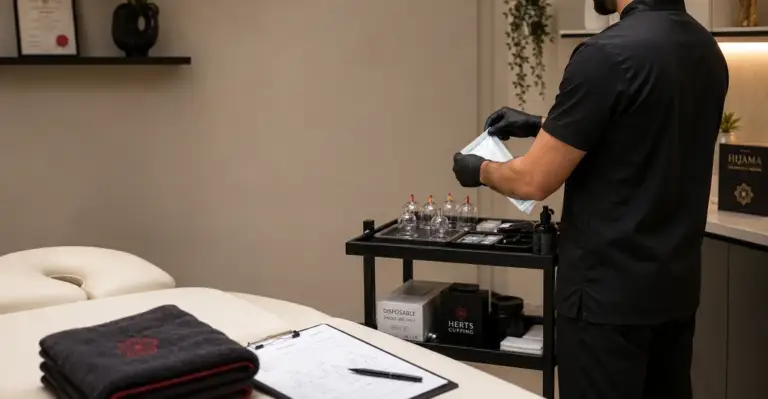
Consultation, suitability screening, warm-up massage, sterile single-use equipment, Hijama wet cupping, free dry cups where appropriate and clear aftercare before you leave.
Clinic Standard
Private one-to-one appointment in St Albans. Equipment is sterile, single-use and disposed of properly after each session.
How Often Should You Come for Back Pain?
For persistent back tension, many clients find sessions every four to six weeks make a meaningful difference over time. Some come monthly. Others come once, the pain shifts, and they return only when tension builds again.
We do not sell packages or push repeat bookings. If one session is enough for what you came in with, I will tell you.
When Hijama Alone Is Not Enough
For back pain that needs more than cupping alone, we can combine Hijama with IASTM muscle scraping and manual deep tissue work in a single session. Many clients with training-related or long-standing back tightness find the combined approach gives better results than cupping on its own.
Hijama can work alongside physiotherapy or chiropractic care. It does not replace medical diagnosis or treatment. For complex, worsening or unexplained pain, speak to your GP first.
Related Pages
- Hijama in St Albans - standalone Hijama and Sunnah wet cupping sessions
- Cupping for back pain - dry cupping for recurring back stiffness
- Cupping and massage treatment - combined recovery sessions
- IASTM muscle scraping - targeted soft tissue work
- Sports recovery therapy - for active clients and gym recovery
Common Questions
Can Hijama help with back pain?
Hijama may help people with recurring back tension, stiffness and heaviness, especially where the same area keeps tightening after massage. It is not a replacement for medical assessment and results vary.
Is Hijama better than massage for back pain?
It depends on the issue. Massage presses down into the tissue, while Hijama uses suction and wet cupping to work differently. For recurring tightness, some clients find Hijama more effective than massage alone.
Where is Hijama done for back pain?
Common areas include the upper back, between the shoulder blades, lower back and areas around the back where tension is sitting. The exact points are chosen after consultation.
Is Hijama suitable for all back pain?
No. If back pain is severe, acute, linked to injury, accompanied by numbness or weakness, or related to a diagnosed structural condition, speak to a GP or physiotherapist first.
How often should I have Hijama for back pain?
For persistent back tension, many clients book every four to six weeks. Some come once and return only when tension builds again. We do not push unnecessary repeat sessions.
Book Hijama for Back Pain in St Albans
Private one-to-one Hijama and recovery sessions. Message us if you are unsure which option fits your situation.
Book a Session Message on WhatsApp