In this article
Headaches with Hijama Cupping
Do not assume every headache is muscular
This legacy article is retained for search history but no longer frames Hijama as a cure for headaches. Where headaches appear alongside neck and shoulder tension, the physical pattern can be discussed; new, severe or unexplained headaches need appropriate medical assessment.
See the neck and shoulder tension guide → .hc-blog-post { max-width: 780px; margin: 0 auto; padding: 10px 20px 60px 20px; font-family: 'Inter', sans-serif; color: #333; box-sizing: border-box; } .hc-blog-post * { box-sizing: border-box; } .hc-blog-post h1,.hc-blog-post h2,.hc-blog-post h3,.hc-blog-post h4,.hc-blog-post strong,.hc-blog-post .hc-blog-answer-label,.hc-blog-post .hc-blog-links-label,.hc-blog-post summary,.hc-blog-post .hc-blog-btn { font-family: 'Montserrat', sans-serif; } .hc-blog-post p { font-size: 16px; line-height: 1.8; color: #444; margin: 0 0 20px 0; } .hc-blog-post h1 { color: #111; font-size: 34px; line-height: 1.1; font-weight: 800; text-transform: uppercase; margin: 0 0 14px 0; letter-spacing: -0.5px; } .hc-blog-post h2 { color: #111; font-size: 22px; font-weight: 800; text-transform: uppercase; letter-spacing: 0.3px; margin: 42px 0 14px 0; line-height: 1.2; } .hc-blog-post h3 { color: #111; font-size: 17px; font-weight: 800; text-transform: uppercase; letter-spacing: 0.3px; margin: 28px 0 10px 0; line-height: 1.25; } .hc-blog-post a { color: #7C2D2A; font-weight: 700; text-decoration: none; } .hc-blog-post a:hover { text-decoration: underline; } .hc-blog-meta { display: flex; align-items: center; gap: 14px; padding: 14px 0; margin: 0 0 28px 0; border-bottom: 1px solid #E8E3DA; flex-wrap: wrap; } .hc-blog-avatar { width: 42px; height: 42px; border-radius: 50%; background: #7C2D2A; color: #fff; font-size: 14px; font-weight: 800; display: flex; align-items: center; justify-content: center; flex-shrink: 0; font-family: 'Montserrat', sans-serif; } .hc-blog-meta-text { font-size: 13px; color: #555; line-height: 1.5; } .hc-blog-meta-text strong { display: block; color: #111; font-size: 13px; } .hc-blog-answer { background: #FDFBF8; border: 1px solid #E8E3DA; border-left: 4px solid #7C2D2A; border-radius: 0 10px 10px 0; padding: 20px 24px; margin: 0 0 32px 0; } .hc-blog-answer-label { color: #7C2D2A; font-size: 10px; font-weight: 800; letter-spacing: 2px; text-transform: uppercase; margin: 0 0 8px 0; } .hc-blog-answer p { font-size: 15px; line-height: 1.7; margin: 0; color: #333; } .hc-blog-callout { background: #F6F3EE; border: 1px solid #E8E3DA; border-radius: 8px; padding: 20px 24px; margin: 28px 0; } .hc-blog-callout p { font-size: 15px; line-height: 1.7; margin: 0; color: #333; } .hc-blog-callout strong { color: #7C2D2A; } .hc-blog-warning { background: #fff8f7; border: 1px solid rgba(124,45,42,0.25); border-left: 4px solid #7C2D2A; border-radius: 0 8px 8px 0; padding: 20px 24px; margin: 28px 0; } .hc-blog-warning p { font-size: 15px; line-height: 1.7; margin: 0; color: #333; } .hc-blog-list { font-size: 15px; line-height: 2; color: #444; padding-left: 20px; margin: 0 0 22px 0; } .hc-blog-grid { display: grid; grid-template-columns: 1fr 1fr; gap: 14px; margin: 24px 0 30px 0; } .hc-blog-card { background: #fff; border: 1px solid #E8E3DA; border-radius: 8px; padding: 18px 20px; } .hc-blog-card.featured { border: 2px solid #7C2D2A; background: #FDFBF8; } .hc-blog-card h3 { margin-top: 0; font-size: 14px; } .hc-blog-card p { font-size: 14px; line-height: 1.65; margin: 0; } .hc-blog-table-wrap { overflow-x: auto; margin: 0 0 32px 0; border-radius: 8px; border: 1px solid #E8E3DA; } .hc-blog-table { width: 100%; border-collapse: collapse; font-size: 14px; } .hc-blog-table th { background: #1a1a1a; color: #fff; padding: 12px 16px; text-align: left; font-family: 'Montserrat', sans-serif; font-size: 12px; font-weight: 800; text-transform: uppercase; letter-spacing: 0.5px; } .hc-blog-table td { padding: 11px 16px; border-bottom: 1px solid #E8E3DA; color: #444; line-height: 1.5; vertical-align: top; } .hc-blog-table tr:last-child td { border-bottom: none; } .hc-blog-table tr:nth-child(even) td { background: #FDFBF8; } .hc-blog-table td:first-child { font-weight: 800; color: #111; font-family: 'Montserrat', sans-serif; font-size: 12px; text-transform: uppercase; letter-spacing: 0.3px; } .hc-blog-links { background: #FDFBF8; border: 1px solid #E8E3DA; border-radius: 8px; padding: 20px 24px; margin: 32px 0; } .hc-blog-links-label { color: #7C2D2A; font-size: 10px; font-weight: 800; letter-spacing: 2px; text-transform: uppercase; margin: 0 0 10px 0; } .hc-blog-links ul { margin: 0; padding: 0; list-style: none; display: flex; flex-direction: column; gap: 6px; } .hc-blog-links li { font-size: 14px; padding-left: 16px; position: relative; line-height: 1.6; } .hc-blog-links li::before { content: '2192'; color: #7C2D2A; font-weight: 800; position: absolute; left: 0; } .hc-blog-faq-list { display: flex; flex-direction: column; gap: 8px; margin: 0 0 32px 0; } .hc-blog-faq-item { background: #FDFBF8; border: 1px solid #E8E3DA; border-radius: 8px; overflow: hidden; } .hc-blog-faq-item[open] { background: #fff; border-color: #7C2D2A; } .hc-blog-faq-q { list-style: none; cursor: pointer; padding: 14px 18px; display: flex; justify-content: space-between; gap: 14px; font-size: 15px; font-weight: 700; color: #111; line-height: 1.35; } .hc-blog-faq-q::-webkit-details-marker { display: none; } .hc-blog-faq-q::after { content: '+'; flex-shrink: 0; width: 24px; height: 24px; border: 2px solid #7C2D2A; border-radius: 50%; color: #7C2D2A; display: flex; align-items: center; justify-content: center; font-weight: 800; } .hc-blog-faq-item[open] .hc-blog-faq-q::after { transform: rotate(45deg); background: #7C2D2A; color: #fff; } .hc-blog-faq-a { padding: 0 18px 16px 18px; color: #444; font-size: 14px !important; line-height: 1.7 !important; margin: 0 !important; } .hc-blog-cta { background: #F6F3EE; border: 1px solid #E8E3DA; border-radius: 10px; padding: 32px 28px; text-align: center; margin: 40px 0 0 0; } .hc-blog-cta h3 { color: #111; font-size: 18px; font-weight: 800; text-transform: uppercase; margin: 0 0 10px 0; } .hc-blog-cta p { font-size: 14px; color: #555; line-height: 1.65; margin: 0 auto 20px auto; max-width: 500px; } .hc-blog-cta-row { display: flex; gap: 10px; justify-content: center; flex-wrap: wrap; } .hc-blog-btn { display: inline-block; padding: 13px 26px; border-radius: 4px; font-weight: 800; text-transform: uppercase; font-size: 12px; letter-spacing: 1px; text-decoration: none !important; } .hc-blog-btn-fill { background: #7C2D2A !important; color: #fff !important; border: 2px solid #7C2D2A !important; } .hc-blog-btn-wa { background: #25D366 !important; color: #fff !important; border: 2px solid #25D366 !important; } @media (max-width: 768px) { .hc-blog-post { padding: 10px 16px 40px 16px; } .hc-blog-post h1 { font-size: 27px; } .hc-blog-post h2 { font-size: 18px; margin-top: 32px; } .hc-blog-post h3 { font-size: 15px; } .hc-blog-post p { font-size: 15px; } .hc-blog-grid { grid-template-columns: 1fr; } .hc-blog-cta { padding: 24px 18px; } .hc-blog-cta-row { flex-direction: column; align-items: center; } .hc-blog-btn { width: 100%; max-width: 320px; text-align: center; } } AS Abdus Shahid Lead Practitioner · Herts Cupping · St AlbansQuick Answer
Many tension headaches start from the neck, upper traps and base of the skull. Cupping can help by decompressing tight soft tissue in the neck and upper back. Hijama may be suitable for long-standing tension where wet cupping is appropriate. Sudden, severe, changing, injury-related or neurological headaches need medical assessment first.
Most tension headaches do not start in the head. They start in the neck.
The sub-occipital muscles at the base of the skull and the upper traps connecting the neck to the shoulders are common sources. When they tighten under load, stress or sustained posture, the pain refers upward. By the time the headache arrives, the tension causing it has often been building for hours.
Painkillers can take the edge off. They do not address where the tension is coming from. That is why the same headache pattern keeps coming back for many people.
Where Cupping Fits In
Cupping decompresses the tissue in the upper back and neck. Instead of pushing down like massage, the cups lift the tissue upward. That lifting effect can release pressure in the fascial layer that standard massage does not always fully reach.
For clients who get regular tension headaches, releasing the upper traps, sub-occipital area, neck and upper back together often shifts the pattern better than treating the headache in isolation.
Where Hijama Fits In
Hijama goes a step further than dry cupping. It combines suction with tiny superficial scratches and a small amount of blood drawn from the treated area.
For tension that has been present for a long time, Hijama can be a useful option where suitable. It is not a medical headache treatment. It is a traditional wet cupping therapy used to work through long-standing tension, heaviness and restricted tissue patterns.
The key point: we are not treating headaches as a diagnosis. We are working through the neck, upper back and shoulder tension pattern that commonly contributes to tension headaches.
What This Is Commonly Used For
- Tension headaches triggered by desk work or screen time
- Headaches starting at the base of the skull and spreading forward
- Recurring headaches connected to upper back and shoulder tightness
- Headaches that worsen through the working week
- Neck and shoulder tightness that builds with stress or training load
When Headaches Need Medical Advice First
Cupping and Hijama are not appropriate for all headaches. New, severe, changing or unexplained headaches need to be taken seriously.
NHS guidance advises seeing a GP if headaches keep coming back, painkillers do not help and the headache gets worse, or symptoms suggest migraine or another headache pattern. NHS Inform also advises urgent medical help for sudden very severe headache, headache after a severe head injury, stroke-like symptoms, fever with stiff neck, confusion, drowsiness or difficulty staying awake.
Do not book cupping first if the headache is sudden and severe, followed a head injury, comes with weakness, speech or vision changes, fever, stiff neck, confusion, fainting, or has recently changed in character or frequency. Get medical advice first.
Why Treating the Neck and Upper Back Together Matters
The neck, upper back and base of the skull are one connected system. Tightness in one area loads the next. Treating only one part in isolation tends to give limited results.
A session that works through all three areas together addresses the source of the tension pattern, not just the area where the symptom is felt.
Neck and base of skull
Often linked to headaches that start at the back of the head and spread forward.
Upper traps and shoulders
Often linked to screen time, stress posture, carrying load and training tension.
What a Session Looks Like
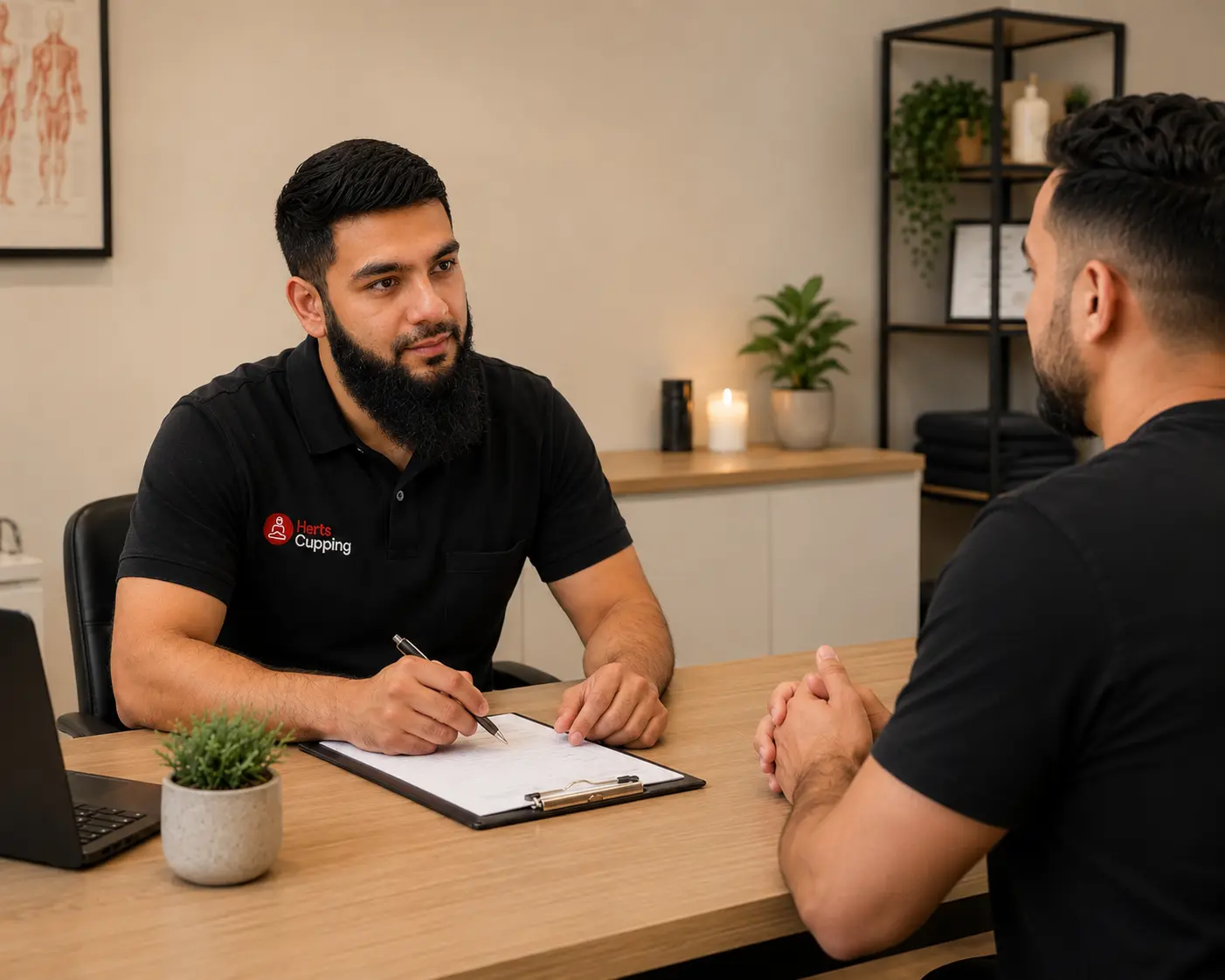
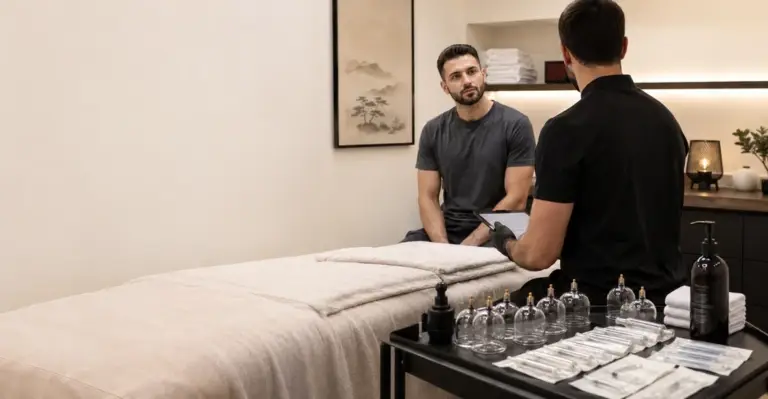
We start with a consultation and safety screen. I ask where the headaches start, how often they happen, what triggers them, whether anything has changed recently and whether any symptoms need medical assessment first.
If it is suitable to continue, the session usually works through the neck, upper traps, upper back and base-of-skull area. Depending on the booking, this may include warm-up massage, dry cupping, Hijama, IASTM muscle scraping or targeted manual work.
Free dry cups can be placed on other tight areas alongside the main Hijama points where suitable. Full consultation before we start. Aftercare before you leave.
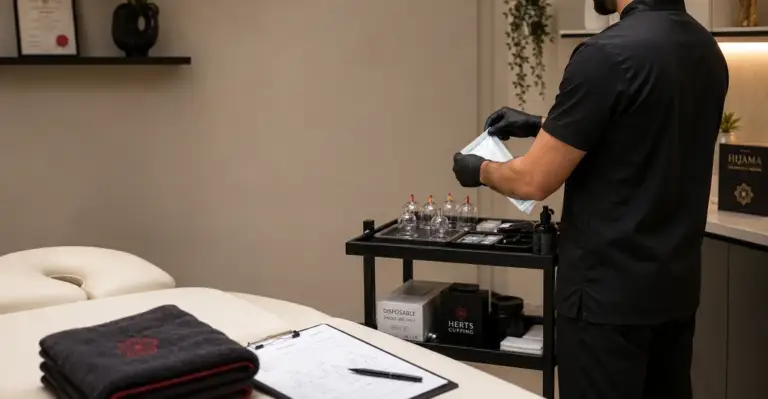
One client at a time. Private treatment room. All Hijama equipment is sterile and single-use.
Which Session Should You Book?
Most clients with this pattern start with a Signature Hijama session if they specifically want wet cupping. If the headaches are clearly connected to wider neck, shoulder and upper back restriction, a Targeted Recovery session may be more complete.
If you are unsure, message first. I would rather guide you properly than have you book the wrong session.
Related Pages
- Hijama in St Albans - session options and what to expect
- Hijama and cupping for neck pain - related neck tension guide
- Cupping and massage treatment - combined recovery sessions
- IASTM muscle scraping - targeted soft tissue work
- Book an appointment - view available sessions
Common Questions
Can cupping help tension headaches?
Cupping is commonly used when tension headaches are linked to neck, upper trap or upper back tightness. It works on the surrounding soft tissue pattern rather than treating the headache as a medical condition.
Can Hijama help tension headaches?
Hijama may be suitable where headaches are linked to long-standing muscular tension and the client is suitable for wet cupping. New, severe, changing or unexplained headaches need medical assessment first.
When should I see a GP for headaches?
See a GP if headaches keep coming back, are getting worse, do not respond to painkillers, or have changed in pattern. Seek urgent help for sudden severe headache, headache after head injury, stroke-like symptoms, fever, stiff neck, confusion or drowsiness.
Why do tension headaches start in the neck?
The muscles at the base of the skull, neck and upper traps can refer pain upwards into the head. Long periods of desk work, screen time, stress or training load can make this worse.
Which session is best for tension headaches?
Most clients with this pattern start with a Signature Hijama session or a Targeted Recovery session if the neck, shoulders and upper back are all involved.
Book Headache and Neck Tension Support
Message us before booking if you are unsure whether your headache pattern is suitable for cupping or needs medical advice first.
Book a Session Message on WhatsApp