


IASTM · Muscle Scraping · Hertfordshire
Muscle scraping for tight fascia, scar tissue and restricted movement
IASTM, also called muscle scraping or Graston-style therapy, uses stainless steel tools to work through fascial restriction, scar tissue and stubborn tightness that normal massage may not fully reach.
At Herts Cupping, it is used as part of structured recovery sessions alongside deep tissue work, cupping and Hijama where suitable. Private clinic based in St Albans, serving Hertfordshire and surrounding areas.
What makes IASTM different
Also known as Graston-style therapy
What is IASTM muscle scraping?
If you have heard of Graston therapy or muscle scraping on social media, what you are seeing is a form of IASTM, which stands for Instrument Assisted Soft Tissue Mobilisation.
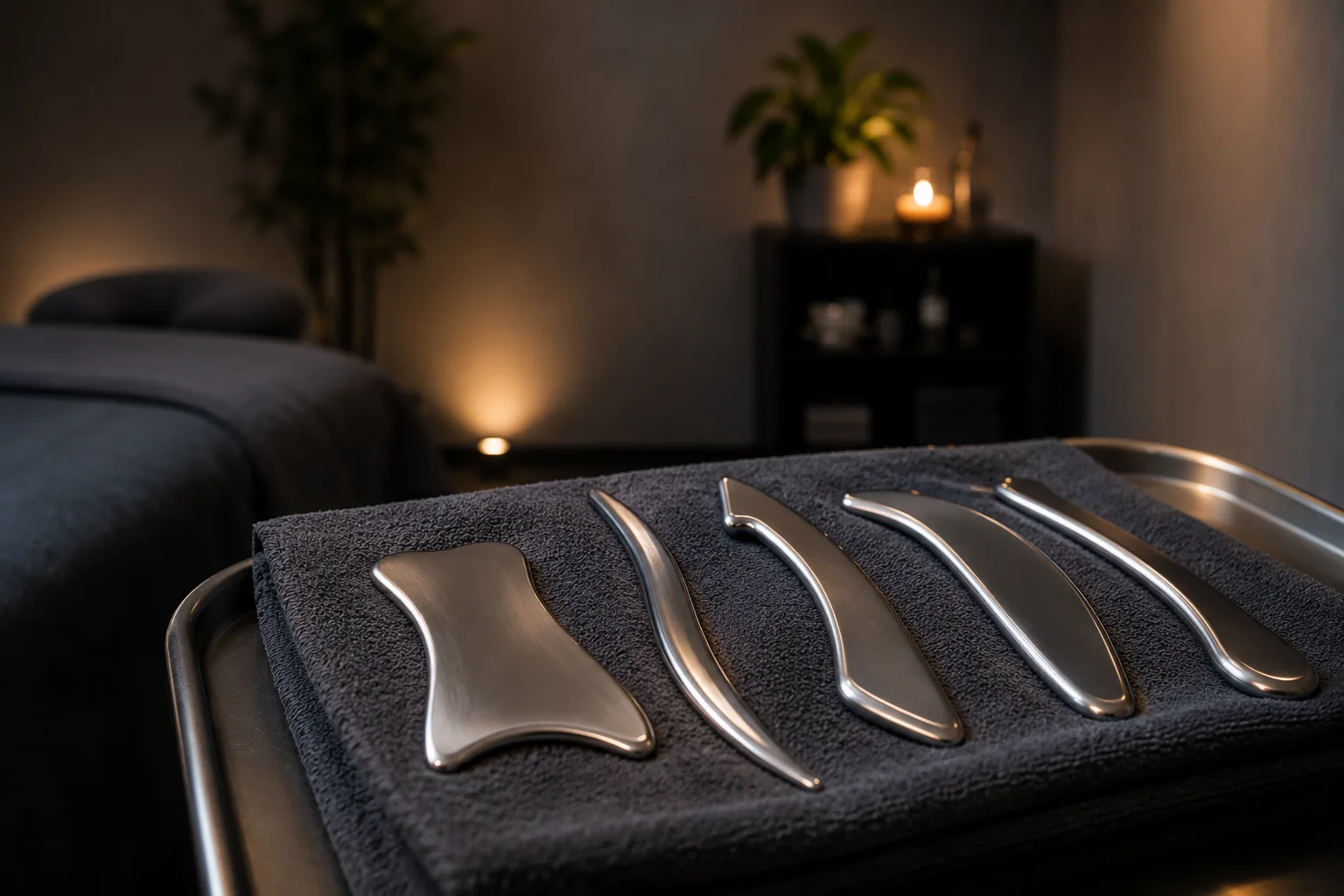
The tools are drawn across the skin with controlled pressure to work through restricted tissue. It can feel intense, but it allows a practitioner to target areas that hands alone may not fully reach.
Part of our specialist massage and recovery offering in St Albans. IASTM is included in Recovery Sessions alongside deep tissue massage, cupping and percussion where suitable.
View massage services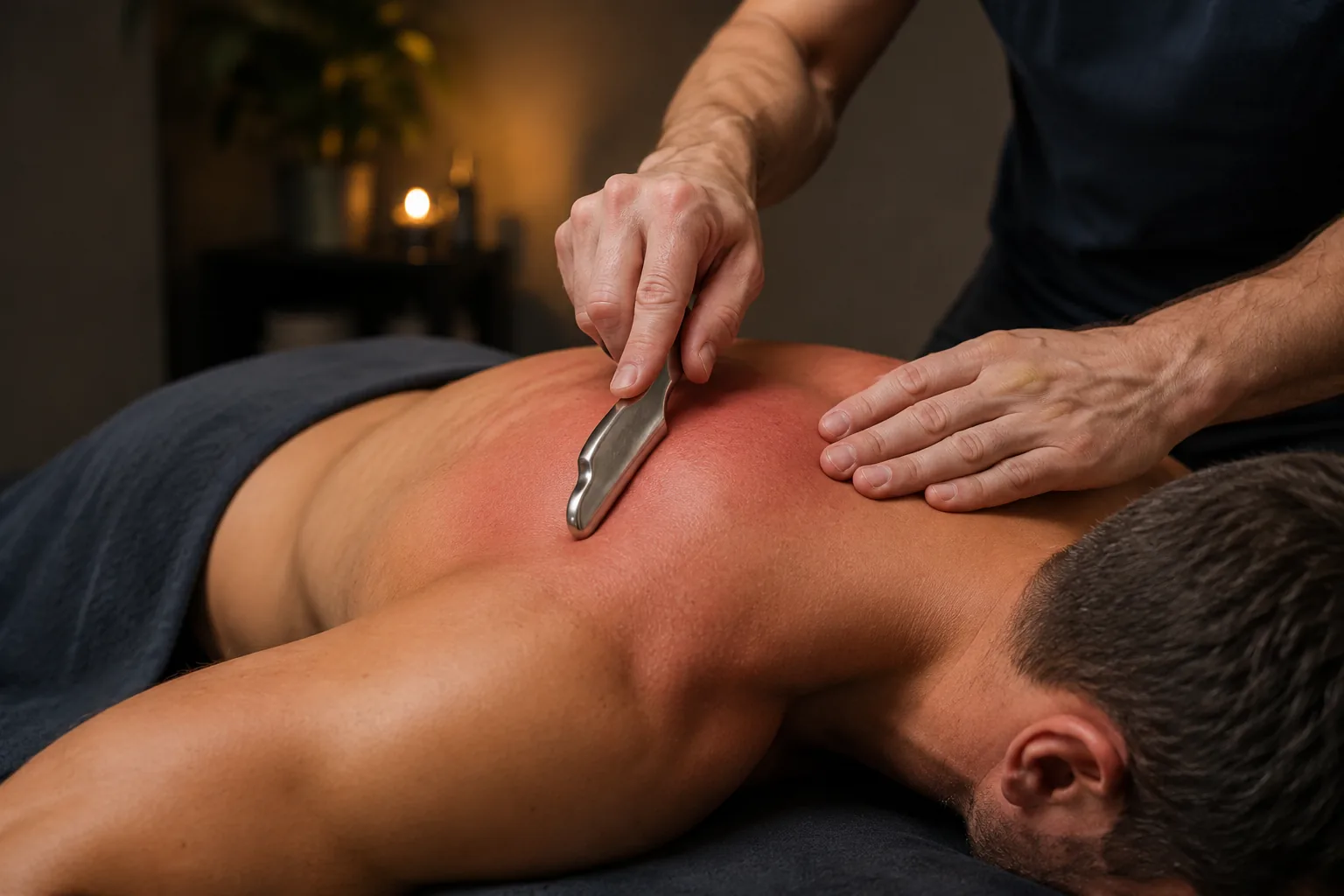
It works like massage, just deeper.
When a massage therapist works a tight muscle, they press, glide and drag their hands along the tissue to release it. Muscle scraping does something similar, but the instrument concentrates pressure into a narrower edge.
If you have ever had deep tissue massage and felt the therapist was close to the restriction but not quite there, this is often where IASTM can bridge the gap.
What the tool does
Glides along muscle fibres, similar to deep tissue massage
Applies sustained directional pressure into restricted areas
Targets fascial layers that hands cannot always fully penetrate
Stimulates local blood flow and tissue response
Graston, Gua Sha and IASTM
Is this the same as Graston therapy?
Short answer: it is the same type of technique. Graston Technique is a well-known brand of IASTM. Because the brand is so visible, many people use “Graston” as the everyday name for muscle scraping.
At Herts Cupping, the work is performed with clinical-grade IASTM tools by a practitioner trained through OMT Training, holding an International Diploma in Instrument Assisted Soft Tissue Manipulation.
Why clients book
What clients come to us for
These are common reasons people choose IASTM and muscle scraping as part of a recovery session.
Scar tissue and adhesions
Old injuries, post-surgery tightness and stubborn restrictions that feel like they have become part of the tissue.
Improved mobility
Clients often book when movement feels restricted, especially around the shoulders, upper back, hips and legs.
Pain massage has not fixed
If tightness returns quickly after massage, the issue may involve fascia and deeper restriction.
Why we combine muscle scraping with cupping and deep tissue
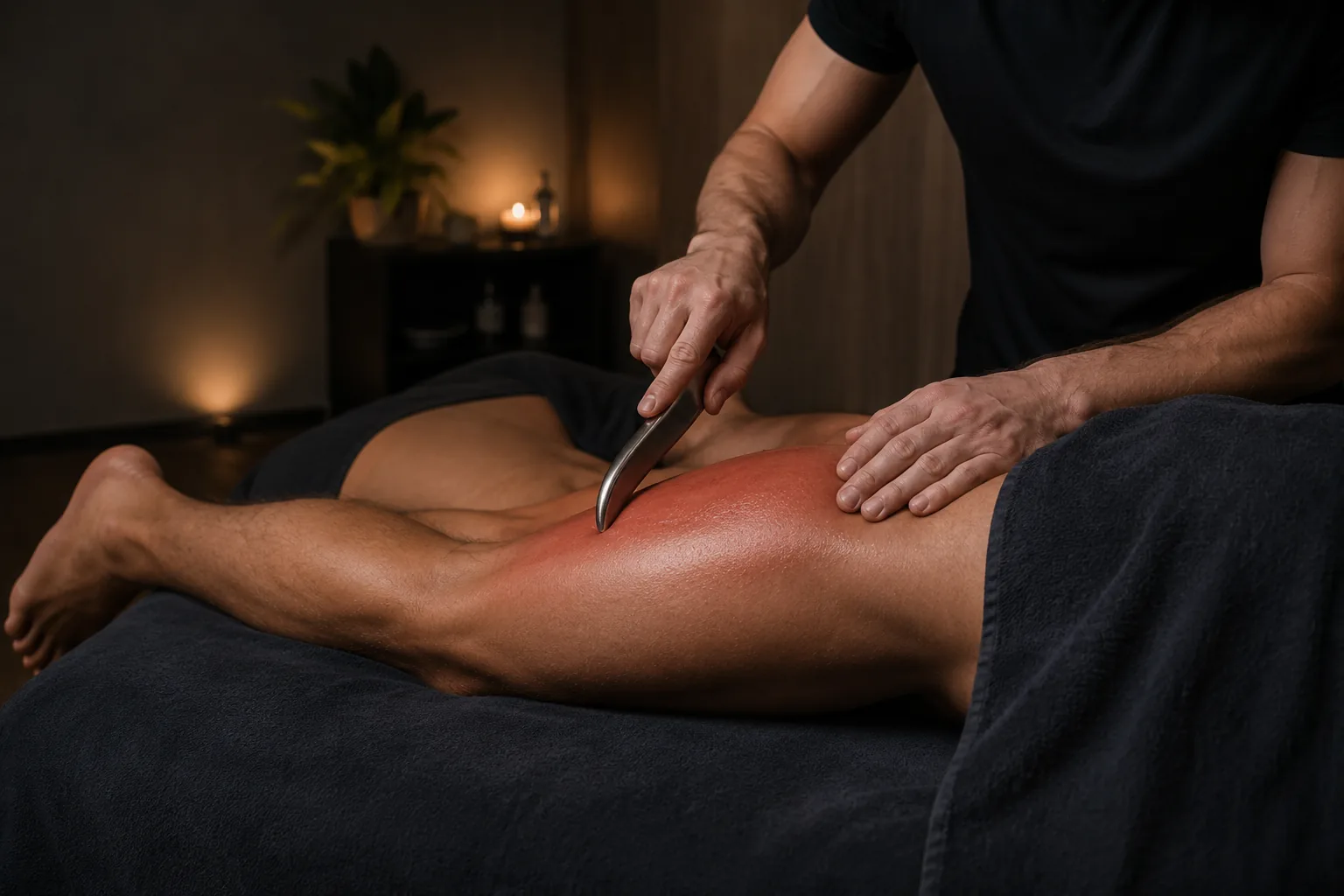
Most clinics offer one technique. We combine several in the same session. IASTM works through restriction. Cupping decompresses the tissue. Deep tissue massage releases the surrounding tension.
Used together, they address the problem at multiple layers. This is what our Recovery Sessions are built around.
Common areas
Commonly treated conditions
Muscle scraping is commonly used for restrictions that have not responded well to massage or stretching alone.
Plantar fasciitis
Targets fascial restriction along the sole of the foot causing heel and arch pain.
Tennis or golfer’s elbow
Works around forearm tendons and surrounding tissue, often combined with cupping.
Lower back stiffness
Targets tightness around the thoracolumbar fascia and spinal movement restriction.
Shoulder restriction
Used around the upper back, rotator cuff and shoulder blade area to support smoother movement.
Gym and training recovery
Useful for tightness from lifting, running, football, cricket or repetitive training load.
Desk posture tension
Targets upper back, neck and shoulder restriction from prolonged sitting and screen work.
Practitioner
Your practitioner
Every recovery session is with Abdus Shahid. International Diploma in Instrument Assisted Soft Tissue Manipulation through OMT Training, Myofascial Cupping Practitioners Diploma, Diploma in Trigger Point Therapy, and certified in Hijama Cupping Therapy.
This allows IASTM to be combined with cupping, deep tissue work and Hijama where appropriate.
Sessions and pricing
Sessions that include muscle scraping
IASTM is included as standard in Recovery Sessions where suitable. Every session includes assessment, treatment planning and aftercare guidance.
Targeted Recovery
60 minutes
Massage, cupping and IASTM. No Hijama. Focused on one or two areas.
£75
Targeted Recovery + Hijama
60 minutes
Recovery session with IASTM and Hijama wet cupping included.
£95
Full Body Recovery
90 minutes
Full-body massage, cupping and IASTM. No Hijama. Best for multiple areas or a full reset.
£110
Full Body Recovery + Hijama
90 minutes
Full-body recovery with IASTM and Hijama across multiple areas.
£135
Returning client? Lower rates apply for sessions booked within 8 weeks of your last visit. Mention it when you book.
Looking for Hijama instead?
If you are looking for Hijama wet cupping on its own, without deep tissue and scraping work, we offer standalone Hijama sessions from £50.
FAQs
Frequently asked questions
Is what you offer the same as Graston therapy?
Yes, in terms of the type of technique. Graston is a well-known brand of IASTM, while IASTM is the clinical category name. We use clinical-grade instruments and our practitioner is trained through OMT Training.
Is muscle scraping a type of massage?
In a functional sense, yes. The instrument glides along the tissue and applies directional pressure, similar to deep tissue massage. The difference is that the tool concentrates pressure more precisely.
Does muscle scraping hurt?
It can feel intense, especially over restricted areas. It should not feel unbearable. Intensity is adjusted throughout the session and you can ask for pressure to be reduced.
Is IASTM the same as Gua Sha?
They share a similar scraping principle, but modern IASTM uses precision-designed tools and a clinical soft tissue approach.
Can I have IASTM on its own?
IASTM is included as part of our Recovery Sessions alongside cupping and deep tissue work where suitable.
Will it leave marks?
It can cause temporary redness and minor bruising where the tissue is restricted. This normally fades within a few days.
How many sessions will I need?
Some clients feel a clear difference after one session. Chronic restrictions may need a short series of sessions spaced one to two weeks apart.
Do you have a female practitioner?
Recovery Sessions including IASTM are currently performed by Abdus Shahid only. We have a female practitioner available for Hijama sessions.
Not sure if this is right for you?
If you are dealing with tightness, restriction or pain that has not responded to massage, message us. We will let you know whether muscle scraping is suitable or whether another approach makes more sense.