In this article
During Hijama, a small amount of blood is drawn after suction and superficial scratches are made on the skin. The blood can look bright red, dark, thick or minimal depending on the area, the person and how the body responds. It should not be over-sold as “toxins” or...
What is happening in a Hijama session?
Hijama is wet cupping. Cups are applied to the skin to create suction. After that first suction stage, the cups are removed, small superficial scratches are made, and the cups are placed back on. The suction then draws a small amount of blood into the cup.
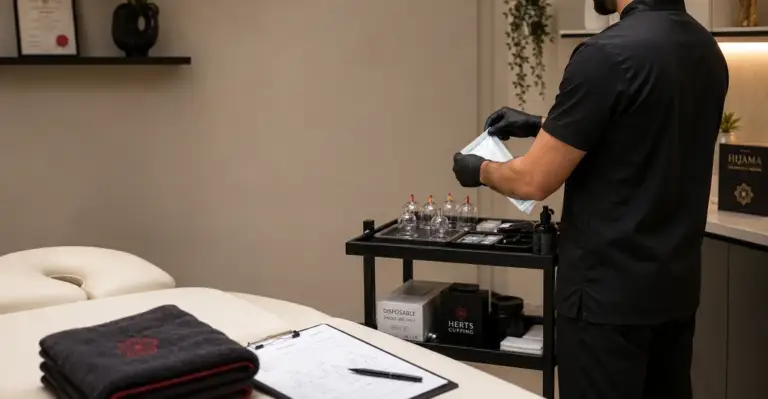
The scratches are not deep cuts. They should be light, controlled and done with sterile single-use blades or lancets. The aim is not to cut deeply. The aim is to allow a small controlled release through the surface of the skin.
Important: A good Hijama session is not judged by how dramatic the cup looks. It is judged by safe technique, correct screening, clean equipment, sensible cup placement and how suitable the treatment is for the person.
Is it blood, toxins or something else?
In plain English, what you see in the cup is blood. Traditional Hijama language may describe it as stagnant blood, bad blood or unwanted blood. That is the traditional way many people understand the practice.
What I avoid saying is that the cup has scientifically proven “toxins” in it. That sounds impressive, but it is not the most accurate way to explain it. Your body already has organs that process waste, including the liver and kidneys. Hijama should not be sold as a magic detox that proves toxins are leaving your body.
A better explanation is this: wet cupping uses suction and superficial scratches to draw a small amount of blood from the treated area. Many people choose it because they feel lighter, looser or less heavy afterwards, but the appearance of the blood alone should not be turned into a diagnosis.
Why does Hijama blood look dark sometimes?
Hijama blood can look bright red, dark red, purple-looking, thick, watery or sometimes slightly jelly-like. People often panic when it looks dark, but dark blood does not automatically mean something dangerous is happening.
Blood colour can be affected by oxygen exposure, local circulation, how long it sits in the cup, the pressure used, the area being treated and normal clotting once blood leaves the body.
| What you may see | What it can mean | What I would say |
|---|---|---|
| Bright red blood | Fresh-looking blood drawn quickly | Common and not unusual. |
| Dark red blood | Blood sitting under suction or slower local flow | Often seen during Hijama. Not a diagnosis. |
| Thicker or jelly-like blood | Normal clotting after blood leaves the body | Can happen. Not automatically worrying. |
| Very little blood | Area, pressure, hydration or individual response | Does not mean the session failed. |
More blood does not mean a better session
This is where social media has made people think the wrong way. A cup full of blood looks dramatic, so people assume that is better. It is not that simple.
A safe Hijama session should never be about chasing blood volume. Some people release more, some release less. Some areas produce more, others barely produce anything. The aim is controlled treatment, not trying to force the body to bleed.
What I tell first-time clients
I tell clients not to judge the session by the cup alone. Judge it by how you feel, how the area settles, whether the treatment was done safely and whether the aftercare was clear. The blood is part of Hijama, but it is not the whole story.
When the blood appearance matters
Most variation is normal. But some things should be taken seriously. If someone bleeds excessively, keeps bleeding after the session, feels faint, has a known bleeding disorder, takes blood-thinning medication or has unexplained bruising generally, Hijama may not be suitable without medical clearance.
This is why screening matters. A proper Hijama practitioner should ask about medication, medical conditions, fainting history, skin issues and general suitability before treatment.
The bottom line
What comes out during Hijama is blood. It may look different from person to person, but that appearance alone should not be over-interpreted. Hijama can be a useful traditional therapy when done properly, but it should be explained honestly and carried out safely.
Useful next reads
- Hijama in St Albans
- Benefits of Hijama
- What is cupping and Hijama?
- Cupping massage in St Albans
- Book an appointment
Common Questions
What actually comes out during Hijama?
A small amount of blood is drawn from the superficial scratches made during wet cupping. The amount, colour and texture can vary from person to person and from one area to another.
Is the blood from Hijama toxins?
I would not explain it as proven toxins. Traditional Hijama language often talks about stagnant or unwanted blood, but medically it is still blood. The safer explanation is that wet cupping draws a small amount of blood after suction and superficial scratches.
Why is Hijama blood sometimes dark?
It can look darker because of the way blood collects under suction, how long it sits in the cup, local circulation, oxygen exposure and the area being treated. Darker blood does not automatically prove a serious problem.
Is thick or jelly-like blood normal in Hijama?
It can happen. Blood can clot quickly once it leaves the body, so thicker or jelly-like patches are not unusual. If you have clotting problems, take blood thinners or bleed unusually, get medical advice before booking.
How much blood comes out during Hijama?
Usually a small amount. A safe session is not about chasing more blood. More blood does not automatically mean a better result.
Should I worry if hardly anything comes out?
Not usually. Some areas produce very little blood. That does not mean the session has failed. The treatment still includes suction, tissue decompression and local stimulation.
Abdus Shahid
Lead Practitioner at Herts Cupping in St Albans. I work with Hijama, dry cupping, fire cupping, IASTM and recovery-focused treatments. My approach is simple: explain things clearly, use sterile single-use equipment, avoid exaggerated claims and tell you honestly when cupping is not the right step.
Safety note: This article is general information, not medical diagnosis. If symptoms are severe, worsening, unexplained, linked with trauma, infection, fainting, bleeding issues, numbness, weakness or a medical condition, speak to a GP or appropriate clinician before booking.
Not sure which session you need?
Message us with what you are dealing with and we will point you towards the most suitable option: Hijama, dry cupping, recovery work or medical advice first if that is the safer route.
Book Online WhatsApp Us