In this article
Tight neck, heavy back, stiff shoulders, low energy and poor recovery are not always random. They can be early signs that your body is carrying more load than it is recovering from. Cupping, massage, Hijama and IASTM may help when the issue is muscular tightness, soft tissue restriction...
Your Body Whispers Before It Shouts
Tightness, heaviness, stiffness and poor recovery are often early signs that your body is carrying more load than it is clearing. The aim is to recognise the pattern before it becomes a bigger problem.

Slide 01 · Body Check
Your body usually warns you before pain takes over.
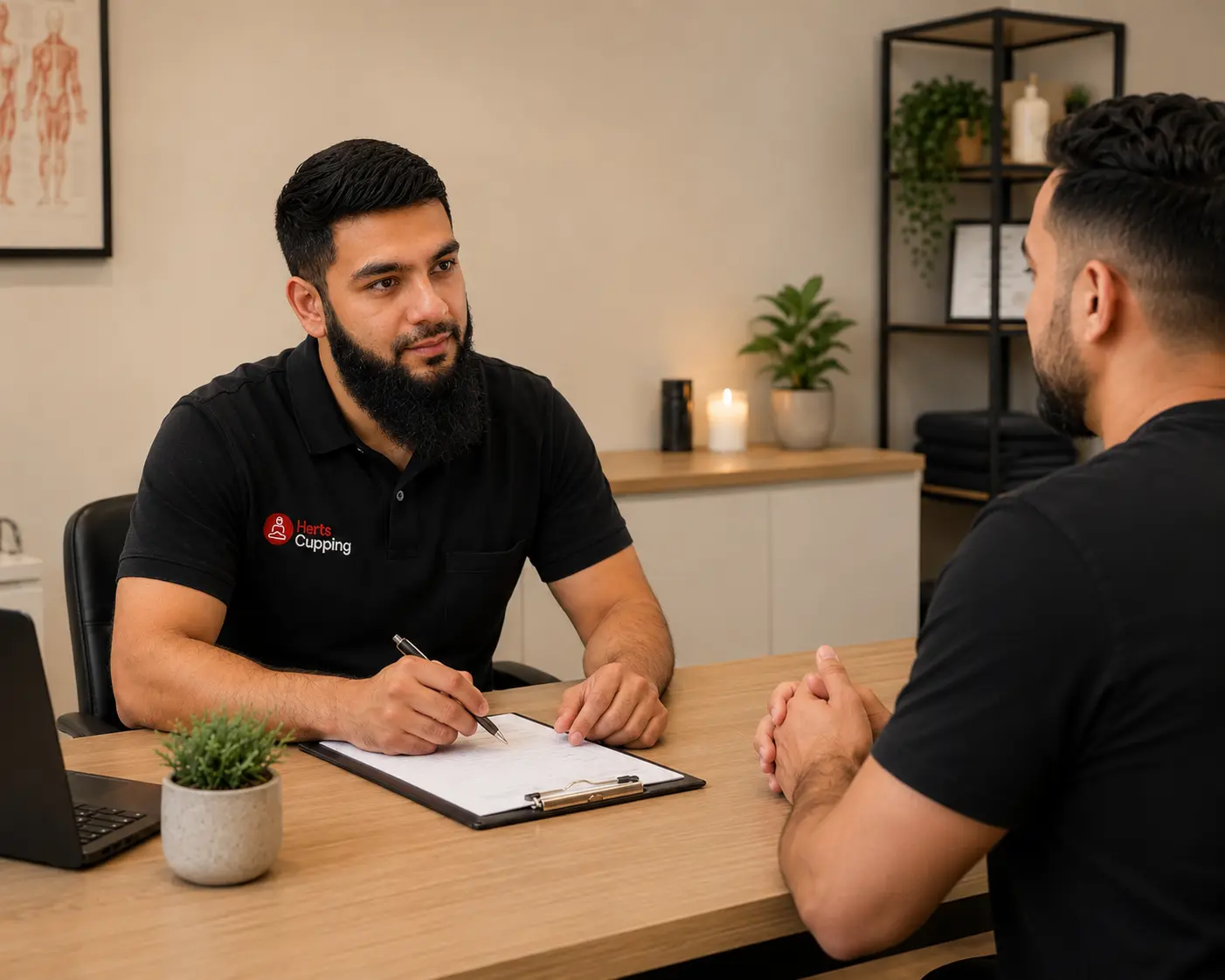
A tight neck, heavy back or stiff shoulder is often treated like a small inconvenience. In clinic, I see the same pattern often: people ignore the early tightness because they can still work, train or get through the day.
The issue is not always the first sign. The issue is ignoring the first sign until it becomes a proper restriction.

Slide 02 · Warning Signs
The quiet signs are the ones people miss.
That tight neck. That heavy back. That shoulder that never fully relaxes. That low energy that does not shift even after sleep. These can be signs that your body is not recovering well from repeated daily load.
Not every problem starts with sharp pain. Sometimes it starts as heaviness, stiffness or the feeling that your body is not moving as freely as it used to.

Slide 03 · Daily Load
You do not need one big injury to feel overloaded.
Desk posture, poor sleep, stress tension, long driving, hard training and lack of recovery can all stack up. One by one, they do not always feel serious. Together, they can create a body that feels tight, tired and restricted.
This is why some people say, “I have not done anything, but my body feels finished.” Often, they have done a lot. They just did not count it as load.

Slide 04 · Reality Check
Not every warning looks like pain.
Sometimes the warning is heaviness. Sometimes it is stiffness. Sometimes it is poor recovery, restricted movement or feeling drained for no obvious reason.
That does not mean cupping is automatically the answer for everything. It means your body is giving information. The job is to understand whether it is muscular, lifestyle-related, recovery-related or something that needs medical assessment.

Slide 05 · Recovery
Recovery is not laziness. It is maintenance.
Most people understand servicing a car, charging a phone and updating software. But they expect their body to run on stress, sitting, training, poor sleep and no recovery.
Recovery work is not only for athletes. It is for anyone whose body is carrying more tension than it is releasing.
What I Usually See in Clinic
Most clients do not come in saying, “I need recovery.” They say things like:
- My neck always feels tight.
- My shoulders feel heavy.
- My back feels stiff when I wake up.
- I keep stretching but it comes back.
- Massage helps for a few days, then the same tightness returns.
- I feel drained and my body feels blocked.
- I train hard but my recovery feels poor.
The wording is different, but the pattern is usually similar. The body has been carrying tension for a while. It has not been given enough recovery. Then one area starts complaining louder than the rest.
That is the point of the phrase: your body whispers before it shouts. The whisper is the tightness, heaviness, stiffness or restriction. The shout is when it becomes painful enough to stop you doing normal things.
Why Small Signs Build Up
Your body adapts to what you repeatedly do. If you sit for long hours, drive a lot, train hard, sleep poorly or carry stress in your shoulders, your body will adapt around that load.
At first, it may feel like normal tightness. Then your baseline changes. You start thinking it is normal to have tight shoulders, a stiff neck or a heavy lower back. It is not always normal. It is often just familiar.
Desk posture
Long hours at a laptop can keep the neck, traps and upper back switched on for too long.
Stress tension
Stress often shows physically through jaw, neck, shoulder and upper back tightness.
Training load
Hard sessions without enough recovery can leave muscles feeling heavy and restricted.
Poor sleep
Sleep is where recovery happens. If sleep is poor, the body often feels more sensitive and tense.
Where Cupping May Fit
Cupping can make sense when the issue appears to be soft tissue tightness, muscular heaviness or areas that feel restricted. It is not magic and it is not a cure. It is a recovery tool.
The cup creates suction on the skin. Instead of pressing down like massage, cupping lifts the tissue. That decompression effect can feel very different for people who have tight traps, heavy shoulders, upper back stiffness, lower back tightness or legs that feel overloaded after training.
Massage Presses Down. Cupping Pulls Up.
This is the simplest way to understand why cupping feels different. Massage compresses tissue. Cupping decompresses tissue through suction. Some people need pressure. Some respond better to suction. Some do best with both.
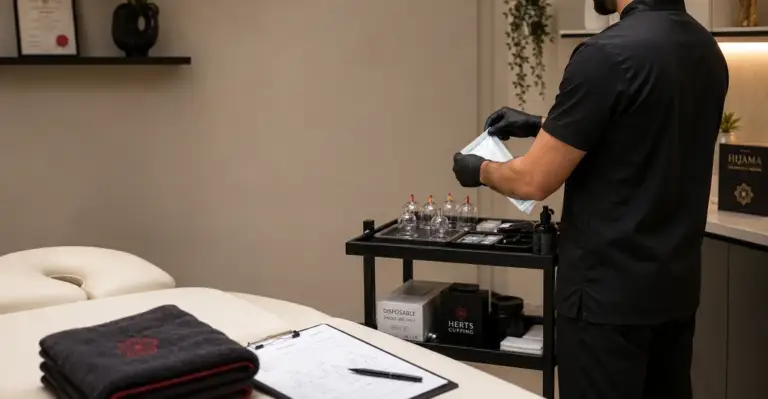
At Herts Cupping, recovery sessions may include cupping, massage, IASTM and, where suitable, Hijama. The aim is not to throw every tool at the body. The aim is to choose what makes sense for the area and the person.
Which Session Makes Sense?
The best session depends on what you are actually dealing with. Not everyone needs Hijama. Not everyone needs deep tissue work. Not everyone needs a full-body session.
| What you feel | Possible starting point | Why |
|---|---|---|
| Tight neck, traps or shoulders | Targeted Recovery or cupping massage | Good for localised muscular tightness and desk-related upper body tension. |
| Heavy back or lower back stiffness | Targeted Recovery | Allows work across the back, hips and surrounding tissue rather than only the painful spot. |
| Post-training heaviness | Sports Recovery or Full Body Recovery | Better when the issue is not one area, but general load and poor recovery. |
| You specifically want wet cupping | Hijama or Recovery + Hijama | Suitable when you want Sunnah Hijama or traditional wet cupping, provided screening is clear. |
When Cupping Is Not the First Step
Sometimes the body is not whispering. It is warning you properly. In those cases, recovery therapy should not be the first move.
Get medical advice first if you have severe or worsening pain, sudden weakness, numbness, symptoms down both legs, bladder or bowel changes, chest pain, fever, unexplained weight loss, recent trauma, unexplained swelling, or pain that feels unusual for you.
If symptoms are clearly linked with a medical condition, injury or nerve issue, cupping may still be discussed later as support, but assessment comes first.
What to Try Before Booking
If your symptoms are mild and feel like general tightness, start with the basics for a few days:
- Move every 30 to 60 minutes if you sit for long periods.
- Walk daily, even if it is short.
- Hydrate properly.
- Reduce heavy training for a few days if your body feels overloaded.
- Stretch gently, but do not force painful areas.
- Improve sleep where possible.
- Use heat if the area feels tight and muscular.
If the same tightness keeps returning, that is when targeted recovery work may be worth considering.
Related Pages
- Cupping therapy in St Albans for dry cupping, fire cupping and suction therapy
- Cupping massage in St Albans for combined cupping and soft tissue recovery
- Desk-work neck and back pain if sitting is your main trigger
- Cupping for neck pain for neck, trap and shoulder tension
- Cupping for back pain for upper and lower back tightness
- Sports recovery therapy for training-related tightness and poor recovery
- Hijama in St Albans for wet cupping and Sunnah Hijama
Common Questions
Why does my body feel tight even when I have not injured myself?
Tightness can build from repeated daily load such as desk posture, driving, poor sleep, stress, training and lack of recovery. You do not always need one clear injury for the body to feel overloaded.
Can cupping help with general body tightness?
Cupping may help some people with muscular tightness by using suction to lift and decompress soft tissue. It can be useful for neck, shoulder, upper back, lower back and leg tension where the issue appears muscular.
Is recovery therapy only for athletes?
No. Recovery therapy can be useful for desk workers, drivers, gym-goers, tradespeople and anyone whose body feels tight, heavy or restricted from repeated daily load.
Should I book Hijama or a recovery session?
If your goal is mainly muscular recovery, a targeted recovery session with cupping, massage or IASTM may be the better starting point. If you specifically want wet cupping or Sunnah Hijama, Hijama can be discussed where suitable.
When should I avoid cupping and get checked first?
You should seek medical advice first if pain is severe, worsening, unexplained, linked with trauma, chest pain, fever, sudden weakness, numbness, bladder or bowel changes, unexplained weight loss or symptoms that do not feel like normal muscular tightness.
Your body keeps giving signs?
Message us with what you feel: tight neck, heavy back, stiff shoulders, poor recovery or general body tension. I’ll tell you honestly whether cupping, recovery therapy, Hijama or another route makes more sense.
Book a Session Message on WhatsApp