Skip to content Skip to footer

Recovery Sessions in St Albans

Hijama. Cupping. IASTM. Deep recovery.

Many clients come here specifically for Hijama. Others start with cupping and IASTM. Either way, the same principle applies: get to the tissue layer causing the problem. For tightness that keeps coming back to the same spot. Sessions from £75.

Four Recovery Mechanisms

Standard massageCompresses from above. Relieves surface tension, temporarily.
CuppingLifts and decompresses. Reaches what compression cannot.
IASTM scrapingClinical tools break fascial adhesions hands alone can't reach.
HijamaExtracts stagnant blood and metabolic waste. The step the others cannot take.

What We Treat

The Tightness That Keeps Coming Back

Pick the problem that sounds most like yours. Each one has the same root cause: the issue sits deeper than surface muscle.

Lower Back Tension That Keeps Returning

What you feel

Aching or stiffness in the lower back. Worse after sitting, standing or sleeping. You've tried everything but it keeps coming back.

Why it persists

Lower back tension is rarely just one muscle. It usually involves layers of fascia, deep stabilisers and sometimes referred tension from the hips and glutes.

What we do

Assess where the tension is actually coming from, then work through the layers. Cupping decompresses. IASTM targets fascial adhesions. Hijama draws out what's been sitting in the loaded tissue. Manual work addresses the deeper stabilisers.

Desk Posture & Upper Back Strain

What you feel

Tight shoulders, stiff upper back, tension that builds through the day. Massage loosens it for a day or two then it comes straight back.

Why it persists

Hours of sitting causes the fascia around the upper back and shoulders to lock down. Standard massage works the surface but can't reach the fascial layer underneath.

What we do

IASTM works through the restricted fascia. Cupping decompresses the tissue and supports blood flow. The combination reaches deeper than either technique alone.

Gym Recovery & Training Soreness

What you feel

Persistent soreness after training, tightness that limits range of motion, or a muscle that won't recover between sessions.

Why it persists

Heavy training creates micro-damage and metabolic build-up in the tissue. If the body can't clear it fully between sessions, the fascia tightens around the area. The restriction compounds over time.

What we do

Cupping draws fresh blood into the area. IASTM works through the fascial restriction. Hijama supports the body's natural detox process on the same area. Active clients often book every 3 to 4 weeks.

Neck Stiffness & Tension Headaches

What you feel

Stiff neck, limited head rotation, headaches that start at the base of the skull or behind the eyes. Often worse with stress or screen time.

Why it persists

Muscles at the base of the skull and along the cervical spine become chronically tight, often pulling on the fascia around the scalp. Massage relieves the surface but not the underlying restriction.

What we do

Careful IASTM along the upper traps and sub-occipital muscles. Cupping to decompress the tissue. Manual work on the trigger points that refer pain into the head.

Restricted Mobility & Stiffness

What you feel

You can't move as freely as you used to. Bending, reaching or rotating feels limited. Morning stiffness that takes a while to ease.

Why it persists

Fascial adhesions build up over time from inactivity, posture or old injuries. They act like internal glue, binding tissue layers together and restricting how far the muscle can stretch.

What we do

IASTM specifically targets fascial adhesions. Cupping separates the tissue layers. Manual work mobilises the joints. Hijama can support the detox process in chronically restricted areas. Improvements in range of motion are often noticeable in a single session.

When Massage Alone Hasn't Held

What you feel

You've had multiple massages, physio or other treatments. It helps temporarily but the tension always returns. You're not sure what else to try.

Why it persists

If the issue is in the fascia or involves accumulated stagnation in the tissue, surface-level treatments will only give temporary relief. The restriction underneath is still there.

What we do

Combine techniques at different tissue depths. Cupping decompresses. IASTM reaches deeper adhesions. Hijama extracts what the other methods leave behind. Many clients who've been stuck for months notice a difference after their first session here.

The Approach

Four Recovery Mechanisms. One Session.

Each technique reaches a different tissue layer. Three release and mobilise. The fourth extracts.

Manual Therapy

Compresses from above. Releases surface muscle tension and trigger points.

+

Cupping

Suction lifts and decompresses tissue, drawing fresh blood into restricted areas.

+

IASTM Scraping

Clinical-grade tools work through fascial adhesions and scar tissue that hands cannot reach.

+

Why Hijama Belongs Here

The Step the Other Methods Can't Take

Manual therapy, cupping and IASTM are all release and mobilisation techniques. They work well. But they share a limitation.

Manual therapy works the muscle. Cupping lifts the fascia. IASTM breaks the adhesions. All three release and mobilise. None of them extract.

Hijama is different. Through small superficial incisions, the body draws stagnant blood and metabolic waste directly to the surface. This is a physical removal, not a decompression. Not a release. An extraction.

Cupping

Decompresses tissue. Improves local circulation. Does not extract.

IASTM

Breaks fascial adhesions and scar tissue restriction. Does not extract.

Manual Therapy

Releases trigger points. Mobilises joint and muscle tissue. Does not extract.

Hijama

Draws stagnant blood and metabolic waste to the surface. The only technique that extracts.

For tightness that returns to the same spot after every massage or treatment, this is often why. The tissue has released, but what's been accumulating in it hasn't moved. Hijama addresses that directly.

That's the reason many clients who've tried physio, massage and dry cupping elsewhere end up booking specifically for Hijama here.

Sessions & Pricing

Choose Your Session

The sessions that include Hijama are where most clients end up. Not as an upgrade they added, but as the recovery method they came for. All sessions include cupping, IASTM and deep tissue.

We never sell block bookings. We never recommend more sessions than you need. If one session is enough, we'll tell you.

Targeted Recovery

60 mins. Cupping, IASTM and deep tissue on one focus area. No Hijama.

Best for: One main area. Tight hamstrings, calves, glutes, lower back, shoulders or upper back from training or desk posture.

£75

60 mins

Book Targeted

Full Body Recovery

90 mins. Full-body cupping, IASTM and deep tissue. No Hijama.

Best for: Athletes, regular gym-goers, runners, lifters. Heavy legs, multiple tight areas, full-body recovery between sessions.

£110

90 mins

Book Full Body

Full Body Recovery + Hijama

90 mins. Hijama plus full-body cupping, IASTM and deep tissue.

Best for: Long-standing stiffness, sustained training load across multiple areas, or anyone who wants Hijama's detox and extraction step as part of a full-body session.

£135

90 mins

Book Full Recovery

Returning client? Lower rates apply for sessions booked within 8 weeks of your last visit. Mention it when you book.

In-Session

What Happens During a Session

Every session follows a structured process. We don't just apply cups and send you home.

STEP 1

Assessment

Talk through symptoms, goals and medical history. Decide which combination of techniques will work best for your body.

STEP 2

Manual Release

Targeted deep tissue and therapeutic percussion to relax the fascia and prepare the tissue for deeper work.

STEP 3

Muscle Scraping

Clinical-grade IASTM tools work through stubborn adhesions that hands alone can't reach.

STEP 4

Cupping & Hijama

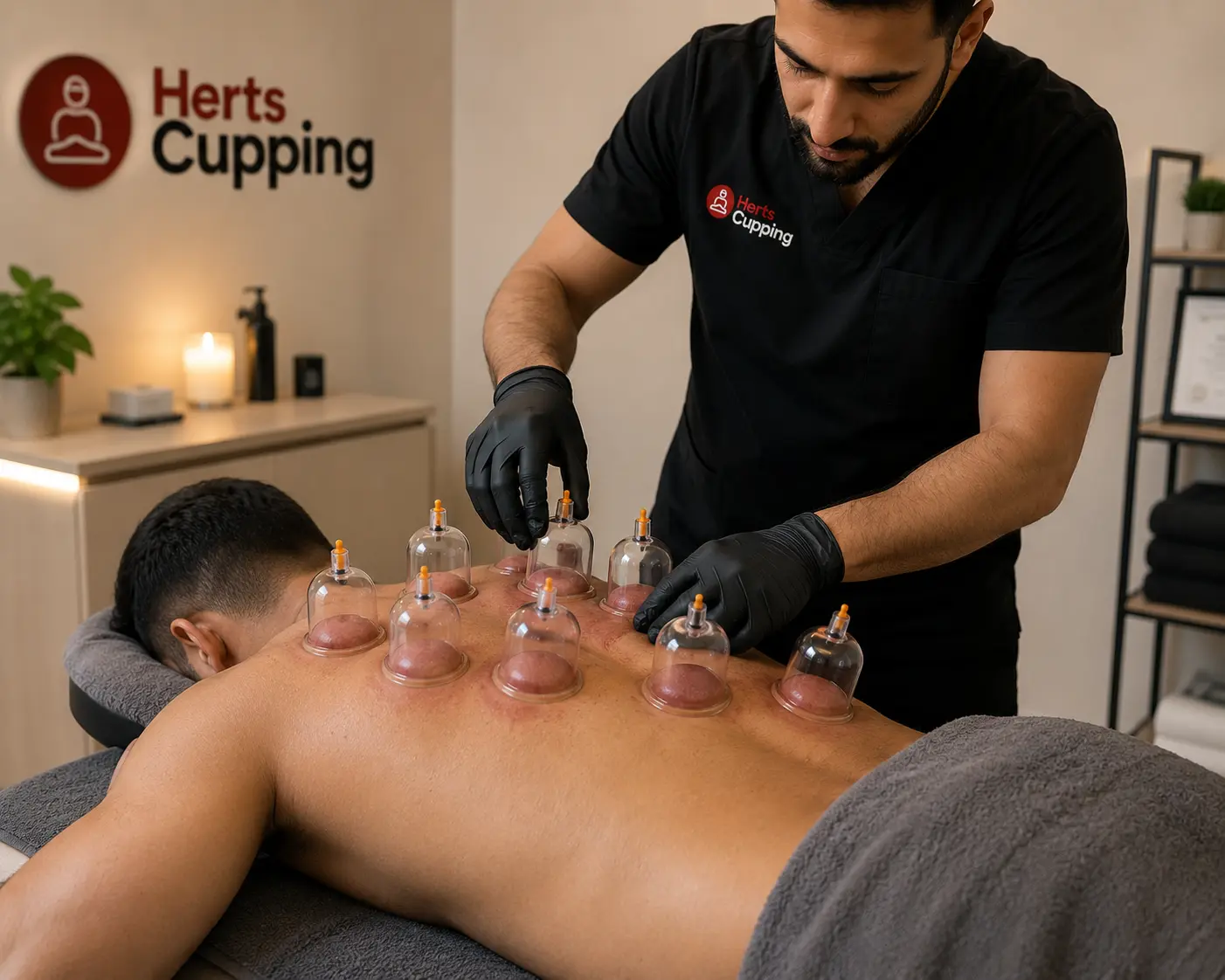
Dynamic gliding cupping followed by static cupping. Hijama (wet cupping) performed on sessions that include it.

STEP 5

Aftercare

Written guidance on what to expect, how to look after marks, and what to do in the days after.

Techniques

What's Inside Every Session

Four techniques. Each one reaches something the others don't.

Clinical Cupping

Negative pressure lifts the fascia, supports blood flow and decompresses tight muscle fibres. Available as dry, dynamic or fire cupping depending on the session.

IASTM Muscle Scraping

Clinical-grade steel tools work through scar tissue and fascial adhesions that standard massage cannot reach. Combined with cupping for a two-direction approach in the same session.

Manual & Deep Tissue

Targeted hands-on work to release tension, support mobility and prepare tissue for deeper instrument work. Combined with therapeutic percussion where needed.

Looking for standalone Hijama, or not sure which session is right for you? View all sessions and pricing.

Ready to address what other treatments haven't held?

Not sure which session is right? Message us on WhatsApp and we'll guide you. We'll confirm the best option during your consultation.