If you have tried massage and found the relief does not last, or you have tightness that keeps coming back in the same spots, there is a good chance the issue is sitting deeper...
What is IASTM (Muscle Scraping)?
IASTM stands for Instrument Assisted Soft Tissue Mobilisation. It is a technique that uses shaped metal tools to apply targeted pressure along the fascia and soft tissue. You may have heard it referred to as the Graston technique, muscle scraping, or Gua Sha. These are all variations of the same approach, though the tools and pressure levels differ between them.
The goal is to identify and break down areas of restriction within the connective tissue. These restrictions can develop after injury, overuse, repetitive strain, or simply from sustained postures over time. Once the tissue becomes restricted, it limits movement, creates tightness and can cause referred pain in areas away from the actual problem.
IASTM allows a practitioner to feel through the tool and detect areas of thickening or restriction that are not always obvious to the hands alone. Targeted strokes are then applied to stimulate the tissue, encourage circulation and support the breakdown of those restricted areas. Research supports the use of instrument assisted soft tissue mobilisation for improving range of motion and reducing pain in musculoskeletal conditions.
What is Cupping Therapy?
Cupping therapy uses suction cups placed on the skin to lift the soft tissue upward rather than compress it downward. This is the opposite of how massage and IASTM work, which is part of what makes it a useful addition to a treatment session.
The suction draws blood to the area, encourages circulation and creates a decompression effect in the tissue layers beneath the cup. Many clients find this helps with areas of chronic tightness that have not responded well to compression-based techniques alone.
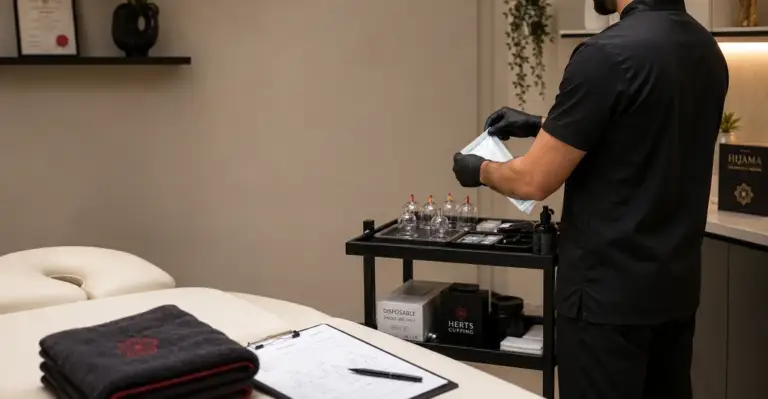
At Herts Cupping we offer dry cupping, fire cupping, and Hijama (wet cupping). Dry and fire cupping are most commonly used in Recovery Sessions alongside muscle scraping. Hijama can also be incorporated for clients who want the full combined approach.
Why Use Muscle Scraping and Cupping Together?
Each technique works on a different aspect of the same problem. Cupping decompresses the tissue and increases blood flow to the area. IASTM then works through the now-warmer, more pliable tissue to address specific restrictions. Using cupping before muscle scraping tends to make the scraping more effective because the tissue has already been loosened.
In practice, a session at our St Albans clinic might start with dry cupping across the tight areas to warm the tissue and encourage circulation, followed by IASTM to work through specific restrictions, and a period of hands-on deep tissue work to finish. For clients who want Hijama included, that is typically performed at the start of the session before the recovery work begins.
The combination is particularly effective for:
- Stubborn back or neck tightness that keeps returning after massage
- Restricted shoulder movement from overuse or postural strain
- Tight hamstrings, calves or hip flexors in athletes and regular gym-goers
- Areas of long-standing restriction that feel knotted or dense
- Sports recovery between training sessions or matches
What to Expect at a Session
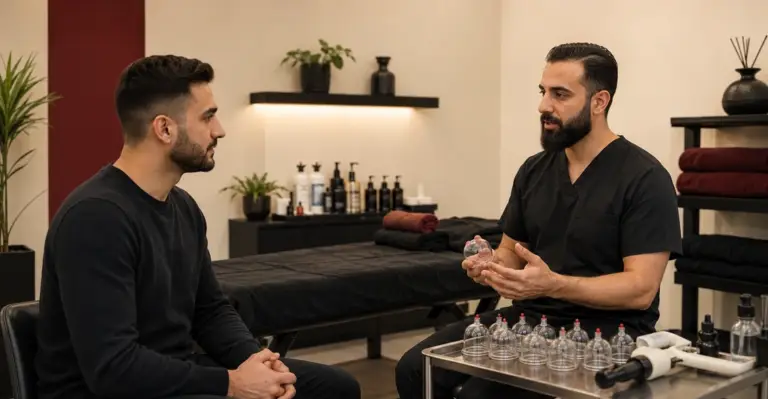
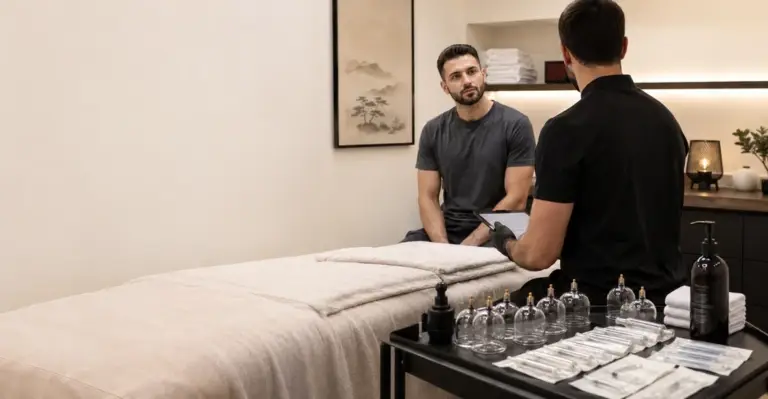
Sessions at Herts Cupping are one-to-one in a private treatment room. Your practitioner will start with a brief assessment to understand where the tension is, how it presents, and what combination of techniques is likely to be most useful for you.
Most clients describe IASTM as a firm, scraping sensation that can feel intense on restricted areas but is generally well-tolerated. Some temporary redness or mild bruising around the treated area is normal and usually settles within a day or two. Cupping marks, where circles appear on the skin after the cups are removed, are also common and typically fade within three to seven days.
You do not need to have tried either technique before. Many clients come to us having only had massage previously and find the combination addresses things that massage alone was not reaching.
Is it Right for You?
IASTM and cupping can support a wide range of musculoskeletal complaints. They are commonly used for back pain, neck and shoulder tension, restricted hip movement, tight calves and hamstrings, and general recovery from training load.
There are some situations where these techniques are not appropriate. We would not perform IASTM or cupping on broken or inflamed skin, in areas of suspected infection, or during pregnancy without medical clearance. If you have a bleeding disorder or are taking blood thinners, please let us know before booking. If you are unsure whether a session is suitable for your situation, message us on WhatsApp and we will advise you honestly before you commit to a booking.
Frequently Asked Questions
Is muscle scraping painful?
It can feel intense on areas with significant restriction, but it should not be unbearable. Your practitioner will check in with you throughout and adjust the pressure. Most clients find it uncomfortable rather than painful, and the discomfort typically reduces as the restriction eases during the session.
How many sessions will I need?
It depends on how long the issue has been present and how your body responds. Some clients notice a significant difference after one session. For long-standing restrictions, a course of two to four sessions is more typical. Your practitioner will give you an honest assessment after your first appointment.
Is IASTM the same as Graston technique?
Graston is a specific branded version of IASTM that uses a particular set of stainless steel tools and a certified protocol. IASTM is the broader category that includes Graston and similar instrument-assisted techniques. At Herts Cupping we use IASTM tools and principles. The outcome for the client is similar.
Can I have IASTM and Hijama in the same session?
Yes. Our combined Recovery Sessions can include Hijama wet cupping, dry cupping and IASTM within the same appointment. Hijama is typically performed first, followed by the recovery work. Many clients who come for Hijama find the addition of IASTM and cupping addresses deeper muscular issues they also wanted to work on.
How does muscle scraping compare to massage?
Massage works primarily through pressure and movement applied with the hands. IASTM uses tools to detect and work through specific tissue restrictions with greater precision. The two techniques are not in competition. In a full Recovery Session, deep tissue massage, cupping and IASTM are typically used together because each addresses something slightly different.
Book a Recovery Session in St Albans
Our IASTM and muscle scraping sessions are available at our private clinic in St Albans, serving clients across Hertfordshire including Watford, Hemel Hempstead, Stevenage, Hatfield and Welwyn Garden City. Sessions can be booked as standalone muscle scraping appointments or as part of a combined Recovery Session with cupping and Hijama.
Book online or message us on WhatsApp if you have questions before booking.