Skip to content Skip to footer

Cupping Therapy Near Me

AS
Abdus ShahidLead Practitioner · Herts Cupping · St Albans

Cupping Therapy Near Me in St Albans: What to Know Before You Book

Quick Answer

If you are searching for cupping therapy near me in St Albans, the main thing to understand is the difference between Hijama wet cupping, dry cupping and fire cupping. Hijama includes small superficial scratches and is often chosen for Sunnah-based wellbeing. Dry and fire cupping use suction only, with no incisions, and are often used for muscle tightness, back tension and recovery.

Most people do not search for cupping because they are curious. They search because something feels tight, heavy, blocked or uncomfortable and they want to know whether cupping is the right next step.

At Herts Cupping in St Albans, people usually come in for one of three reasons: they want Sunnah Hijama, they have persistent muscle tension, or they have tried massage and the same tightness keeps coming back. This guide explains the differences clearly so you do not book the wrong type of session.

What Is Cupping Therapy?

Cupping therapy uses cups placed on the skin to create suction. That suction lifts the skin and underlying soft tissue instead of pressing down into it. This is why cupping feels different from massage. Massage pushes into the tissue. Cupping pulls the tissue upward.

Many clients use cupping for areas such as the upper back, lower back, shoulders, neck, glutes, hamstrings and calves. It is commonly chosen for tightness, heaviness, restricted movement and recovery support.

Important: cupping should be treated as a complementary therapy, not a medical cure. If pain is severe, worsening, linked with injury or comes with unusual symptoms, get medical advice first.

Hijama, Dry Cupping and Fire Cupping: What Is the Difference?

Hijama Wet Cupping

Hijama uses suction cups followed by small superficial scratches, then the cups are reapplied to draw a small amount of blood.

Best for: Sunnah Hijama, general wellbeing, heaviness and clients specifically wanting wet cupping.

Dry Cupping

Dry cupping uses suction only. There are no scratches and no blood drawn. Cups can be static or moved across the skin.

Best for: muscle tightness, desk posture tension, gym recovery and first-timers unsure about wet cupping.

Fire Cupping

Fire cupping uses glass cups and controlled heat to create suction. It is a traditional Chinese cupping method.

Best for: people who prefer traditional glass cupping and a warmer, deeper-feeling session.

What Can Cupping Therapy Help With?

People commonly book cupping therapy for:

  • Upper back, neck and shoulder tightness
  • Lower back tension from sitting, training or work
  • Heavy legs, calf tightness and sports recovery
  • Desk posture related tension
  • A feeling of stiffness or restriction
  • General recovery and relaxation
  • Sunnah-based Hijama wellbeing

The aim is not to promise that cupping fixes every condition. A better way to explain it is this: cupping may help some people feel looser, lighter and less restricted by supporting local circulation and soft tissue decompression.

Is Cupping Therapy Painful?

Most people describe cupping as a pulling or tight sensation rather than pain. Tight areas can feel more intense, but cup pressure can be adjusted throughout the session.

Hijama includes small superficial scratches. Most clients are surprised by how manageable this feels. The anticipation is usually worse than the actual process.

Will Cupping Leave Marks?

Yes, cupping can leave temporary circular marks. These are common and usually fade within a few days, although darker marks can last longer depending on the person and the area treated.

The marks are not usually painful, but the area can feel mildly tender afterwards. If you have an event, wedding, holiday or sports competition coming up, plan your session with enough time for marks to fade.

Who Should Avoid Cupping?

Cupping and Hijama may not be suitable for everyone. You should check with your GP first if you:

  • Take blood-thinning medication
  • Have a bleeding disorder or clotting issue
  • Have severe anaemia
  • Have active infection, fever or open wounds
  • Have certain skin conditions in the treatment area
  • Faint easily or have very low blood pressure
  • Are pregnant or recently had surgery
  • Have an uncontrolled chronic health condition

Red flag symptoms: if back pain comes with bladder or bowel changes, numbness around the genitals or back passage, weakness in both legs, fever, chest pain, unexplained weight loss or pain that is rapidly worsening, seek medical advice first. Do not book cupping as the first step.

What Happens During a Session?

Every session starts with a short consultation. This helps us understand what you are dealing with, whether cupping is suitable and which type of session makes sense.

A typical session may include:

  • Consultation and suitability check
  • Assessment of the areas causing tension
  • Light warm-up massage where appropriate
  • Dry cupping, fire cupping or Hijama depending on your booking
  • Additional recovery work such as IASTM or hands-on release if booked
  • Aftercare advice before you leave

Which Session Should You Book?

If you are unsure, use this as a simple starting point:

  • Want Sunnah Hijama? Book Hijama.
  • First time and unsure about wet cupping? Start with dry cupping or message first.
  • Neck, back or shoulder tightness from desk work? A targeted recovery session may suit you better.
  • Gym recovery, heavy legs or full-body tightness? Consider full body recovery or cupping massage.
  • Massage helps but the pain keeps coming back? Combined cupping, massage and muscle scraping is usually more relevant.

The honest answer is that not everyone needs Hijama. Sometimes dry cupping and recovery work is more suitable. Sometimes Hijama is exactly what the client wants. The point of the consultation is to guide that properly.

Cupping Therapy in St Albans and Hertfordshire

Herts Cupping is based in St Albans and serves clients from across Hertfordshire, including Harpenden, Hatfield, Hemel Hempstead, Welwyn Garden City, Watford, Borehamwood and surrounding areas.

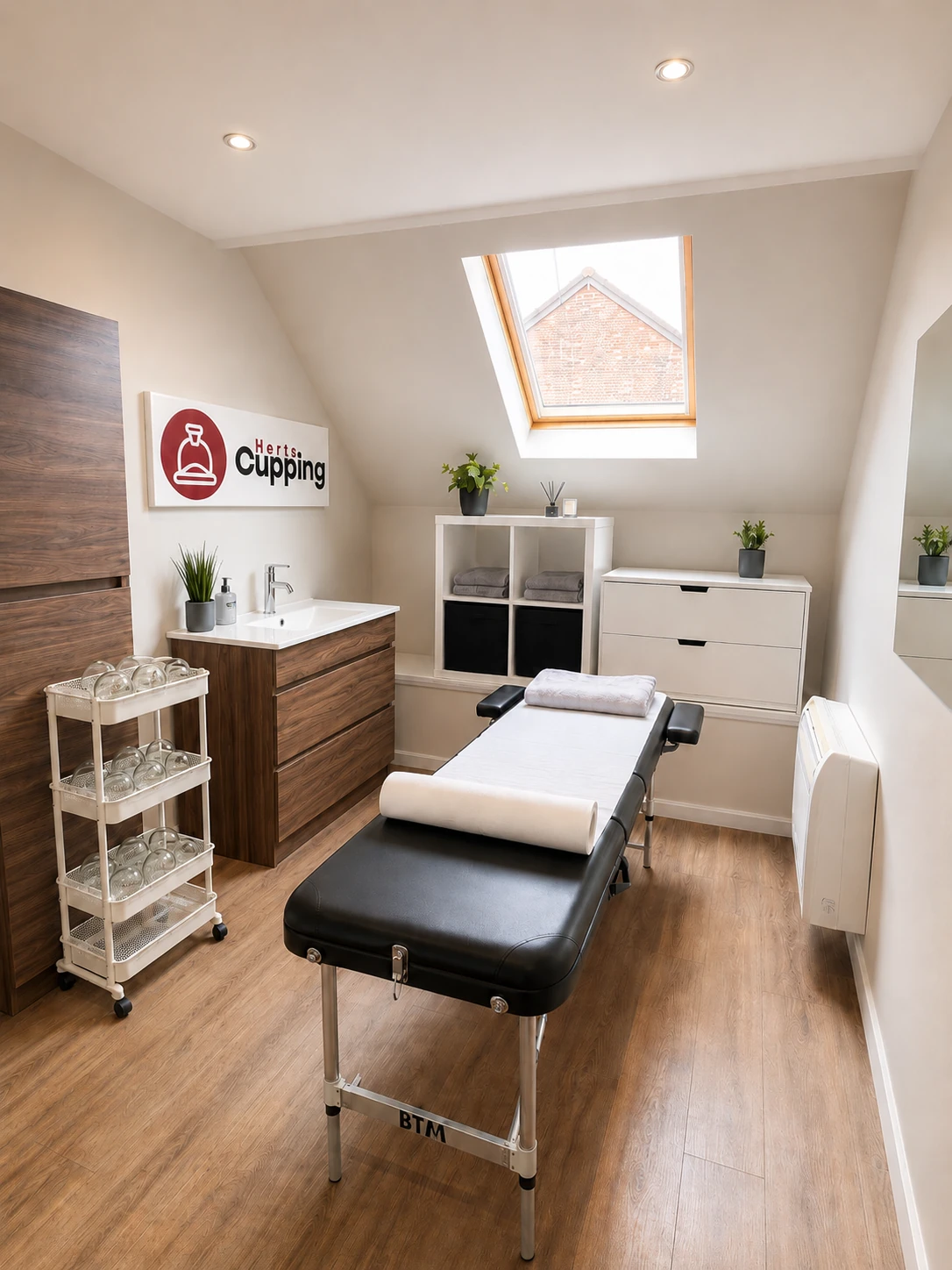
Sessions are carried out in a private clinic setting with sterile single-use equipment, a proper consultation and clear aftercare guidance. This is not a rushed walk-in treatment or a generic spa service.

Common Questions

Where can I find cupping therapy near me in St Albans?

Herts Cupping is a private cupping and Hijama clinic in St Albans, Hertfordshire. Sessions include Hijama wet cupping, dry cupping, fire cupping and combined recovery sessions depending on your needs.

Is Hijama the same as cupping therapy?

Cupping therapy is the broader term. Hijama usually refers to wet cupping, where small superficial scratches are made before the cups are reapplied. Dry cupping and fire cupping use suction only without incisions.

Does cupping therapy help with back and neck pain?

Many people choose cupping therapy for back, neck and shoulder tightness. It may help some people feel looser or less restricted, but it should not be presented as a cure or replacement for medical assessment.

What type of cupping should I book first?

If you specifically want Sunnah Hijama, start with a Hijama session. If your main issue is muscular tightness, dry cupping or a targeted recovery session may be more suitable. If unsure, message before booking.

Who should avoid cupping therapy?

Cupping may not be suitable for people taking blood thinners, those with bleeding disorders, severe anaemia, active infection, certain skin conditions, uncontrolled chronic conditions or people who faint easily. Speak to your GP first if unsure.

Does cupping leave marks?

Yes, cupping often leaves temporary circular marks. These usually fade over several days. They should not be confused with injury, although the area can feel mildly tender afterwards.

Looking for cupping therapy near you?

Book a private one-to-one session in St Albans or message first if you are unsure whether Hijama, dry cupping or a recovery session is the right option.

Leave a comment