In this article
Massage can settle a loaded area without changing the work, training, movement or neighbouring muscle pattern that keeps reloading it. If the same tightness repeatedly returns, the useful question is not simply whether you need harder pressure, but what keeps asking that area to compensate.
Why Back Pain Often Returns After Massage
Massage can help reduce muscular tension. The issue is that recurring back pain is not always caused by the surface muscle alone. It can involve deeper layers of fascia, restricted tissue, old compensation patterns, poor posture, training overload or stiffness around the hips and glutes.
When the deeper restriction is not addressed, the surface muscle may relax temporarily, but the body soon pulls itself back into the same tight pattern. That is why you can feel better after a massage, then feel the same ache return within a few days.
This does not mean massage was useless. It means the body may need a different type of work, especially if the pain has been there for months or keeps returning after every treatment.
The Fascia Problem Most People Miss
Fascia is the connective tissue that surrounds and supports your muscles. When it becomes restricted, it can feel like deep stiffness, pulling, pressure or a tight band that does not fully release.
This is one reason some people say, “I can feel the tightness, but stretching does not shift it.” The restriction may not be only in the muscle belly. It may be in the layer around it.
Standard massage usually presses down into the muscle. That can help, but if the tissue feels stuck or restricted, compression alone may not be enough. This is where cupping and IASTM muscle scraping work differently.
How Cupping Works Differently From Massage
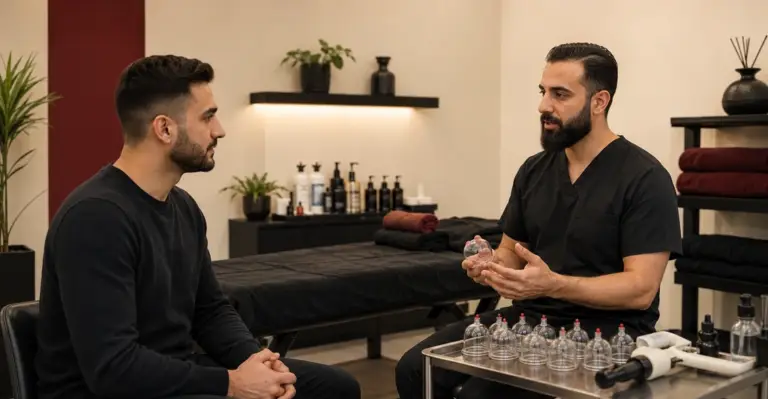
Most bodywork pushes down. Cupping does the opposite. It lifts and decompresses the tissue using suction.
That lifting effect may help separate restricted layers, increase local blood flow and support better movement through the muscle and fascia. Many clients describe it as a deep pulling pressure rather than pain.
For back stiffness, cupping may be used across the lower back, upper back, shoulders, traps, glutes or around areas where the body feels locked. The aim is not just to relax the surface. The aim is to decompress tissue that has become tight, stuck or overloaded.
Where Muscle Scraping Fits In
Muscle scraping, also known as IASTM or Graston-style therapy, uses specialist stainless steel tools to work through areas of fascial restriction and stubborn tightness.
It is not the same as a relaxing massage. It is more targeted. The tool is used to identify and work through areas where tissue feels rough, restricted or adhered.
For recurring back stiffness, muscle scraping can be useful when the same area keeps tightening despite stretching or massage. It is especially relevant when the issue is linked to old injuries, gym training, desk posture, scar tissue or chronic restricted movement.
Massage
Compression
Pushes down into tight muscle. Useful for surface tension, general tightness and relaxation.
Cupping
Decompression
Lifts and decompresses tissue. Useful when the area feels stiff, restricted or stuck.
IASTM
Targeted Soft Tissue Work
Works through fascial restriction and stubborn adhesions that standard massage may miss.
The Lower Back Is Rarely Just the Lower Back
One of the biggest mistakes people make is treating lower back stiffness as if the lower back is the only problem.
In many cases, the lower back is reacting to tight hips, restricted glutes, stiff hamstrings, poor desk posture, heavy lifting, weak core control or long periods of sitting. The back becomes the area where the pressure is felt, but not always the original cause.
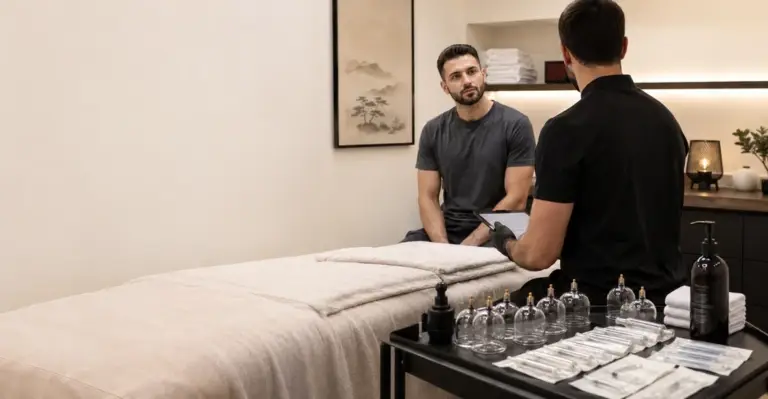
That is why a proper session should start with an assessment. If someone only works exactly where you feel pain, they may miss the wider pattern that keeps pulling the back into tension.
Why Gym-Goers Get Recurring Back Stiffness
Training hard is good, but repeated loading can create tightness that builds over time. Deadlifts, squats, running, cycling, football and combat sports can all place heavy demand on the lower back, hips and posterior chain.
If recovery is poor, the fascia around the muscle can become tighter. Range of motion drops, movement feels restricted and the same areas keep flaring up after training.
This is why many active clients use cupping and muscle scraping as part of their recovery routine. Not because they are necessarily injured, but because they want to stay loose, mobile and able to train consistently.
When Back Pain Needs Medical Attention
Most back stiffness is not serious, but there are times where you should seek medical advice before booking any bodywork session.
- Severe pain after a fall, accident or injury
- Numbness, weakness or loss of control in the legs
- Loss of bladder or bowel control
- Unexplained weight loss, fever or feeling severely unwell
- Pain that is worsening quickly or does not improve with rest
Safety note: If any of these apply, speak to your GP, physiotherapist or an appropriate medical professional first. Cupping, massage and muscle scraping are supportive therapies. They do not replace medical diagnosis, urgent care or treatment for a medical condition.
What I Usually Recommend at Herts Cupping
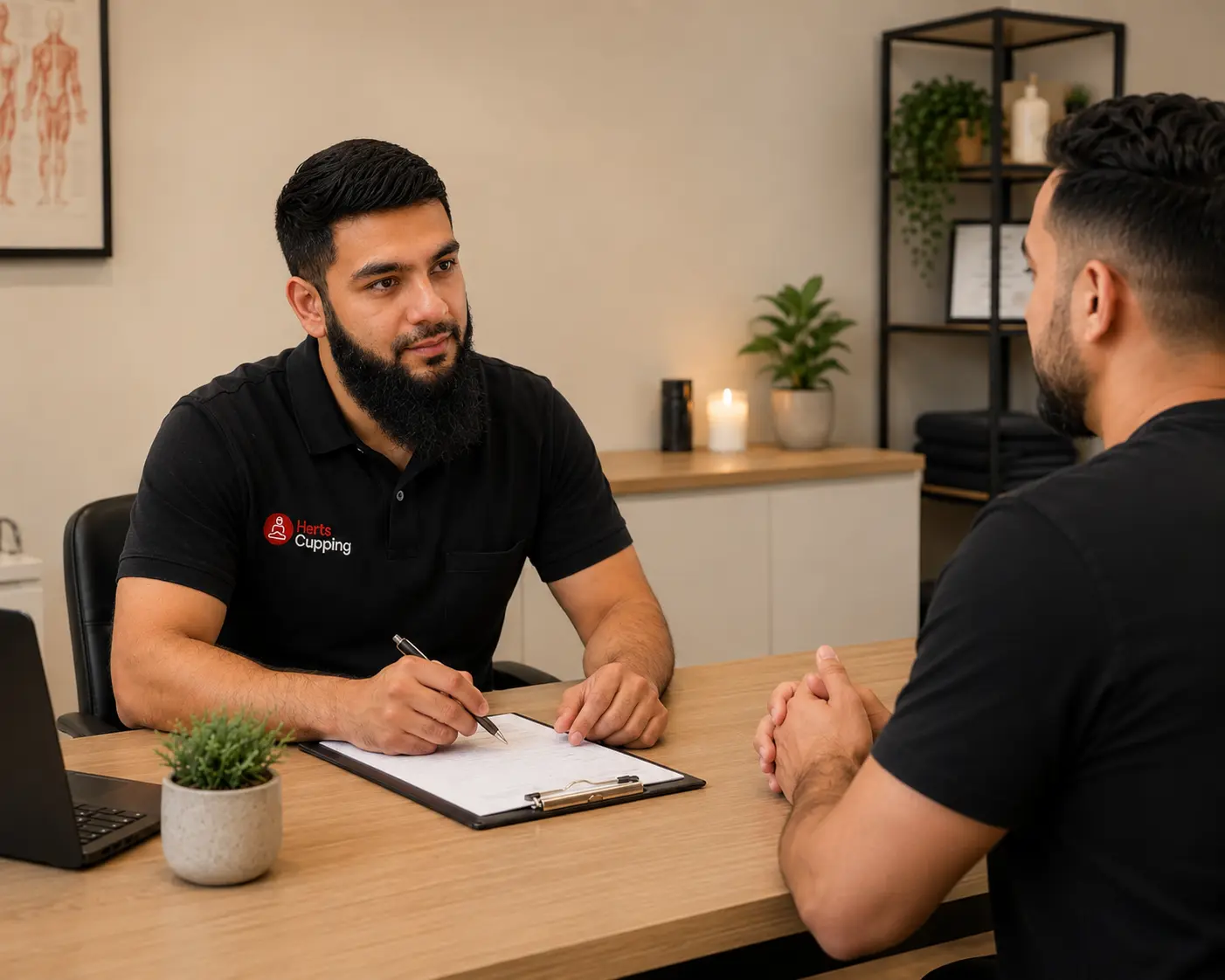
For recurring back stiffness, most clients do best with a combined recovery session rather than basic massage alone. This allows me to assess the area properly and use the right mix of cupping, deep tissue work and IASTM muscle scraping.
If someone specifically wants Hijama, we can include wet cupping where suitable. If they prefer no incisions, dry cupping with massage and muscle scraping is usually the better starting point.
The aim is not to throw every technique at the body. The aim is to choose what makes sense based on the presentation, the area and how the tension is behaving.
Dry Option
Targeted Recovery
£75
Cupping, deep tissue and IASTM for a focused area.
Most Clients Choose
Targeted Hijama + Massage
£95
Hijama, cupping, deep tissue and IASTM where suitable.
Full Coverage
Full Body Recovery
From £110
For multiple areas or long-standing stiffness.
Not sure what to book? You do not need to diagnose yourself. Message us on WhatsApp and we will point you towards the most suitable option based on what you are dealing with.
Does One Session Fix Back Pain?
Sometimes clients feel a major difference after one session. Sometimes the body needs a few sessions, especially if the stiffness has been there for a long time.
The honest answer is that it depends on the cause, the duration, the person’s lifestyle and how the body responds. We do not promise miracle fixes. What we do is assess properly, treat the relevant areas and give clear aftercare so the session has the best chance of holding.
For ongoing gym recovery or recurring desk-related tension, many clients book every four to six weeks as maintenance. For more stubborn restriction, a short course of sessions may make more sense.
What You Can Do Between Sessions
A good session helps, but what you do afterwards matters too. If you return to the same posture, same training load and same habits, the tension can build again.
- Keep moving gently after treatment
- Stay hydrated for the next 24 hours
- Avoid heavy training on the day of treatment
- Do light mobility work instead of aggressive stretching
- Review desk posture, sleep position and training recovery
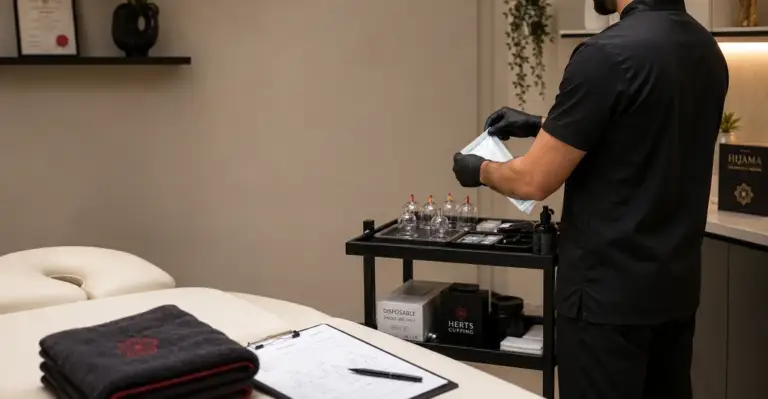
We provide aftercare guidance after every session so you know what to do and what to avoid.
Back Pain Treatment in St Albans
If your back pain keeps returning after massage, it may be time to look beyond surface-level tension. Cupping, deep tissue work and muscle scraping offer a different approach by working through compression, decompression and fascial restriction in the same session.
At Herts Cupping, we provide private one-to-one recovery sessions in St Albans for clients dealing with lower back stiffness, upper back tension, gym recovery issues, desk posture strain and long-standing tightness.
You do not need to know exactly what to book. If you are unsure, message us on WhatsApp and we will point you in the right direction.
Further Reading
- Cupping for Back Pain — how we approach recurring back stiffness
- Cupping Massage and Deep Tissue Therapy — combined recovery sessions
- Muscle Scraping and IASTM — Graston-style soft tissue work in St Albans
- Sports Recovery Therapy — cupping, IASTM and deep tissue for active clients
- Hijama in St Albans — wet cupping sessions and what to expect
Common Questions
Why does my back pain come back after massage?
Back pain or stiffness can return after massage when the issue is not only surface-level muscle tension. Deeper fascia, posture, training load, tight hips, glutes or movement patterns may be contributing. Massage may give temporary relief, but the same pattern can return if the deeper restriction is not addressed.
Can cupping help if massage only gives short-term relief?
Cupping may help some people because it works differently from massage. Massage presses down into tissue, while cupping uses suction to lift and decompress tissue. This may be useful when the area feels stuck, restricted or heavy. Results vary and it is not a replacement for medical assessment.
What is muscle scraping or IASTM used for?
IASTM, often called muscle scraping or Graston-style therapy, uses specialist tools to work through areas of fascial restriction and stubborn tightness. It is more targeted than a relaxing massage and is often used when the same tight area keeps returning.
When should back pain be checked by a doctor?
Seek medical advice before bodywork if the pain is severe, follows a fall or injury, causes numbness or weakness, affects bladder or bowel control, comes with fever or unexplained weight loss, or is quickly worsening. Cupping, massage and IASTM are supportive therapies and do not replace medical diagnosis.
Which session is best for recurring back stiffness?
For recurring back stiffness, a combined recovery session is usually more suitable than basic massage alone. At Herts Cupping, this may include cupping, deep tissue massage, IASTM muscle scraping and, where appropriate, Hijama. The right option depends on the area, symptoms and suitability.
Book a Recovery Session in St Albans
Private clinic in St Albans. Cupping, deep tissue massage and muscle scraping for recurring back stiffness, gym recovery and long-standing tension.
Book a Session View Recovery Sessions Message on WhatsApp