In this article
Cupping therapy uses suction to lift and decompress soft tissue. Dry cupping uses suction only, while wet cupping, known as Hijama, includes tiny superficial scratches and draws a small amount of blood. Research into cupping exists, especially around pain and soft tissue complaints, but the evidence is mixed...
What Cupping Therapy Involves
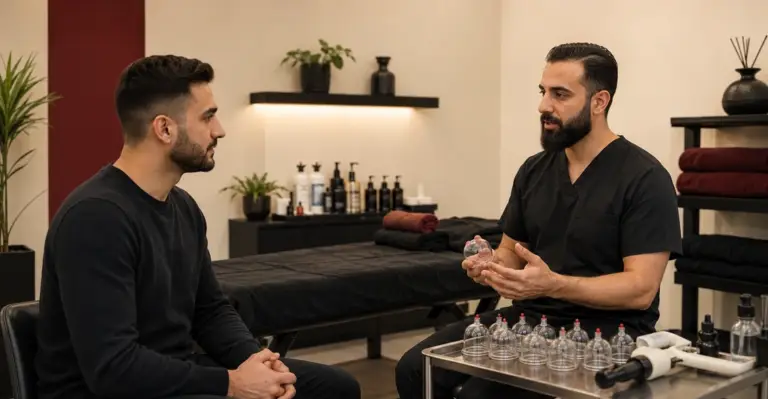
Cupping involves placing cups on the skin and creating suction. That suction draws the skin and underlying soft tissue upward. The cups may be left in place or moved across the skin as part of a massage-style session.
At Herts Cupping, the main forms are dry cupping, fire cupping and Hijama wet cupping.
| Type | What happens | Common use |
|---|---|---|
| Dry cupping | Suction only, no incisions | Muscle tightness, recovery, stiffness |
| Fire cupping | Glass cups with heat-created suction | Traditional cupping experience |
| Hijama | Wet cupping with tiny superficial scratches | Sunnah practice, wellbeing, wet cupping support |
What Research Says
There is research on cupping therapy, particularly around pain and musculoskeletal complaints, but the overall evidence is mixed. Some reviews suggest possible benefit, while others highlight limitations in study quality, methods and consistency.
That means we should not oversell cupping as a proven cure for medical conditions. A more honest position is that cupping may help some people with soft tissue tension, discomfort and recovery, but more high-quality research is needed.
What Cupping May Help With
In clinic, people usually come for cupping because something feels tight, heavy, restricted or hard to shift with massage alone.
- Back and shoulder tightness
- Neck and upper back stiffness
- Gym recovery and training load
- Heavy legs or tight calves
- Soft tissue restriction
- General wellbeing and relaxation
What Cupping Cannot Do
- It does not diagnose medical conditions
- It does not replace GP care or physiotherapy
- It does not cure chronic disease
- It does not repair structural damage
- It should not be used over infected or broken skin
Safety and Side Effects
Cupping commonly leaves temporary circular marks. These are usually painless and fade over several days. Some people may feel tired afterwards, especially after wet cupping.
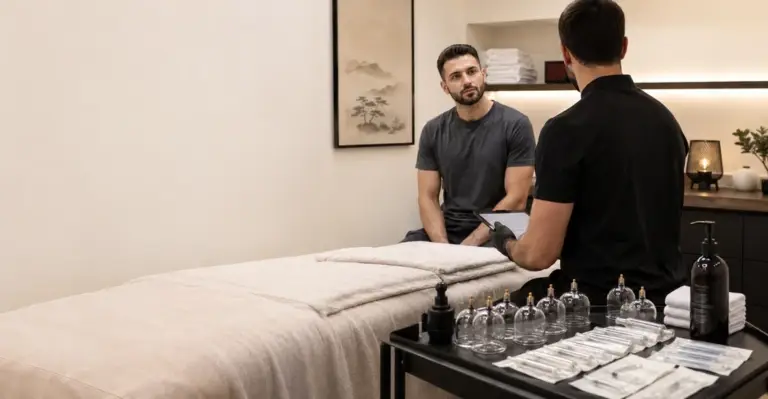
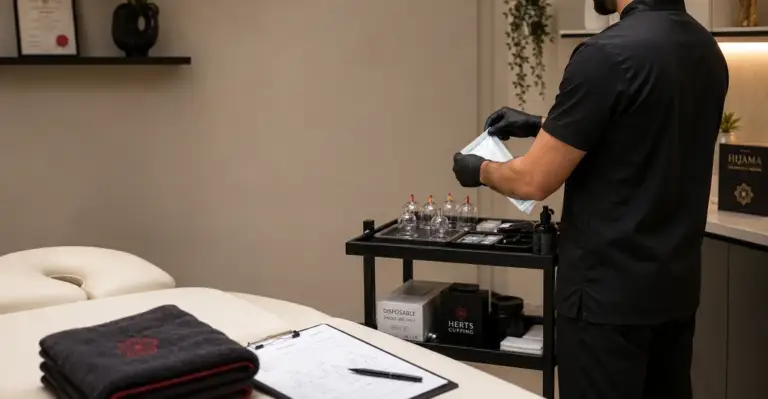
Safety depends heavily on the practitioner and setting. Hygiene matters. Screening matters. Equipment matters. Wet cupping should only be carried out with sterile single-use equipment and appropriate disposal.
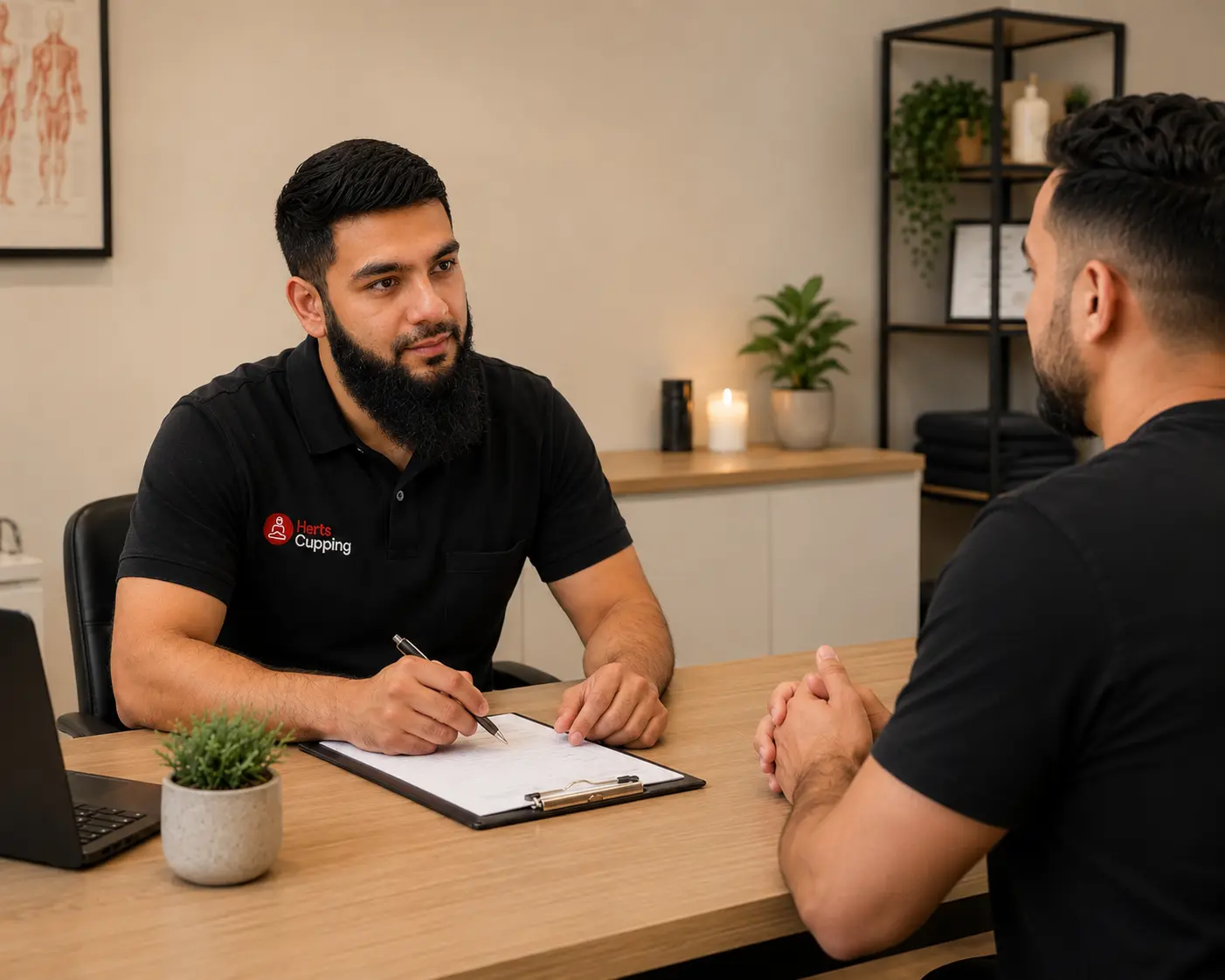
At Herts Cupping: we screen every client, use sterile single-use equipment for Hijama, explain aftercare clearly and avoid making claims that go beyond what can be responsibly supported.
Final Answer
Cupping therapy has traditional value, client-reported benefits and some developing research behind it. But it should be spoken about carefully. It is not a miracle cure, and it is not a substitute for medical care.
Used properly, cupping can be a useful complementary therapy for soft tissue tension, recovery and general wellbeing.
Related Pages
- Cupping massage in St Albans - dry cupping, fire cupping and suction therapy
- Hijama in St Albans - wet cupping sessions
- Benefits of Hijama - evidence and safety guidance
- Cupping vs sports massage - how suction differs from massage
Common Questions
Is there medical evidence for cupping therapy?
There is some research on cupping, mainly around pain and musculoskeletal complaints, but evidence quality varies and stronger research is still needed.
Is cupping safe?
Cupping is usually well tolerated when performed properly, but it can cause temporary marks, discomfort and, if hygiene standards are poor, infection or other risks.
What is the difference between dry and wet cupping?
Dry cupping uses suction only. Wet cupping, known as Hijama, involves tiny superficial scratches and draws a small amount of blood.
Can cupping treat medical conditions?
Cupping should not be presented as a cure or replacement for medical care. It may be used as complementary support for soft tissue tension and recovery where suitable.
Who should avoid cupping?
People with certain blood disorders, blood-thinning medication, active infection, skin conditions in the treatment area, severe anaemia or unstable health conditions should seek medical advice before booking.
Book Cupping in St Albans
Private one-to-one cupping and Hijama sessions with clear advice, safe standards and no exaggerated claims.
Book a Session Message on WhatsApp