In this article
Abdus Shahid Lead Practitioner · Herts Cupping · St Albans Hijama Healing: 10 Benefits for Your Body and Mind Quick Answer Hijama supports the body and mind by helping many clients feel lighter,...
Updated framing: reported experiences, not miracle claims
This legacy article has been retained because people already find it in search, but the wording should not be read as a promise of healing or a cure. Use the current Benefits guide for the evidence, safety and realistic limits.
Read the current Benefits guide → AS Abdus Shahid Lead Practitioner · Herts Cupping · St AlbansQuick Answer
Hijama supports the body and mind by helping many clients feel lighter, looser, calmer and more physically settled. It is commonly used for Sunnah practice, back and shoulder tension, sports recovery, general heaviness and relaxation. It should not be sold as a miracle cure or a treatment for diagnosed physical or mental health conditions.
The original angle of this article was right: people want to understand what Hijama can do for the body and mind. The problem is that Hijama is often spoken about online in a way that goes too far.
I do believe Hijama has real value. I see clients leave feeling lighter, calmer and less restricted. But I also do not believe in making wild claims about depression, PTSD, digestion, immunity or treating every illness. Hijama does not need exaggeration to be powerful.
What Hijama Is
Hijama, also known as wet cupping, is a traditional therapy where cups are used to create suction on the skin. Tiny superficial scratches are then made and the cups are reapplied to draw a small amount of blood from the surface tissue.
It has a long history across different cultures and holds a special place in Islamic tradition. Many Muslim clients book Hijama because it is connected to the Sunnah of the Prophet Muhammad ﷺ. Others come for the physical side: tension, heaviness, recovery and a general reset.
10 Benefits of Hijama for Your Body and Mind
These are the benefits clients most commonly ask about and report after treatment. They are not guaranteed for every person, but they are a fair reflection of why people continue to book Hijama.
1Supports muscle tension relief
Many clients book Hijama for tightness around the back, neck, shoulders and legs. The suction lifts and decompresses the tissue, which feels different from massage because it works by pulling tissue upward rather than pressing down into it.
2Helps many clients feel lighter
This is one of the most common client-reported effects. People often describe feeling lighter, less heavy, less blocked or more open after the cups are removed.
3Supports sports and activity recovery
Active clients often use Hijama as part of a wider recovery routine. It is commonly booked for heavy legs, tight hips, shoulder stiffness, lower back tightness and training-related heaviness.
4Supports local blood flow
Cupping increases local blood flow towards the treated area. This is part of why cupping marks appear and why the tissue can feel different afterwards. This does not mean Hijama cures medical conditions.
5Helps physical stress tension
Stress often shows up physically as tight traps, stiff shoulders, headaches, jaw tension or upper back heaviness. Hijama is not a mental health treatment, but releasing physical tension can help many clients feel calmer and more settled.
6Supports Sunnah-based wellbeing
For Muslim clients, Hijama is not only physical. It is also connected to Sunnah practice. Many clients book for that reason alone, even when they are not coming with a specific complaint.
7Can support relaxation
Many clients feel relaxed during or after the session. This is likely linked to the stillness of the treatment, the physical release and the body's response to being treated in a calm setting.
8Encourages body awareness
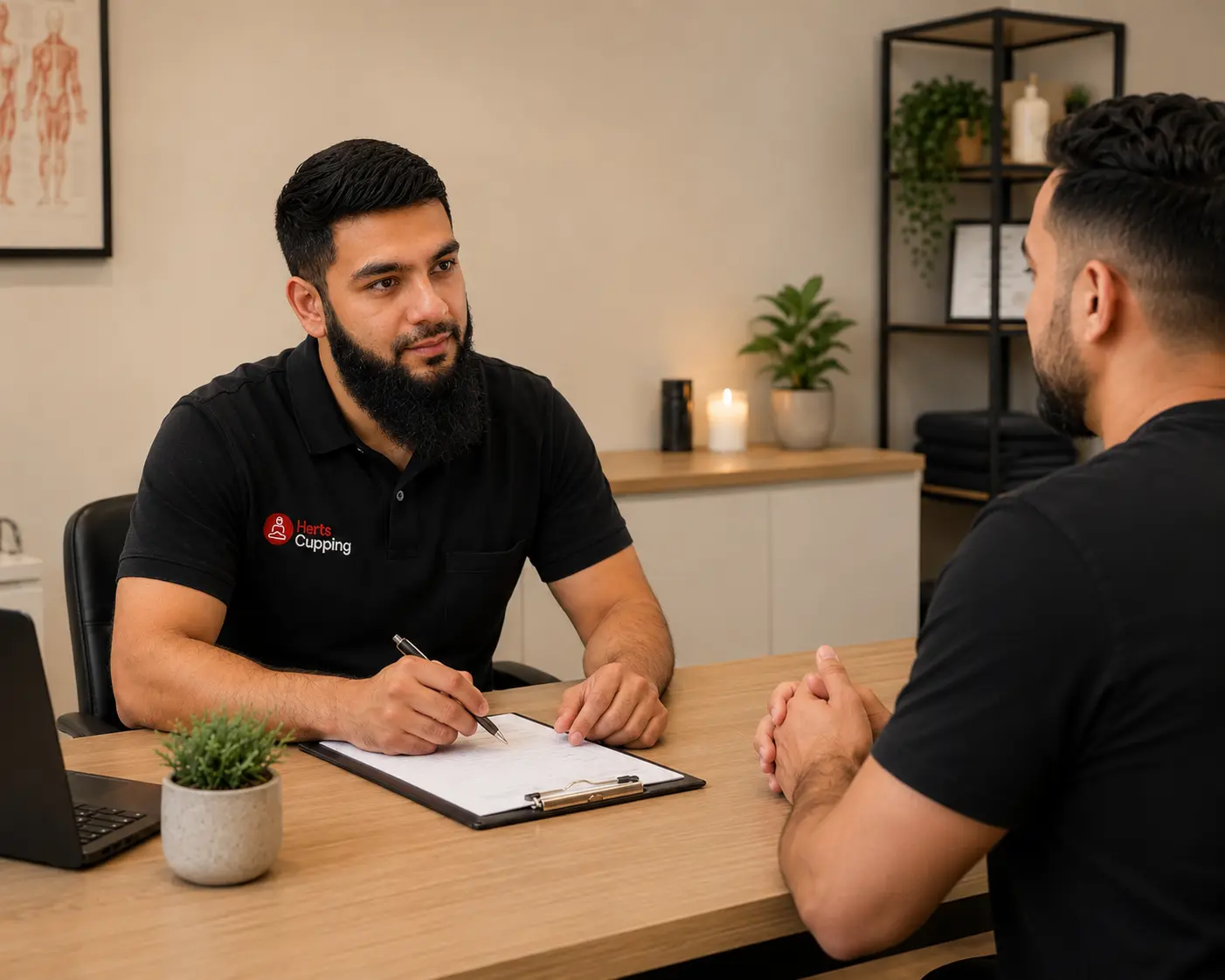
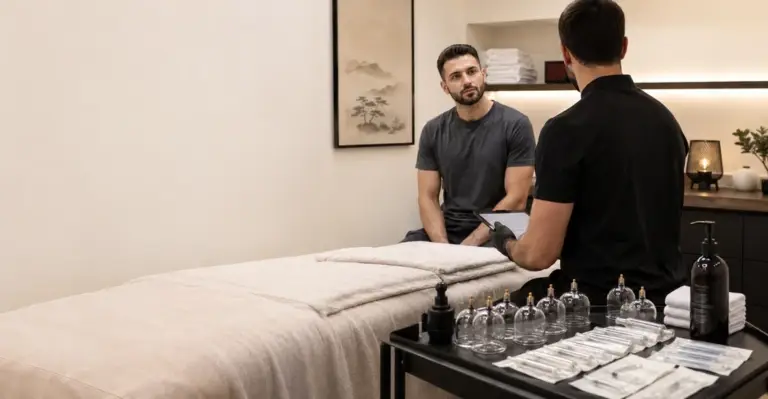
A proper Hijama session starts with a consultation. We talk through where you feel tension, what has been building up and what your body has been trying to tell you. That awareness alone can change how you approach recovery.
9Can be targeted to specific areas
Hijama is not random. It can be focused on the areas causing restriction, such as upper back, lower back, shoulders, hamstrings, calves or between the shoulder blades.
10Offers a deeper option than massage alone
Massage presses down into tissue. Cupping and Hijama lift tissue upward using suction. For people who have had repeated massage but still feel stuck, that different mechanism can make the session feel more complete.
Body Benefits vs Mind Benefits
Body
Muscle tension, heaviness, training load, restricted areas, back stiffness, shoulder tightness and general recovery support.
Mind
Feeling calmer, lighter, more settled and more aware of where the body carries stress. Not a treatment for mental health conditions.
What I Would Not Claim
I would not say Hijama cures illness, treats depression, treats PTSD, fixes digestion, strengthens the cardiovascular system, boosts the immune system or replaces medical care. Those claims go too far.
There are traditional explanations around stagnant blood, release and wellbeing. I respect that language. But when writing for the public, especially online, it is important to be honest and precise. Hijama can be valuable without being sold as a miracle cure.
Important: if you have a diagnosed physical or mental health condition, speak to your GP or a qualified healthcare professional. Hijama can sit alongside your wider wellbeing routine where suitable, but it does not replace medical care.
How Hijama Works Alongside Other Therapies
Hijama can be used on its own or as part of a wider recovery session. At Herts Cupping, we may combine Hijama with dry cupping, deep tissue massage, IASTM muscle scraping or percussion therapy where suitable.
This is especially useful when someone has long-standing tension, training-related tightness or areas that keep returning after massage alone.
Is Hijama Suitable for Everyone?
No. Hijama is not suitable for everyone. Suitability depends on your health, medication, skin condition, energy levels and what you are hoping to get from the session.
- Tell us if you take blood thinners or regular medication.
- Tell us if you have diabetes, anaemia, blood pressure issues or fainting episodes.
- Do not book if you feel unwell on the day.
- Speak to your GP first if symptoms are severe, unexplained or worsening.
Related Pages
- Hijama in St Albans - session options and pricing
- Benefits of Hijama - evidence, safety and suitability
- Dry cupping vs Hijama - how to choose the right session
- Cupping vs sports massage - suction versus pressure explained
- Book an appointment - view available sessions
Common Questions
What are the benefits of Hijama for the body?
Clients commonly book Hijama for back, neck and shoulder tension, heaviness, sports recovery, general stiffness and Sunnah-based wellbeing. It should not be presented as a cure for medical conditions.
What are the benefits of Hijama for the mind?
Many clients feel calmer, lighter or more settled after Hijama. This is usually linked to physical release, stillness and relaxation during the session. Hijama is not a treatment for anxiety, depression or PTSD.
Is Hijama a miracle cure?
No. Hijama is a valued Sunnah practice and traditional wet cupping therapy, but it should not be described as a miracle cure or a guaranteed treatment for illness.
Can Hijama help with stress?
Hijama can help many clients feel physically relaxed and less tense, especially around the upper back, neck and shoulders. If you are struggling with significant stress or mental health symptoms, speak to a GP or qualified mental health professional.
Is Hijama safe?
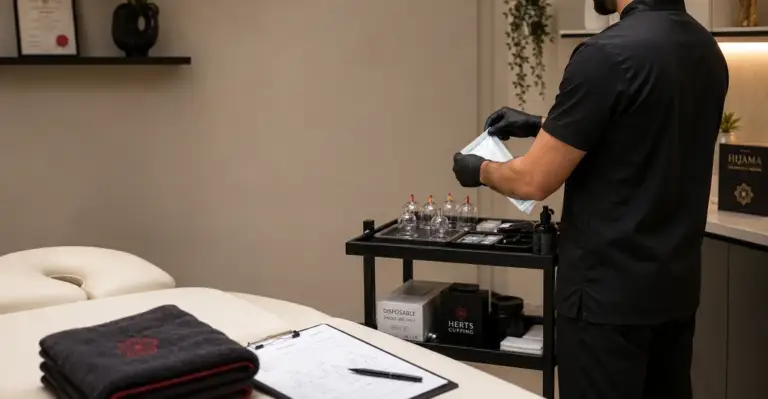
Hijama can be carried out safely when performed by a trained practitioner using sterile single-use equipment and proper suitability checks. It is not suitable for everyone, so screening matters.
Book Hijama in St Albans
Private one-to-one Hijama sessions with sterile single-use equipment, clear aftercare and honest suitability checks.
Book a Session Message on WhatsApp