Firm manual work
Sustained hands-on pressure works directly through tight muscle and remains the main part of a deep tissue recovery session.
Deep Tissue Massage · Combined Recovery · Hertfordshire
For a tight back, loaded shoulders, heavy legs or muscular restriction that keeps returning. Firm hands-on treatment is the foundation, with dry cupping and IASTM available when a different treatment input is useful.
Deep tissue should mean purposeful work, not maximum pain
People usually search for deep tissue massage because they want something firmer and more focused than a light massage. We provide that. The difference is that depth is created with time, sustained pressure, better positioning and a clear treatment target rather than simply testing how much discomfort you can tolerate.
If the area starts guarding under excessive pressure, more force can become less useful. We adjust the approach, work connected muscles and, where appropriate, change the treatment input with dry cupping or IASTM rather than trying to solve every problem by pressing harder.
What I repeatedly see in clinic
A client may arrive convinced one side is the entire problem, yet the opposite side, glute, hip, lat or upper back may feel more loaded when we begin working. This is especially common when someone has spent weeks avoiding a movement, training around discomfort or doing a one-sided job.
That observation does not diagnose an injury. It changes how I use the appointment. Instead of spending the full hour repeatedly pressing the exact same point, I can treat the wider muscular pattern and recheck how movement feels as the session progresses.
A combined recovery toolkit
The value comes from selecting the right tools, not from forcing every technique into every appointment.
Sustained hands-on pressure works directly through tight muscle and remains the main part of a deep tissue recovery session.
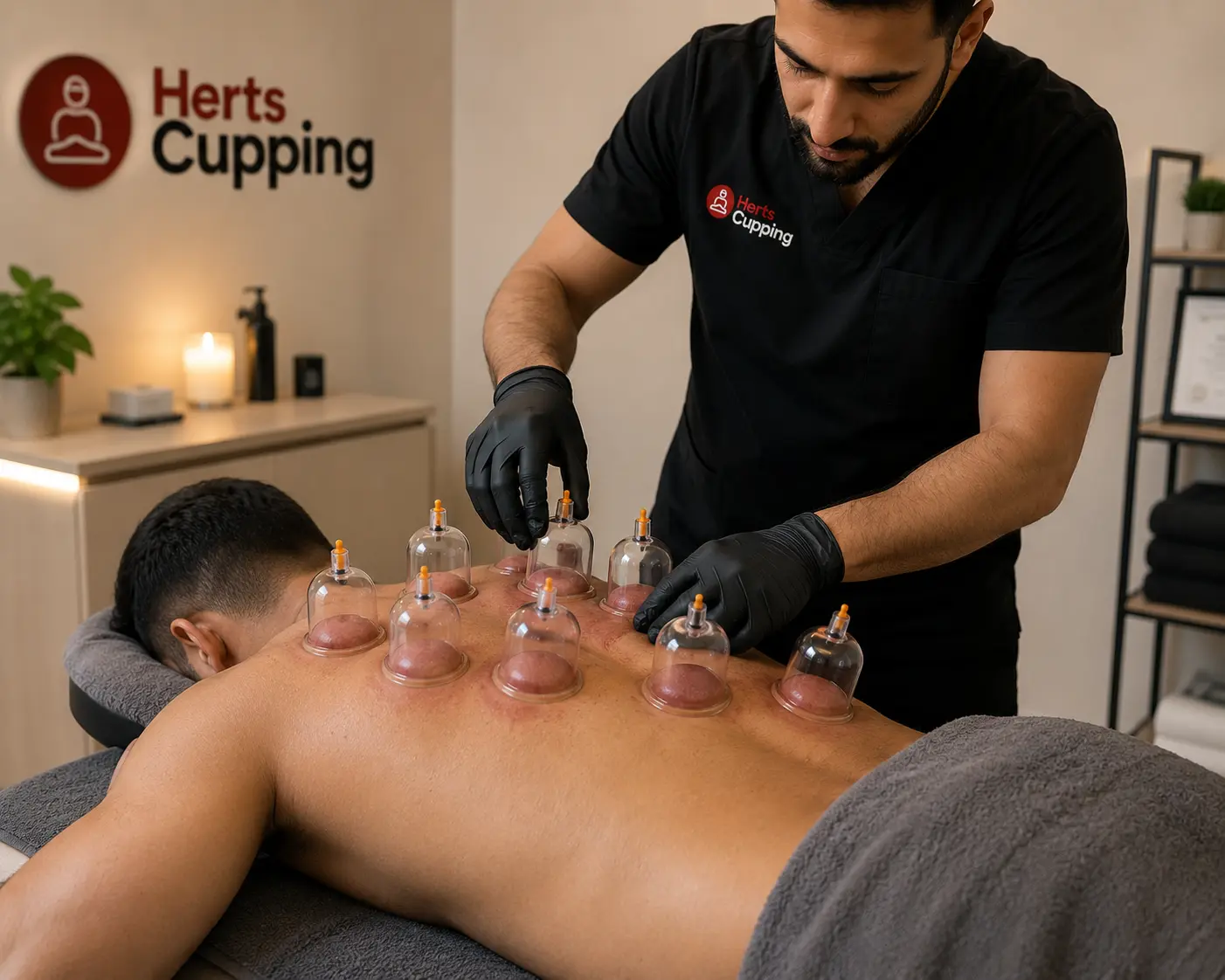
Suction lifts rather than presses. Cups may stay in place or move with the body when restriction appears through a range of motion.
Smooth tools help work over dense or stubborn areas before the session returns to deeper manual treatment.
Used for warm-up, circulation and settling larger muscle groups. It supports the treatment rather than replacing hands-on work.
Available when wet cupping is specifically wanted. It can be a standalone session or included after muscular work in a combined option.
The next-day guidance changes if Hijama is included. Clothing, hydration and training timing are explained before you leave.


Why people choose this instead of another standard massage
That does not make cupping or IASTM automatically better. It means the practitioner has another option when a familiar muscular problem needs a different input.
Useful when desk work, lifting, driving or repeated posture keeps loading one connected region and ordinary massage has been short-lived.
Calves, hamstrings, glutes, hips, shoulders and lower back can be worked around training demands rather than treated as a generic full-body massage.
After appropriate assessment or rehabilitation, some clients still feel guarded or restricted. Fresh injury, swelling, weakness or numbness requires another route first.
Choose the session by area and time.
Firm hands-on recovery with dry cupping, IASTM and percussion where useful.
Book 60-minute recoveryThe same targeted muscular work with Hijama included in the appointment.
Book Recovery + HijamaLonger treatment when training load or tightness is spread across several regions.
Book 90-minute recoveryFull-body recovery work and Hijama in one extended appointment.
Book Full Body Recovery + HijamaTrusted locally
Live Google feedback is shown through Trustindex.
Yes. Firm manual work is the foundation of the appointment. “Recovery” is the booking name because dry cupping, IASTM and percussion can also be used when appropriate.
Cupping gives the area a different treatment input using suction rather than more compression. It is optional and is only added when it fits the area and your preference.
No. The treatment is selected around the area, the response during the session and what you are comfortable with.
60 minutes is for one main region. 90 minutes is for several connected areas or broader training/work load.
No. We provide recovery-focused bodywork, not diagnosis or rehabilitation. New, severe or neurological symptoms need appropriate assessment first.
Deep tissue & recovery · Hertfordshire
Book 60 minutes for one main region or 90 minutes for several. We will explain whether massage alone is enough or another method is worth adding.
