In this article
Lower back tightness after heavy lifting is usually a natural response to muscle fatigue or mechanical strain, but managing it properly prevents lingering discomfort and keeps your training on track.
If your lower back feels tight after lifting, take a break from the lift that brought it on and keep moving gently if you can. A short walk is a practical place to start. Give yourself room to build back up gradually, especially if the load, number of sets or frequency of training has recently changed.
What to do after the session
Carry on with everyday activities that feel manageable. Try a short walk or a few easy movements you already know. If a stretch makes the pain worse, stop. A wrapped heat pack can help with stiffness or muscle spasm, and a wrapped cold pack can help with pain and swelling. Avoid long periods in bed.
When to get your back checked
Speak to your GP if the pain is getting in the way of everyday activities, you are worried about it, or it has not improved after a few weeks. Contact NHS 111 if the pain starts suddenly and is severe, gets worse quickly, or comes with feeling feverish or generally unwell.
Call 999 or go to A&E if you have back pain with weakness, numbness or tingling in both legs, loss of feeling around the genitals or anus, changes in bladder or bowel control, chest pain, or if it started after a serious accident. Read the NHS guidance on back pain for the full advice.
Getting back to lifting
When everyday movement feels easier, start with a lighter version of a familiar lift. Reduce the load or the number of sets and see how your back responds during the session and afterwards. If the pain keeps returning with the same lift, a physiotherapist can help you work out how to adjust your training.
Where Hijama fits
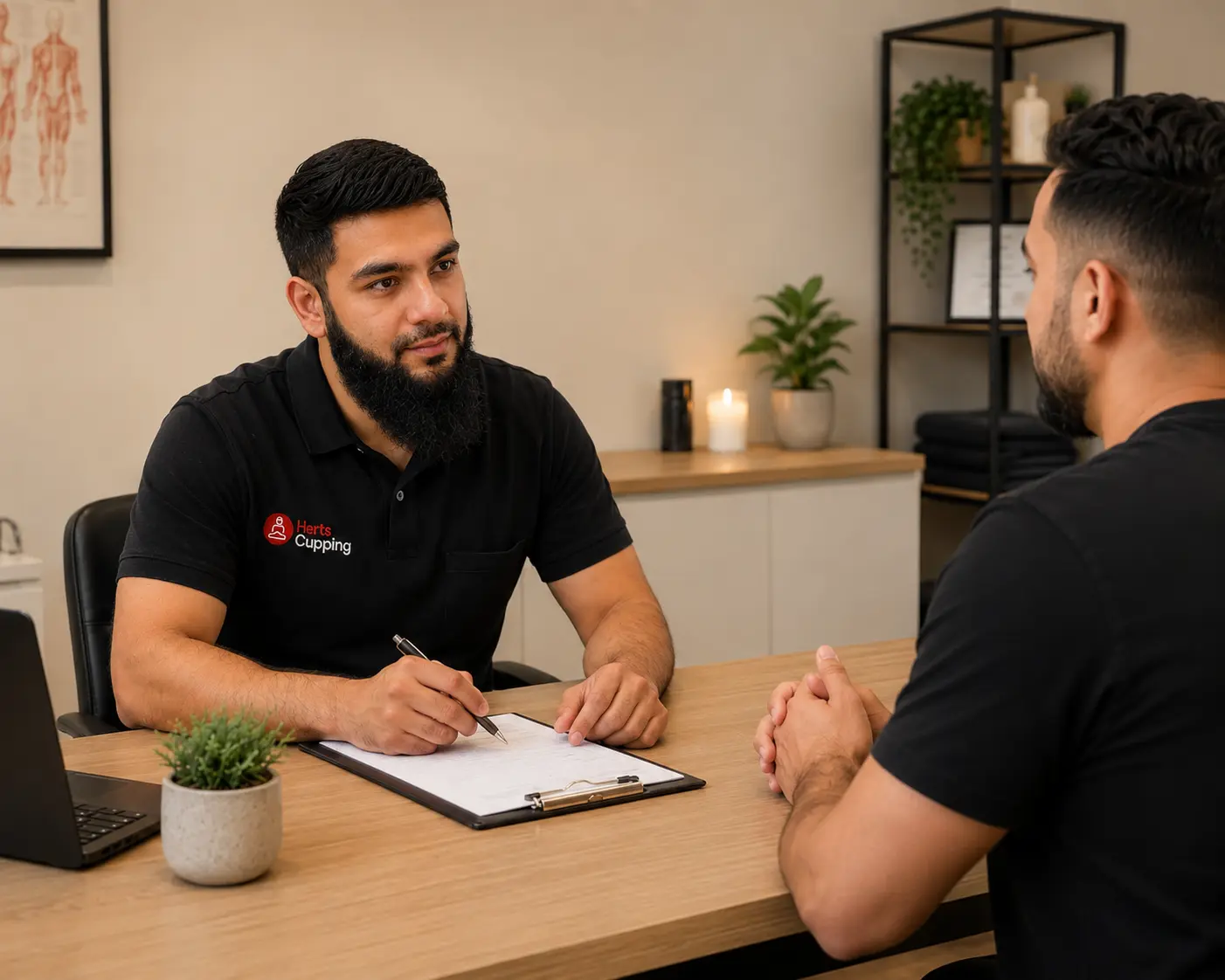
If you are curious about wet cupping for a tight or aching back, our guide to Hijama for back tightness in St Albans explains how we assess suitability and gives you the option to book a standalone Starter Hijama session. The appointment starts with a conversation about where you feel the tightness, when it comes on and whether wet cupping is suitable for you.
Wet cupping uses suction and small superficial scratches that allow a little blood to collect in the cup. Research on cupping for pain is limited. If this is your first time, see what happens at a Hijama appointment, including preparation and aftercare.