In this article
A “muscle knot” is the phrase most clients use, and it is a useful starting point. I explain what I am actually feeling for, how trigger point work fits and why pressing one spot harder is not always the answer.
What is trigger point massage?
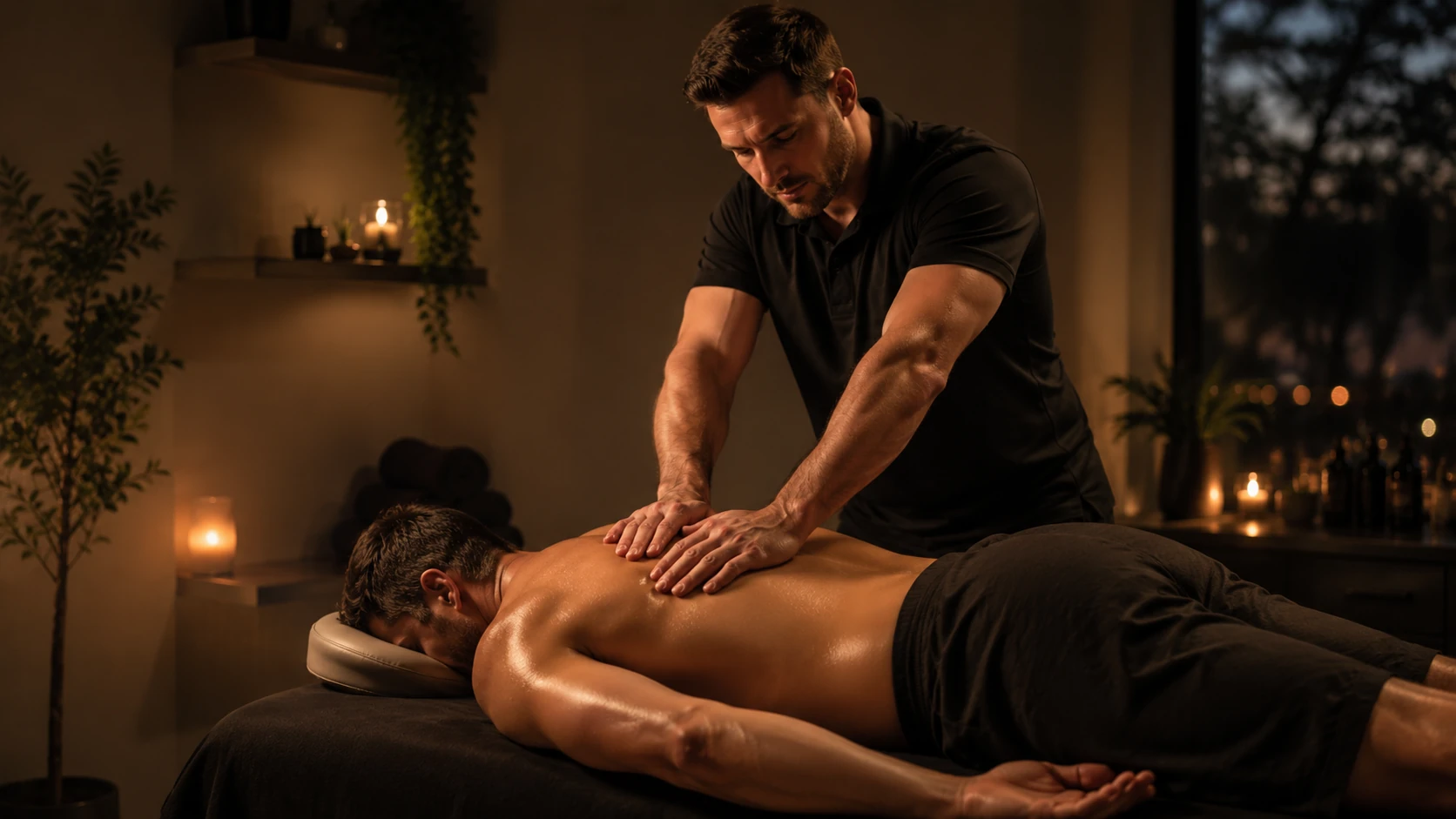
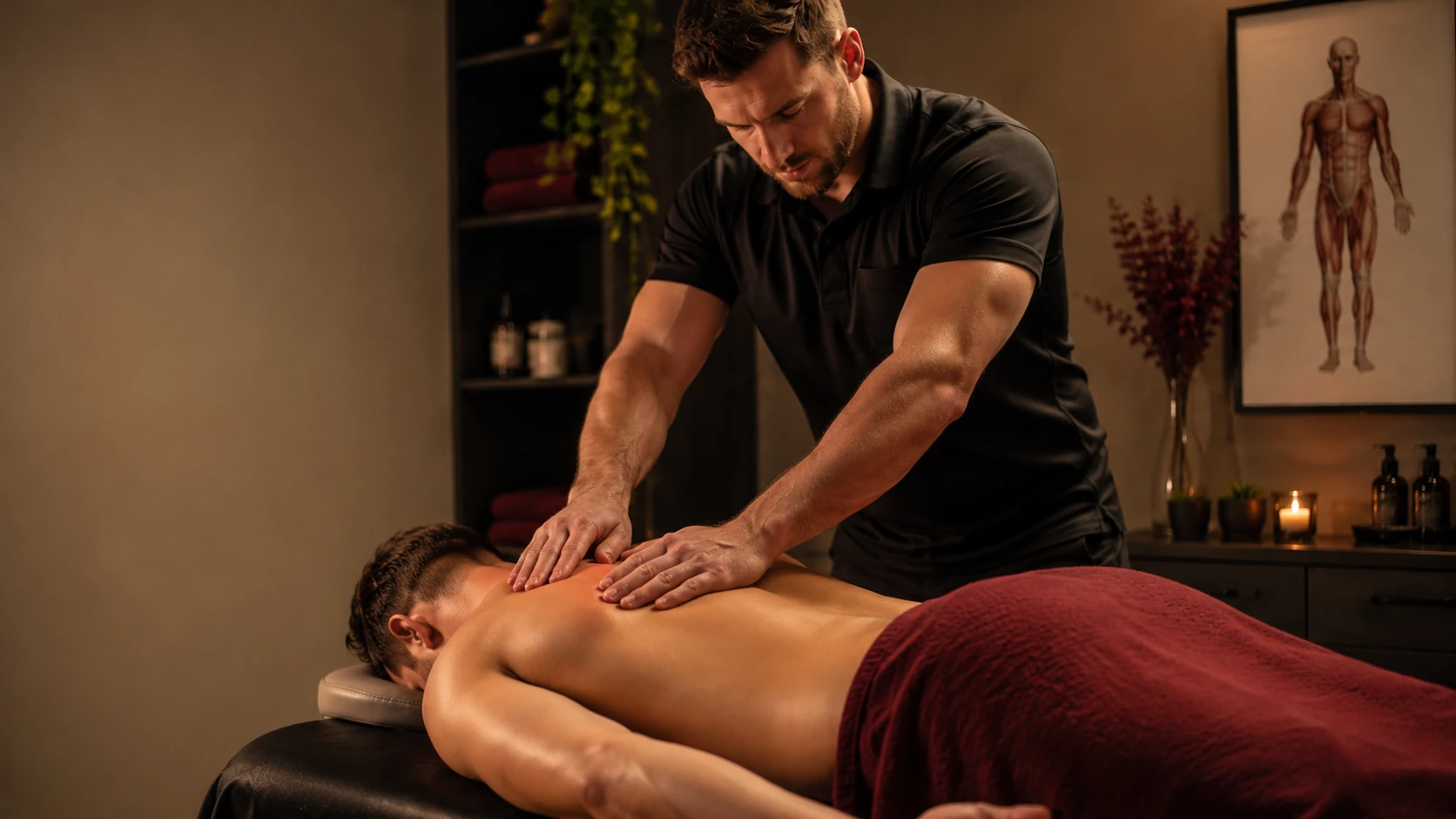
Trigger point massage is focused hands-on work around a local area of muscular tenderness or tension. Rather than moving continuously across the whole back, I may slow down and use sustained pressure on a specific point, then reassess how the surrounding area feels or moves.
I am certified in Trigger Point Therapy, but I still do not treat every sore spot as though it needs a textbook trigger-point routine. The body in front of me decides how much pressure, how long and whether the point is actually worth staying on.
Does a muscle knot need to be “broken up”?
I do not use that language with clients because it encourages the idea that there is a hard lump which needs to be crushed until it disappears.
Sometimes a tight area softens quickly with steady pressure. Sometimes the tenderness changes when the surrounding muscle is worked first. Sometimes the exact point becomes more irritable the more somebody digs into it.
If a spot is not responding, my answer is not automatically to press harder.
Why the painful point can be misleading
A common example is the area between the shoulder blade and spine. Somebody may feel one very specific “knot” there and have been leaning against a massage ball for weeks.
When I check them, the upper traps, lats, neck and shoulder may all be loaded as well. Spending the entire session drilling into the one tender point can keep irritating it while missing the wider reason the area feels overworked.
The same can happen in the glutes or calves. One local point gets all the attention because it is easy to find, but the surrounding area still needs treatment.
What trigger point work should feel like
Focused pressure can feel strong. You may recognise the exact sensation you came in with. What I want is a pressure you can breathe through without the whole body tensing around it.
If the sensation becomes sharp, electric, numb or increasingly unpleasant, I change what I am doing.
There is no benefit in winning a battle against one muscle knot if the rest of the body is guarding throughout the treatment.
Trigger point massage vs deep tissue massage
They overlap, but they are not exactly the same thing.
Deep tissue massage describes broader firm work through an area. Trigger point work is more local and specific. In a normal session I may use both without announcing each technique as a separate treatment.
For example, I might use deep hands-on work through the upper back, then spend focused time on two or three local points that remain particularly tender. The session still feels like one coherent treatment rather than a menu of techniques.
Where I commonly use trigger point work
- upper traps and shoulder-blade area
- glutes and hip area
- calves
- forearms in people doing grip-heavy work or training
- upper and mid back where one local point repeatedly feels tight
That does not mean every pain in those areas is a trigger point. It simply means these are common places where clients describe a knot-like feeling.
When I add cupping or IASTM instead
If focused pressure is working, I keep using it. If the point becomes more sensitive under repeated compression or the wider area feels very restricted, I may switch the treatment input.
Dry cupping gives suction rather than more downward pressure. IASTM gives me a more precise tool over a local region. Those options are available within our Muscle Recovery sessions.
I do not automatically combine all three. The point of having options is to use what is useful, not make the session look complicated.
Can you treat your own muscle knots at home?
A ball against the wall, gentle self-massage and normal movement can be useful for straightforward tightness. The mistake is repeatedly hammering the same sore point because it temporarily feels satisfying.
If the area is getting more painful, causing neurological symptoms, repeatedly returning without an obvious muscular pattern or affecting strength and normal function, get it properly assessed rather than escalating self-treatment.
What I want to know before treating a “knot”
Tell me how long it has been there, what makes you notice it, whether pressing it changes anything and what you do for work or training.
That gives me context. I can then decide whether local trigger point massage makes sense or whether the better session is broader back, neck, shoulder or muscle recovery work in St Albans.
The aim is not to chase every tender spot. It is to work out which areas actually deserve the session time.