In this article
Yes, cupping is legal in the UK. But that simple answer needs context because dry cupping, fire cupping and Hijama are not regulated in exactly the same way.
The legal position depends on the type of cupping
| Treatment | Does it break the skin? | Main legal and safety considerations |
|---|---|---|
| Dry cupping | No | General health and safety, informed consent, insurance, safe equipment and an appropriate treatment environment. |
| Fire cupping | No | The same general duties as dry cupping, plus training and risk control for flame, heat and glass cups. |
| Hijama wet cupping | Yes | Local skin-piercing or special treatment rules may apply, along with infection control, sharps handling and clinical waste requirements. |
| Cupping massage or recovery | Usually no unless Hijama is added | The applicable rules depend on the techniques actually used within the session. |
Is there one national cupping licence?
No. The UK does not currently have one universal statutory licence called a “cupping practitioner licence”. That does not mean the industry is rule-free. Different legal duties can apply through local council registration, health and safety law, consumer protection, insurance requirements, waste rules and the practitioner’s general duty of care. GOV.UK advises businesses to contact the council where their premises are based to find out whether massage, special treatment or skin-piercing licensing is required. Local councils may inspect premises and can set conditions through their byelaws.The Key Distinction
Wet cupping is not simply dry cupping with an extra step
Hijama involves breaking the skin and handling blood. That changes the risk, the hygiene process, the equipment and potentially the local registration requirements. A practitioner should know which rules apply in their council area rather than assuming that a general massage qualification covers everything.What does the law say about skin-piercing treatments?
In England and Wales, local authorities regulate several skin-piercing practices under the Local Government (Miscellaneous Provisions) Act 1982 and local byelaws. GOV.UK directs practitioners to register with the relevant council for tattooing, piercing and related treatments where applicable. Wet cupping is not named consistently on every council website, but some councils explicitly list it. Rochdale Council, for example, states that wet cupping must be registered and that carrying it out unregistered is illegal in that area. London boroughs can use the London Local Authorities Act 1991 special treatment licensing system. Guidance used by London councils specifically recognises wet cupping, also known as Hijama or bleeding cupping, as a treatment involving incisions and suction. The practical lesson is not to assume. The practitioner must check the council where the premises are located.What applies in St Albans?
St Albans City and District Council states that acupuncture, tattooing, piercing and electrolysis require registration under the Local Government (Miscellaneous Provisions) Act 1982. It explains that registration covers both the person carrying out the practice and the premises, with procedures and facilities expected to be safe, hygienic and designed to prevent the spread of disease. The public page does not provide a simple one-line statement specifically naming Hijama. A St Albans practitioner offering wet cupping should therefore confirm directly with the council how the activity is categorised and what registration or premises requirements apply. That is the careful answer. It is more useful than claiming that all UK cupping is unregulated or that every form requires the same licence.Is dry cupping regulated?
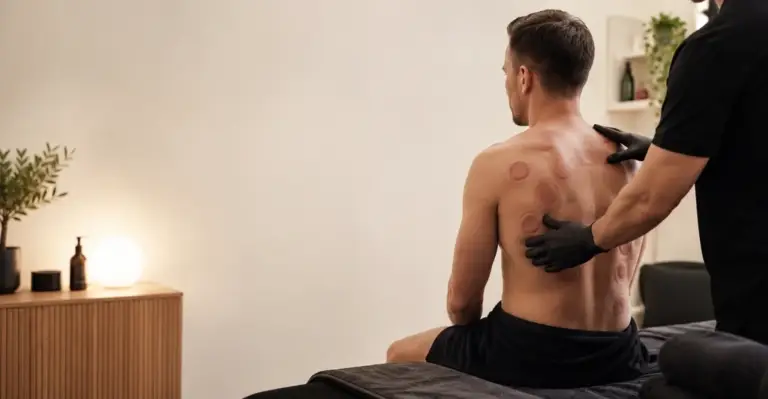
Dry cupping does not pierce the skin, so it is usually treated differently from tattooing, acupuncture and wet cupping. In many areas there is no dry-cupping-specific licence. However, “no specific licence” does not mean “no responsibilities”. A dry cupping practitioner still needs to work safely, obtain informed consent, keep equipment clean, avoid unsuitable areas, manage fire safely if using glass cups and hold appropriate treatment insurance.Health and safety
The premises, equipment and working method should not expose clients to avoidable risk.Informed consent
Clients should understand the treatment, expected marks, likely sensations and realistic limits before starting.Insurance
The policy should specifically cover the treatments being provided, not just generic massage.Training and competence
A certificate alone is not enough if the practitioner cannot screen, place cups safely or recognise when not to treat.Data and records
Health questionnaires, consent, treatment notes and sensitive information should be handled responsibly.Advertising
Claims must be honest. Cupping should not be advertised as a guaranteed cure for medical conditions.What should a legal and professional Hijama setup include?
- A consultation that checks medication, bleeding risk, health conditions, pregnancy and active skin issues.
- Sterile single-use blades or lancets opened for the individual client.
- Appropriate gloves and cross-contamination controls.
- A sharps container and proper arrangements for blood-contaminated clinical waste.
- A cleanable treatment surface and suitable hand-washing and cleaning procedures.
- Clear written aftercare and contact details.
- Insurance that covers Hijama wet cupping specifically.
- Any practitioner or premises registration required by the relevant local authority.
- No reuse of blood-contaminated disposable equipment.
Does legal mean high quality?
No. Legal compliance is the minimum. A registration or certificate does not guarantee that every treatment decision will be good. A practitioner can technically meet a basic administrative requirement and still rush consultations, use excessive suction, make poor incisions or oversell results. Clients should look at the full standard of care, not one badge.| What to ask | A reassuring answer should cover |
|---|---|
| What training do you have? | Specific training in the treatment being offered, not only a general wellness course. |
| Are you insured for Hijama? | The practitioner should know whether wet cupping is named or covered within the policy. |
| What is single use? | Blades, lancets and relevant blood-contaminated disposables should never be reused. |
| What happens to clinical waste? | It should be handled through an appropriate certified waste route, not ordinary household rubbish. |
| Do you screen every client? | Medication, bleeding risk, health changes and skin condition should be checked each time. |
| Can I see the treatment room? | The space should be private, clean and suitable for the treatment being performed. |
Can cupping be carried out from a home clinic?
A treatment does not automatically become illegal because the premises are residential. But home premises may still need to meet planning, insurance, hygiene, registration and local council requirements. The more important client question is whether it is a dedicated professional setup or a casual room being used without proper infection control, privacy and waste arrangements. For Hijama, the practitioner should be able to explain how the room is cleaned, where hand hygiene takes place, what is single use, where sharps go and how clinical waste is collected.What about mobile Hijama?
Mobile wet cupping can be more complicated because some local authorities register treatments only at approved premises, and a practitioner has less control over the cleanliness and facilities at another location. Rules differ, so practitioners should confirm their local position rather than assuming that registration at one address allows them to carry out wet cupping anywhere.What clients should check before booking cupping near them
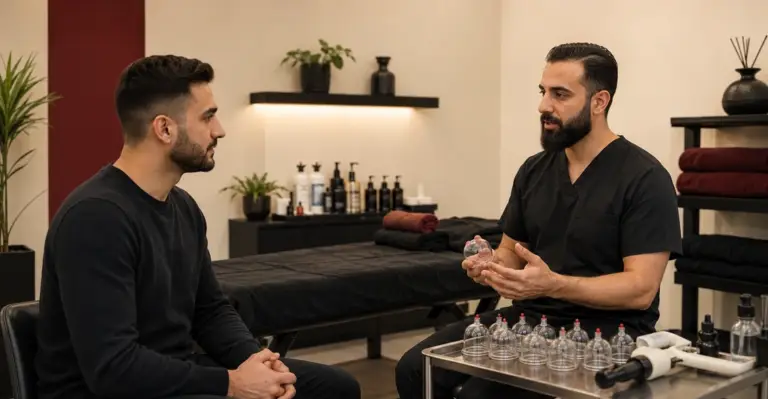
- The practitioner explains whether you are booking dry cupping, fire cupping or Hijama.
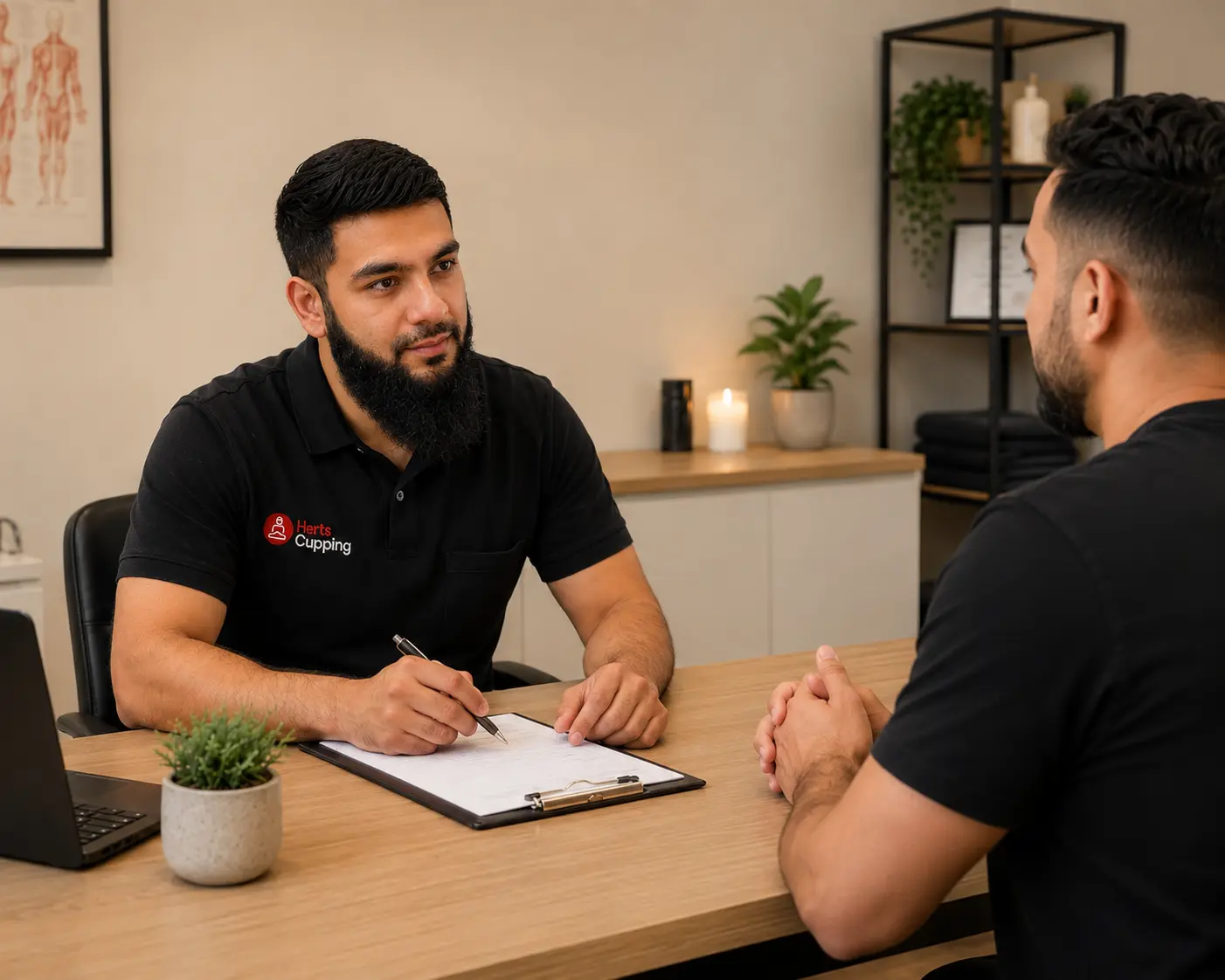
- There is a proper consultation before treatment.
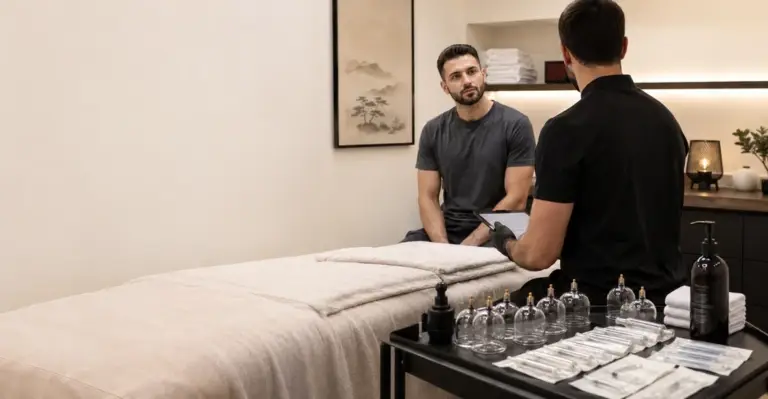
- The environment is private and visibly appropriate for the service.
- The practitioner has suitable treatment insurance.
- Hijama equipment is sterile and single use.
- Clinical waste and sharps are handled correctly.
- The practitioner is honest about local registration requirements.
- There are no cure-all claims or pressure to buy repeated sessions.
- The practitioner is willing to refer you for medical assessment when needed.
Our approach at Herts Cupping
Herts Cupping operates as a dedicated private clinic in St Albans, serving clients across Hertfordshire. Every appointment starts with a consultation. Hijama uses sterile single-use equipment, and blood-contaminated waste is handled through certified clinical waste procedures. We also believe clients should be able to ask direct questions about hygiene, insurance, treatment type and suitability before booking. A professional practitioner should not be offended by sensible safety questions.Related Pages
- About Herts Cupping for our clinic standards and practitioner information
- Is Hijama Safe? for wet cupping hygiene and suitability
- Cupping and Hijama FAQ for prices, preparation and common safety questions
- Sessions and Pricing to compare dry cupping, fire cupping, Hijama and recovery sessions
Common questions
Is cupping legal in the UK?
Yes. Dry cupping, fire cupping and Hijama can be offered legally in the UK. However, the rules that apply depend on the treatment and local authority. Wet cupping breaks the skin, so council registration or special treatment requirements may apply.Do you need a licence to perform cupping in the UK?
There is no single nationwide cupping licence covering every treatment. Dry cupping may not require a specific skin-piercing registration, while Hijama may fall under local council skin-piercing or special treatment rules. Practitioners should check the council where they work.Is dry cupping regulated in the UK?
Dry cupping does not break the skin and is usually treated differently from wet cupping. Even where no specific cupping licence applies, practitioners still have duties relating to health and safety, consent, insurance and safe practice.Is Hijama legal in the UK?
Yes, but because Hijama involves superficial skin piercing, local registration, premises requirements, hygiene rules and clinical waste responsibilities may apply. Some councils explicitly list wet cupping in their licensing information.What should I check before booking a cupping practitioner?
Check training, insurance, consultation procedures, hygiene, single-use equipment for Hijama, waste disposal, privacy and whether the practitioner can explain the local requirements that apply to their treatment and premises.Official Guidance
- GOV.UK special treatment licensing on checking requirements with the local council
- GOV.UK skin-piercing registration for England and Wales registration guidance
- St Albans Council registration guidance on practitioner, premises and hygiene requirements in St Albans
- Rochdale Council wet cupping guidance as an example of a council explicitly listing wet cupping
Want to ask about our setup before booking?
You are welcome to ask about the treatment type, consultation, single-use equipment, hygiene, insurance or clinical waste procedures before deciding. Book a SessionMessage on WhatsApp