In this article
Most cupping pages only talk about benefits. I do not think that is enough. A client should know what can go wrong, what is normal afterwards and when cupping is simply not the right treatment.
The most common downsides of cupping
Temporary circular marks
Red, purple or darker marks are common after suction. They can be visible for several days and occasionally longer.Tenderness or soreness
The area may feel worked, sensitive or bruised afterwards, particularly if suction was strong or the tissue was already irritable.Skin irritation
Some people react to oils, friction, adhesives or suction. Existing eczema or psoriasis may also become more irritated.Results may not last
Cupping can reduce how tight an area feels, but the same load, posture, training habit or stress pattern can bring symptoms back.It does not suit every problem
Sharp pain, neurological symptoms, fractures, infection and serious injuries need assessment rather than cups.Visible marks can be inconvenient
Even harmless marks may be unsuitable before holidays, weddings, competitions, medical appointments or work where the skin is visible.Are cupping marks a downside or a normal response?
Marks are one of the main reasons people hesitate. Dry and fire cupping pull blood towards the surface and can leave circular discolouration. The colour varies with skin response, suction level, treatment time and the area being treated. Normal marks are usually flat and gradually fade. They should not be blistered, broken or severely painful. Darker does not automatically mean more toxins came out, and it does not prove the treatment worked better. Plan around visible marks: tell the practitioner if you have an event, holiday, medical appointment or sports weigh-in coming up. Suction can often be reduced, but nobody can guarantee that no mark will appear.When cupping is performed too aggressively
Strong treatment is not automatically effective treatment. Excessive suction can cause significant tenderness, blistering, skin damage and prolonged marks. Sliding cups can also irritate the skin when too much pressure or friction is used. The practitioner should check how the area feels, adjust the suction and stop if the response is not appropriate. A client should never be made to feel weak for asking for less pressure.| What can happen | More likely cause | What good practice looks like |
|---|---|---|
| Very painful suction | Cups applied too strongly or left too long | Pressure checked throughout and reduced when needed. |
| Blistering | Excessive suction, heat or treatment time | Immediate removal of the cup and appropriate skin care. |
| Skin abrasion | Aggressive sliding cupping or too little lubricant | Controlled movement with clean suitable medium and regular skin checks. |
| Burns | Poor fire cupping technique or overheated glass | Proper training, controlled flame handling and cups checked before placement. |
| Prolonged severe soreness | Overworking already irritated tissue | Treatment intensity matched to the person and the reason for booking. |
The additional risks of Hijama wet cupping
Hijama involves small superficial scratches, so it carries risks that do not apply to dry cupping. The main concerns are infection, bleeding, scarring, poor wound care and blood-contaminated equipment. I have seen clients after friends or family members tried Hijama using a kit and online videos. Some had deep scratches. Some had actual permanent scars. That is not a normal part of Hijama and should not be accepted as one. A correct Hijama scratch is superficial and controlled. It should not resemble slicing, deep cuts or long scratches across the back. Every blade must be sterile and single use. Blood-contaminated materials need proper clinical waste disposal.Clinic Reality
DIY dry cupping and DIY Hijama are not the same risk
A simple home dry cup used gently on an uncomplicated area is one thing. Hijama involves breaking the skin, screening for contraindications, preventing cross-contamination and disposing of blood-contaminated waste. A kit can provide cups and blades. It cannot provide judgement, training or infection-control standards.Where should you not do cupping?
Cupping placement should be chosen carefully. It should not be used directly over areas where suction could damage vulnerable tissue or hide a problem that needs assessment.- Open wounds, cuts, ulcers or recently broken skin.
- Active skin infection, spreading rash or inflamed eczema and psoriasis.
- Recent fractures, acute trauma or an area with unexplained swelling.
- Varicose veins or visibly compromised blood vessels.
- The eyes, genitals and highly delicate areas.
- A known blood clot or suspected deep vein thrombosis.
- Areas with reduced sensation where the client may not feel excessive pressure or heat.
- Sites where a doctor, surgeon or physiotherapist has advised against pressure or suction.
- Any area where severe pain, neurological symptoms or unusual changes have not been assessed.
Who may need to avoid or delay cupping?
The answer depends on whether the appointment is dry cupping, fire cupping or Hijama. Wet cupping requires a stricter suitability check because the skin is opened and a small amount of blood is drawn.| Situation | Why caution is needed | What to do |
|---|---|---|
| Blood-thinning medication or bleeding disorder | Higher risk of bleeding or prolonged oozing with Hijama. | Speak to your GP and tell the practitioner before booking. |
| Severe anaemia or unexplained fatigue | Repeated wet cupping may be inappropriate and symptoms may need investigation. | Seek medical advice first. |
| Pregnancy or possible pregnancy | Some areas and treatment types may be unsuitable. | Contact the practitioner before booking and seek medical clearance where needed. |
| Active infection, fever or feeling acutely unwell | Treatment may worsen irritation or delay appropriate care. | Recover or seek medical advice first. |
| Poor wound healing or uncontrolled diabetes | Skin damage may heal slowly and infection risk may be higher. | Medical clearance and a careful risk assessment are needed. |
| Recent surgery or major injury | The area may need rehabilitation or medical review, not suction. | Follow the treating clinician’s advice. |
| Severe skin condition in the treatment area | Suction can aggravate inflamed skin. | Treat only after the skin has settled and suitability is confirmed. |
Cupping can delay the right diagnosis if used for everything
One of the biggest downsides is not caused by the cup itself. It is the risk of treating every pain as muscle tightness. If someone has progressive weakness, numbness, severe headaches, chest pain, unexplained weight loss, night pain, fever, bowel or bladder changes, a suspected tear or pain after significant trauma, cupping should not become a way of delaying proper medical assessment. Complementary treatment has a place, but so does knowing when to stop and refer.What if cupping only helps temporarily?
Temporary relief is not necessarily a failure. It may show that the body responds to treatment but returns to the same loading pattern afterwards. Desk work, training volume, poor sleep, stress and lack of strength can all bring the tightness back. The downside comes when temporary relief is oversold as a permanent correction, or when clients are told they must keep attending indefinitely without reviewing why symptoms return. At Herts Cupping, recurring muscular tightness is often better suited to a recovery session that combines cupping with IASTM and hands-on work rather than simply repeating the same cups.How we reduce the risks at our St Albans clinic
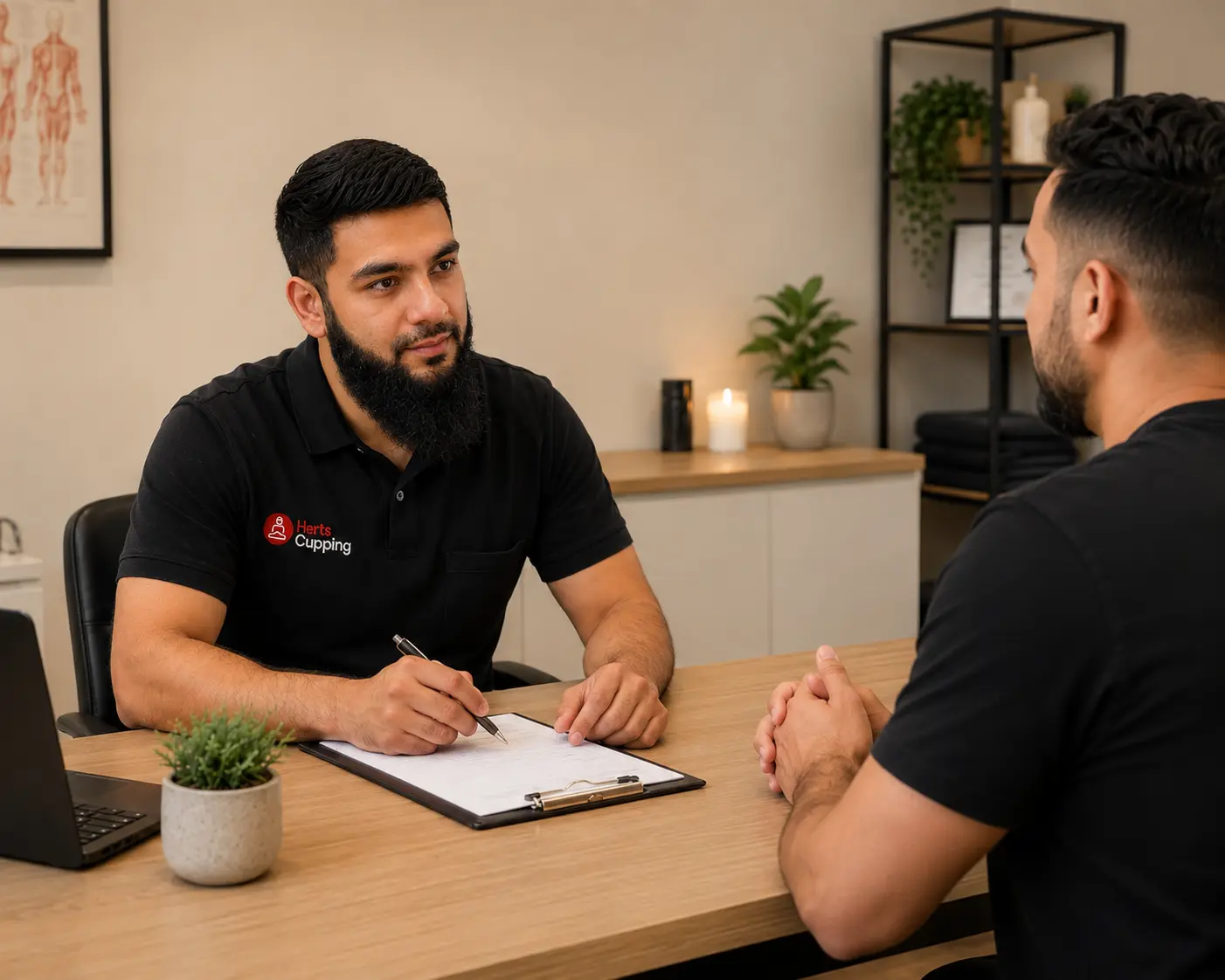
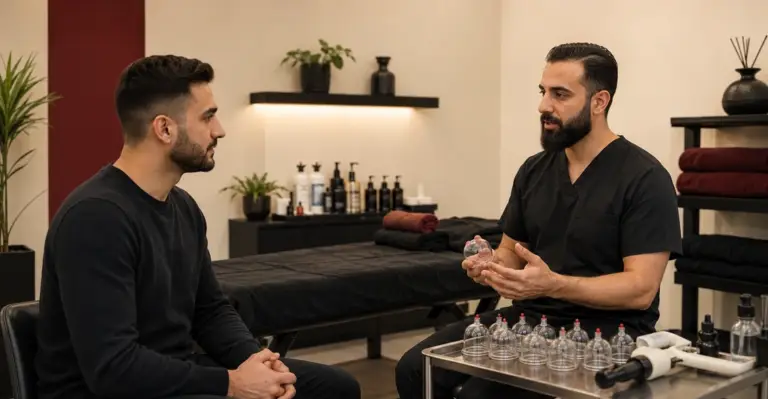
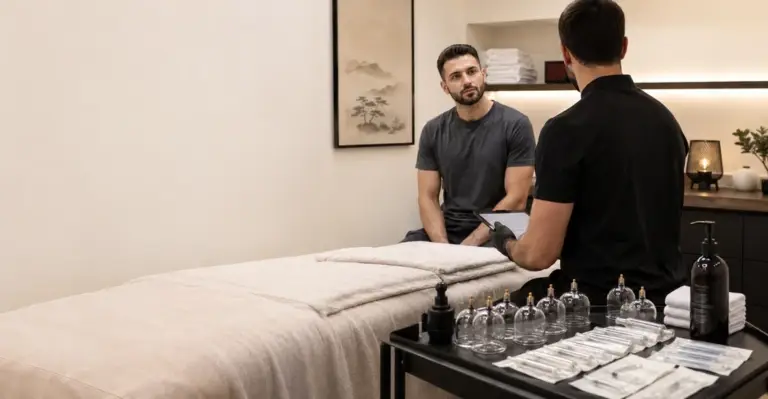
- Every session begins with a consultation and contraindication check.
- Suction is adjusted to the person and monitored throughout.
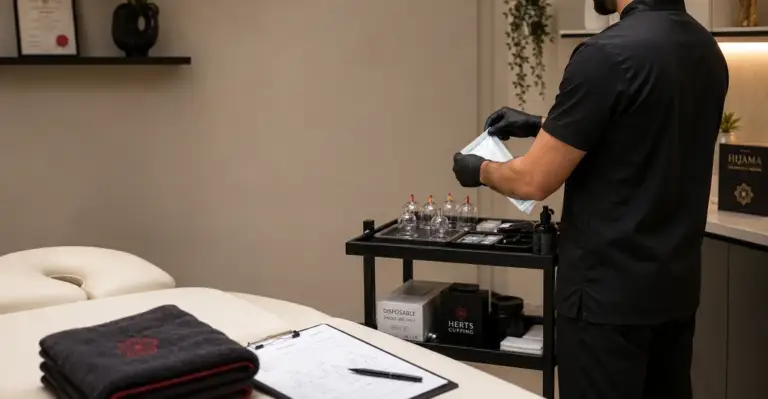
- Hijama uses sterile single-use blades and relevant disposable equipment.
- Blood-contaminated materials are handled through certified clinical waste procedures.
- Treatment is carried out privately, one client at a time.
- Aftercare is explained clearly rather than left to guesswork.
- We do not proceed when symptoms require medical assessment first.
- We do not use pain, dark marks or the number of cups as proof of a better session.
When should you contact someone after cupping?
Normal marks and mild tenderness should settle. Contact the practitioner if you develop blistering, increasing redness, heat, swelling, discharge, worsening pain or a skin reaction that concerns you. Seek urgent medical help for serious symptoms such as difficulty breathing, fainting, chest pain, severe weakness or signs of a significant allergic reaction or infection.The honest conclusion
Cupping has downsides. Pretending otherwise does not make the treatment safer. The key is distinguishing expected temporary effects from preventable harm. Marks, mild tenderness and the possibility of short-lived results are realistic limitations. Burns, infection, deep cuts and permanent scarring are not outcomes that should be normalised.Related Pages
- Is Hijama Safe? for a fuller wet cupping safety guide
- Dark Cupping Marks for what normal marks can look like and when to be concerned
- Who Should Avoid Hijama? for contraindications and suitability
- Cupping Therapy in Hertfordshire for the different treatment types available
Common questions
What are the downsides of cupping therapy?
The main downsides are temporary circular marks, tenderness, skin irritation and the possibility that results are short-lived. Poor technique can also cause blistering, burns, infection or scarring, particularly with fire cupping or Hijama.Where should you not do cupping?
Cupping should not be applied over open wounds, active skin infections, inflamed or broken skin, recent fractures, unexplained swelling, varicose veins, the eyes, genitals or areas where a medical professional has advised against suction or pressure.Can cupping therapy be dangerous?
The overall risk is usually low when dry cupping is carried out correctly, but risk increases with excessive suction, poor hygiene, fire cupping burns or badly performed wet cupping. Serious or unusual symptoms should be medically assessed.Can cupping cause permanent marks or scars?
Normal dry cupping marks should fade. Permanent scarring is not the expected result. It can occur after burns, blistering, skin damage or incisions that are too deep during poorly performed Hijama.Who should avoid cupping?
Suitability depends on the treatment type. Wet cupping may not be appropriate for people with bleeding disorders, severe anaemia, certain medications, active infection, poor healing or pregnancy. A proper consultation is essential.Safety Sources
- NCCIH cupping safety guidance on known side effects and the limits of current evidence
- Cleveland Clinic cupping overview on marks, soreness and possible complications
Want to check whether cupping is suitable first?
Message with your health concerns, medication and the area you want treated. We will tell you honestly whether to book, choose a different session or seek medical advice first. Book a SessionMessage on WhatsApp