In this article
If you tried Hijama once and felt nothing, it does not automatically mean Hijama does not work. It may mean the issue needed more than one session, the wrong area was treated, there was no follow-up, or your lifestyle kept recreating the same tension. I know this because...
Why One Session Did Not Change Much for Me
At the time, I treated Hijama like a one-off fix. I had pain, someone suggested Hijama, I tried it once, and because I did not feel a big difference, I assumed it was not for me.
But the problem was not only the treatment. It was the whole setup around it. There was no proper guidance afterwards. Nobody explained that some issues need more than one session. Nobody explained what to look out for over the next few days. Nobody helped me understand whether my issue needed Hijama, dry cupping, soft tissue work, lifestyle changes or simply more time.
The lesson: when there is no consultation, no plan and no follow-up, it is easy for someone to walk away thinking the treatment did nothing.
Years Later, I Tried Hijama Again
Several years later, Hijama came back into my life because of different pains: back, lower back, shoulders and general tightness from training and life. By then, I had also experienced dry cupping and noticed how much release it could give, especially after gym sessions.
Eventually, I tried Hijama again. This time, my experience was different. It helped me understand that sometimes the issue is not whether Hijama “works” or “does not work”. Sometimes it is whether the right treatment is being used in the right way, with the right expectations.
That changed how I viewed Hijama completely.
Hijama Is Not Always a One-Time Fix
Some people feel a big difference after one Hijama session. I have seen that many times. Others notice changes gradually. Some need a few sessions. Some need dry cupping, massage, IASTM muscle scraping or lifestyle changes alongside it.
That does not mean Hijama is weak. It means the body is not simple.
If someone has been carrying tension for months or years, one session may not undo everything. If the same posture, stress, training load, poor sleep or lack of movement keeps creating the issue, the same pattern can come back.
The Antibiotics Example
I often explain it like this. If a doctor gives someone antibiotics for an infection and tells them to take the course for several days, you would not take one tablet, stop, and then say antibiotics do not work.
Hijama is not antibiotics, and I am not comparing it as a medical treatment. But the principle of consistency is still useful. Some things need time, repetition and the right plan.
One session can be enough for some people. For others, it is only the first step.
Why Some People Feel Nothing After Hijama
There are a few common reasons why someone might try Hijama and feel no obvious benefit:
- The issue had been there too long for one session to shift it fully.
- The wrong area was treated.
- The session was too general and not targeted enough.
- There was no aftercare or follow-up advice.
- The body needed dry cupping, massage, IASTM or rehab work alongside it.
- The client expected one session to undo years of tension.
- Lifestyle factors kept recreating the same problem.
- The pain was medical or structural and needed assessment elsewhere.
This is why I do not like treating Hijama like a quick transaction. The conversation before and after the session matters.
What Changed My View
What changed my view was experience. I saw the difference between having Hijama once with no guidance and having it as part of a more thoughtful recovery approach.
Dry cupping helped me understand how much tissue restriction can build up from gym work and daily life. Hijama helped me understand that deeper work can have value when it is used properly. But the biggest lesson was that treatment works best when the person also understands what they need to do outside the room.
What did not help
A one-off session with no follow-up, no clear explanation and no plan.
What helped later
Better guidance, more realistic expectations and understanding how Hijama fits into wider recovery.
Your Lifestyle Still Matters
Hijama can support the body, but it cannot do everything for you. If your sleep is poor, stress is high, posture is bad, training load is excessive, hydration is low or you keep aggravating the same area, the same tightness can return.
That is not a failure of Hijama. It is just how the body works. Treatment can support recovery, but lifestyle decides whether the same pattern keeps rebuilding.
What I Do Differently at Herts Cupping
My first experience with Hijama is part of the reason I run Herts Cupping the way I do now. I do not want clients to leave confused, with no idea what just happened or what to do next.
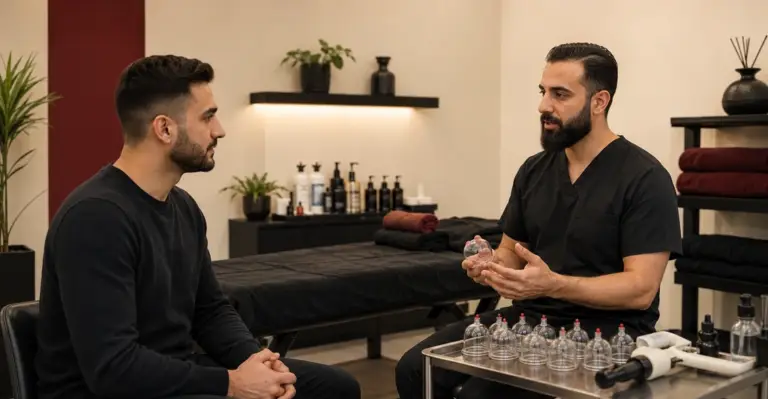
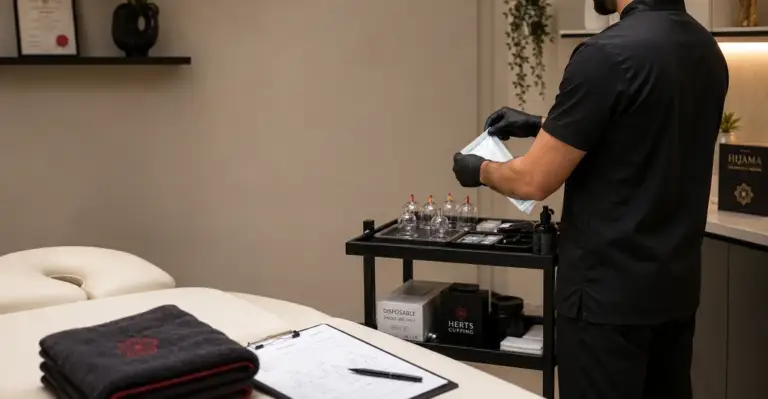
That is why sessions include consultation, clear explanation, sterile single-use equipment, aftercare advice and honest guidance. If I think one session may not be enough, I will say that. If I think Hijama is not the right option, I will say that too.
The aim is not to keep people coming back for no reason. The aim is to guide people properly.
If You Tried Hijama Once and Felt Nothing
If you tried Hijama once and felt nothing, I would not dismiss your experience. It happens. But I also would not write off Hijama completely without looking at the bigger picture.
Ask yourself:
- Was there a proper consultation?
- Was the session targeted to the actual issue?
- Were you given clear aftercare?
- Did anyone follow up or explain what to expect?
- Was the problem long-standing?
- Were lifestyle factors still feeding the issue?
- Was the pain something that needed medical assessment first?
Sometimes the honest answer is that Hijama was not the right treatment. Sometimes the answer is that the first session was not enough. Sometimes the issue was the way the treatment was delivered.
Final Thought
I tried Hijama once, felt nothing, and left it for years. Later, I came back to it and understood it differently.
That experience made me a better practitioner because I know what it feels like to be on the other side. I know what it is like to leave a session with no answers. And I know why proper guidance matters.
Hijama is not magic. It is not a guaranteed one-time fix. But used properly, with the right expectations and the right aftercare, it can be a valuable part of recovery and wellbeing for many people.
Related Pages
- Hijama in St Albans - session options and what to expect
- Benefits of Hijama - realistic benefits, safety and suitability
- Does Hijama actually work? - an honest practitioner view
- Hijama aftercare guide - what to do before and after
- Book an appointment - view available sessions
Common Questions
Why did Hijama not work after one session?
One session may not be enough if the issue has been building for months or years, if the wrong areas were treated, if there was no follow-up, or if lifestyle factors keep recreating the same tension.
Does Hijama work for everyone?
No treatment works the same for every person. Some clients feel a big difference after one session, others notice gradual changes, and some may need a different approach altogether.
How many Hijama sessions do I need?
It depends on your reason for booking, how long the issue has been there and how your body responds. Some people only need occasional sessions, while long-standing tension may need a few sessions or a combined recovery approach.
Should I try Hijama again if it did not help the first time?
It can be worth reconsidering if the first session had no proper consultation, no follow-up or did not target the right issue. But if symptoms are severe, unexplained or worsening, seek medical advice first.
Is Hijama a one-time fix?
Hijama can be powerful for some people, but it should not be treated as a guaranteed one-time fix. It works best when expectations, treatment choice, aftercare and lifestyle are handled properly.
Not Sure If Hijama Is Worth Trying Again?
Message us with what you tried before and what you are dealing with now. I’ll tell you honestly whether Hijama, dry cupping or a recovery session sounds more suitable.
Book a Session Message on WhatsApp