
Targeted Recovery
Focused treatment for one main region such as neck, shoulders, back, glutes, hamstrings or calves.
£75or £95 with Hijama
Book Targeted RecoveryMuscle Tension Relief · Hertfordshire
For recurring muscular pain and tension across the back, neck, shoulders or legs, including people looking for another hands-on option after massage, physio, osteopathy or chiropractic.
Wet cupping option
Hijama is wet cupping. Choose it on its own, or combine it with Targeted Recovery (£95) or Full Body Recovery (£135) when you want hands-on recovery and wet cupping in the same appointment. You do not need to be Muslim to choose Hijama.
Best fit for recurring tension
Tell us the main area, what loads it and what you have already tried. The session can stay hands-on, or include dry cupping and IASTM when another input is more useful than simply pressing harder.
Focused treatment for one main region such as neck, shoulders, back, glutes, hamstrings or calves.
For several loaded areas, desk-work patterns, heavier training weeks or broader whole-body recovery.
Start with the problem
Tell us what feels tight or restricted, what makes it worse, how long it has been there and what you have already tried. Recovery is usually the starting point when the problem sounds muscular.
Wet cupping is available in the same clinic and can be combined with the recovery session when you want both approaches.
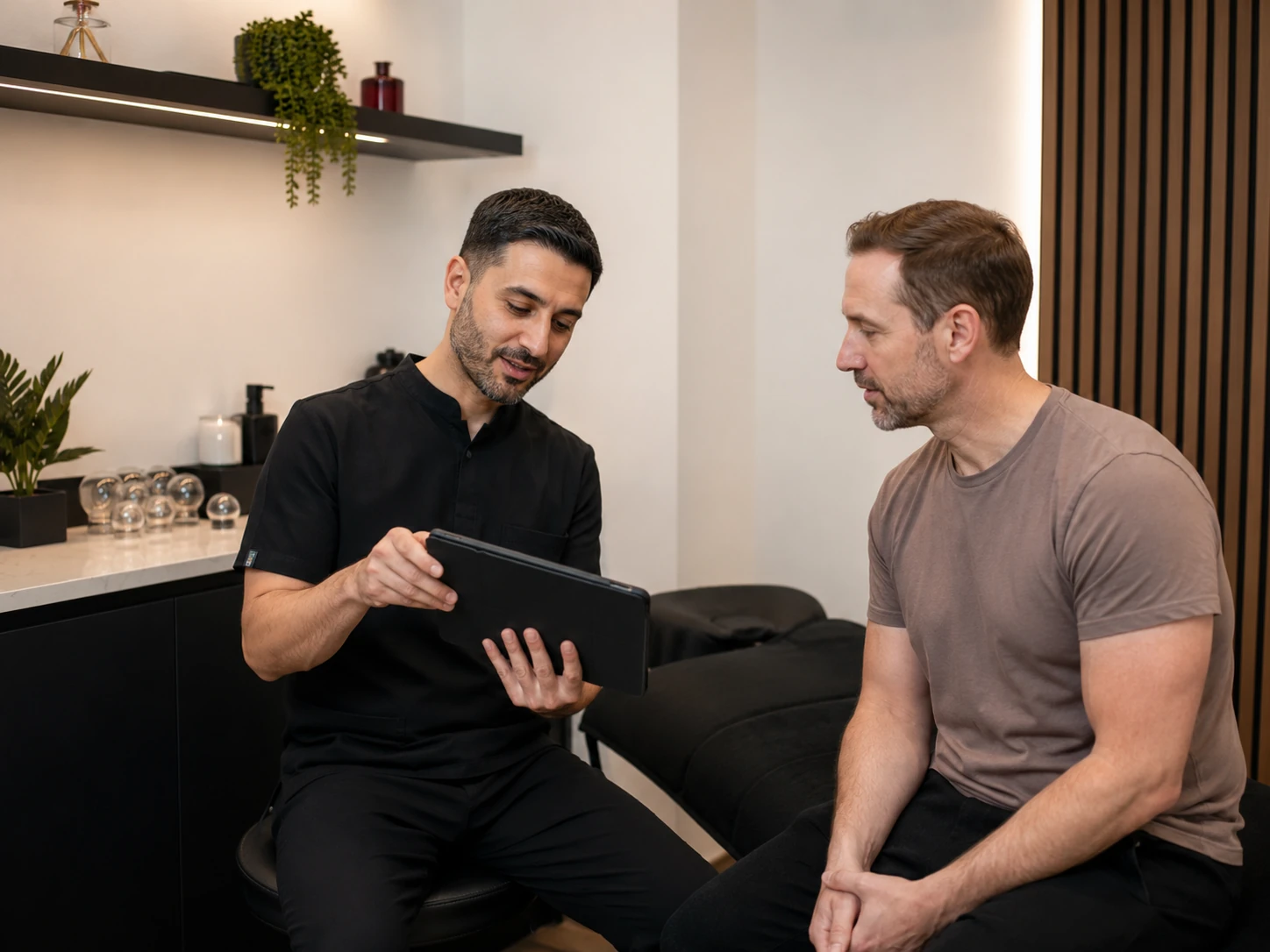
Does this sound familiar?
You do not need to know the name of the treatment. Start with what feels painful, tight or restricted and we will help you choose the right approach.
You may get short-term relief from rest, stretching or massage, but the same back, neck or shoulder area repeatedly becomes uncomfortable.
Long periods sitting, driving or working at a screen can leave the upper back, neck, shoulders and hips feeling stiff and overloaded.
The injury may no longer be acute, yet the surrounding area still feels tight, guarded or less comfortable during movement.
Difficulty turning your neck, raising an arm, bending comfortably or moving freely during training and daily activity.
Stress, poor recovery and repeated tension can leave the traps, jaw, upper back and lower back feeling constantly switched on.
You should not have to diagnose yourself. Tell us what you feel and what you have tried, and we will recommend the most sensible starting point.
Trusted locally
Independent feedback from people who have visited the clinic.
The treatment logic
What keeps loading the area, what has already been tried, and how much of the body genuinely needs treatment time?
Work posture, driving, training load, guarding and recovery can repeatedly load the same area. Hands-on treatment may help the muscular component while strength, movement or clinical assessment can still matter for the wider issue.
Common with sitting, driving, lifting and training.
Common with desk work, stress and upper-body load.
Common with gym work, running, football and long periods standing.
When the pattern is wider, 90 minutes gives the main areas proper time.
Where, when and what repeatedly loads it?
Hands-on work first, with dry cupping, IASTM or percussion added only where useful.
Aftercare, training timing, follow-up or another professional if that is the better route.
Why clients value the difference
Massage may not have failed. The area may simply need more time, a wider look at what is loading it, or a different treatment input such as suction or tool-assisted work.
This is where combined Recovery is easier for clients to understand: it starts with firm hands-on work, then adapts if needed. You are not sent away to book separate cupping, separate scraping and separate massage appointments. The useful options are already in the same session.
We still keep the boundary clear. If symptoms are severe, new, worsening, neurological or linked to injury, assessment comes first.
Different input, same goal
IASTM, dry cupping or movement work can be introduced without making you book several separate treatments.
Sessions and pricing
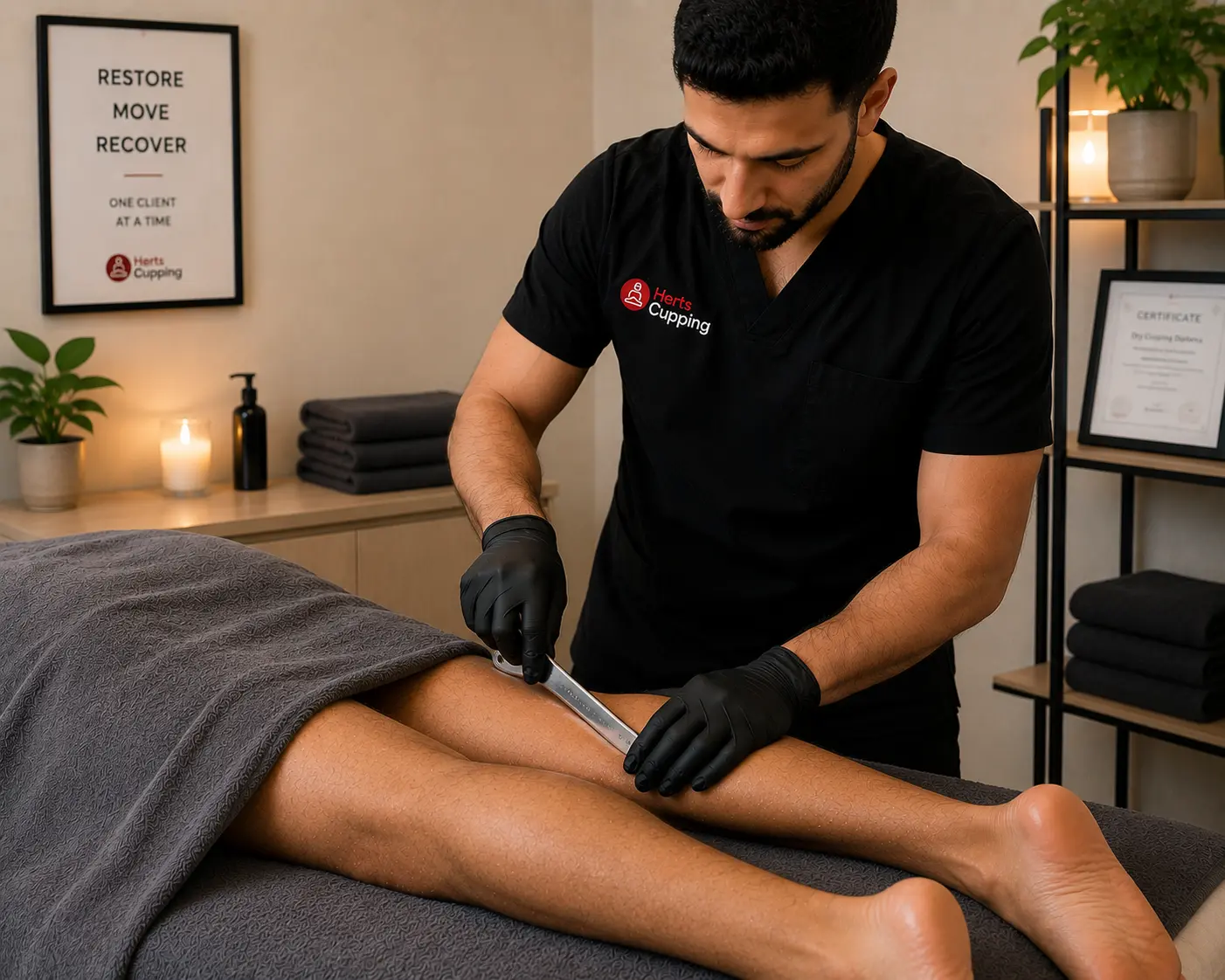
Use 60 minutes for one main area and 90 minutes when several connected regions need proper time. The + Hijama options include wet cupping in the same appointment.
Firm manual work, dry cupping, IASTM and percussion on one main focus area. No Hijama. Best for one main area of muscular pain, stubborn tightness or restricted movement.
Book Targeted RecoveryHijama plus firm manual work, dry cupping, IASTM and percussion on one main focus area. Best for one recurring area where you also want wet cupping included.
Book Recovery + HijamaFirm manual work, dry cupping, IASTM and percussion across several areas. No Hijama. Best for multiple areas of tension or wider posterior-chain work.
Book Full Body RecoveryHijama plus firm manual work, dry cupping and IASTM across several areas. Best for wider long-standing tension or several problem areas with wet cupping included.
Book Full Recovery + HijamaSafety first
Speak to a GP, urgent care service or physiotherapist first if the pain is severe, unexplained, rapidly worsening or followed a significant injury. You should also seek assessment for new weakness, persistent numbness, loss of coordination, major swelling, fever, suspected infection, suspected blood clot, chest pain, breathing difficulty or changes to bladder or bowel control.
Tell us about diagnosed conditions, pregnancy, blood-thinning medication, bleeding disorders, severe anaemia, active skin problems and any recent operation before booking. We will advise honestly if a session is unsuitable.
No. Tell us the area, how long it has been there, what loads it and what you have already tried. We select the useful methods with you.
Tell us what was assessed, what helped and what still feels muscularly tight or restricted. We offer a different hands-on route and will tell you if another clinician should remain the first option.
Yes. Choose Recovery + Hijama when you want wet cupping included alongside the hands-on recovery work.
Severe, unexplained or rapidly worsening pain, significant trauma, new weakness, persistent numbness, loss of power or major swelling should be appropriately assessed before bodywork.
Useful next steps
Extra detail is available without turning the main treatment page into another long article.
If you already know the area, these pages go into more detail.
For lower-back, upper-back and recurring muscular tension.
Read the back pain guideFor stiff necks, tight traps and tension headaches.
Read the neck pain guideThe methods themselves and how they combine.
View the treatment pageFocused tool-assisted soft-tissue work where useful.
Explore IASTMFor training load and active clients.
View sports recoveryWhat Hijama involves, sessions and pricing.
View HijamaServing Hertfordshire from St Albans
Herts Cupping supports clients experiencing recurring back tension, neck and shoulder tightness, muscular stiffness, restricted movement and training-related overload.
The clinic is based in St Albans and sees clients from Harpenden, Hatfield, Welwyn Garden City, Watford, Hemel Hempstead, Radlett, Luton, Stevenage and surrounding areas.
Ready when you are
Message us with the area, how long it has been present and what you have already tried. We will recommend the most sensible starting point without pressure or guesswork.