
Targeted Recovery
Focused treatment for one main region such as neck, shoulders, back, glutes, hamstrings or calves.
£75or £95 with Hijama
Book Targeted RecoveryRecovery Sessions · Deep Tissue · Cupping · Hertfordshire
Choose 60 minutes for one main area or 90 minutes when several areas need proper time. Firm hands-on work comes first; dry cupping, IASTM and Hijama are added only where they fit.
Wet cupping option
Hijama is wet cupping. Choose it on its own, or combine it with Targeted Recovery (£95) or Full Body Recovery (£135) when you want hands-on recovery and wet cupping in the same appointment. You do not need to be Muslim to choose Hijama.
Start with the problem
Deep tissue work is the base. Cupping, IASTM and percussion are used only when they add value. If you came looking for massage because the same area keeps tightening, start with the amount of body area that needs proper time.
Focused treatment for one main region such as neck, shoulders, back, glutes, hamstrings or calves.
For several loaded areas, desk-work patterns, heavier training weeks or broader whole-body recovery.
Useful if you need treatment after work or training. Same-day appointments may be available when the live calendar has space.
Deep tissue should mean purposeful work
People usually search for deep tissue massage or soft tissue therapy because they want something firmer and more focused than a light massage. That is a sensible starting point. The issue is that many recurring problems do not respond better just because someone presses harder every time.
At Herts Cupping, deep tissue work stays central. We use sustained pressure, slower work and focused time on the area. If the tissue response is limited, we can change the input with dry cupping, IASTM or percussion rather than escalating pressure until the session becomes uncomfortable.
This is why the booking route is called Recovery. You still get firm hands-on work, but the session can adapt around what the area actually needs.
A combined recovery method
The method is simple: use the minimum combination that gives the best reasoned chance of helping that area settle.
Firm hands-on treatment for overloaded muscles, trigger-point style tightness and areas that need sustained attention.
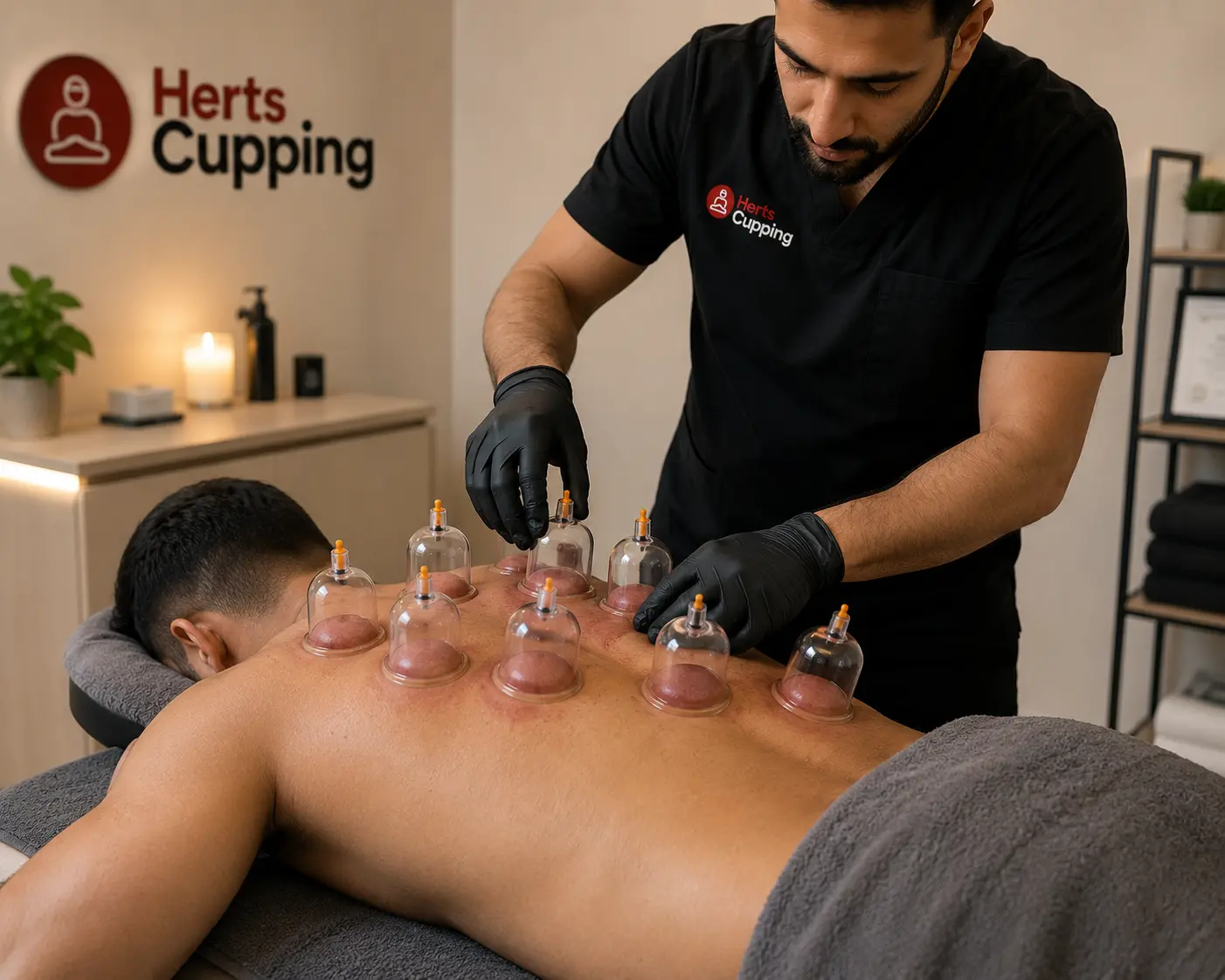
Dry cupping uses suction, which gives the area a different input from pressing down into it again.
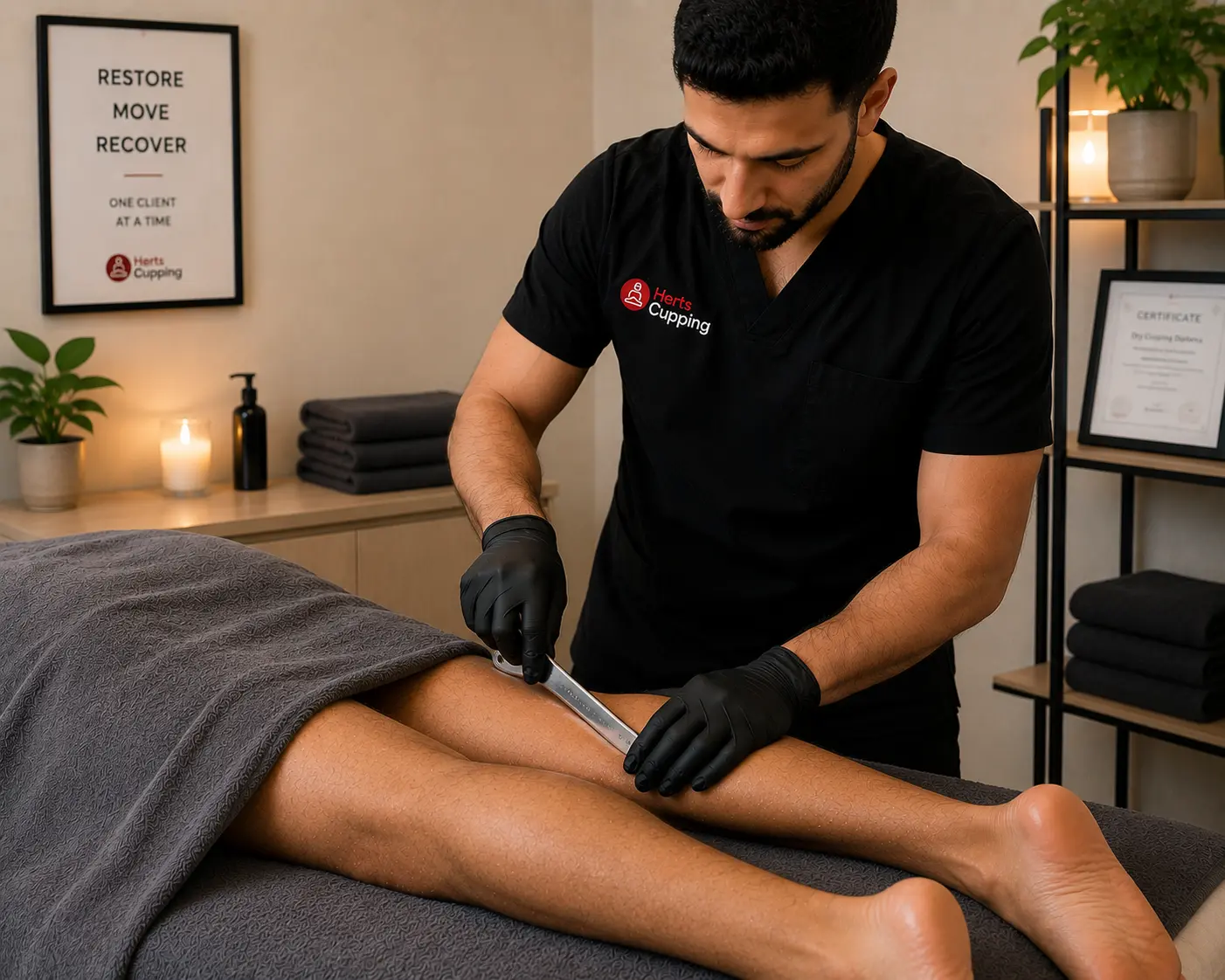
IASTM, often called muscle scraping, gives a precise tool-assisted option when a local area feels stubborn or restricted.
The important part is not the tool. It is knowing when to keep the session simple and when another method is worth adding.
Why clients like this approach
Some clients have already tried massage, osteopathy, chiropractic care or physio before booking. We do not claim to replace those services. The value here is different: a longer hands-on recovery appointment where several practical methods are available in one room.
The aim is to get useful work done without dragging you through unnecessary repeat visits. If one session is enough, we will say so. If the issue needs strengthening, assessment or a different route, we will say that too.
Why people choose this instead of another standard massage
That does not make cupping or IASTM automatically better than massage. It means the practitioner has another option when the response to one technique is limited.
You feel better for a short time, then the neck, shoulder, lower back or legs tighten again in the same pattern.
We can keep the session hands-on, add suction with dry cupping, use IASTM for a precise local input or recommend another route if treatment is not appropriate.
Choose the session by area and time.
Focused hands-on muscle work for one main area, with dry cupping, muscle scraping or a massage gun used where useful.
Book Targeted RecoveryThe same targeted muscular work with Hijama included in the appointment.
Book Targeted Recovery + HijamaLonger treatment when training load or tightness is spread across several regions.
Book Full Body RecoveryFull-body recovery work and Hijama in one extended appointment.
Book Full Body Recovery + HijamaWhat the treatment can look like
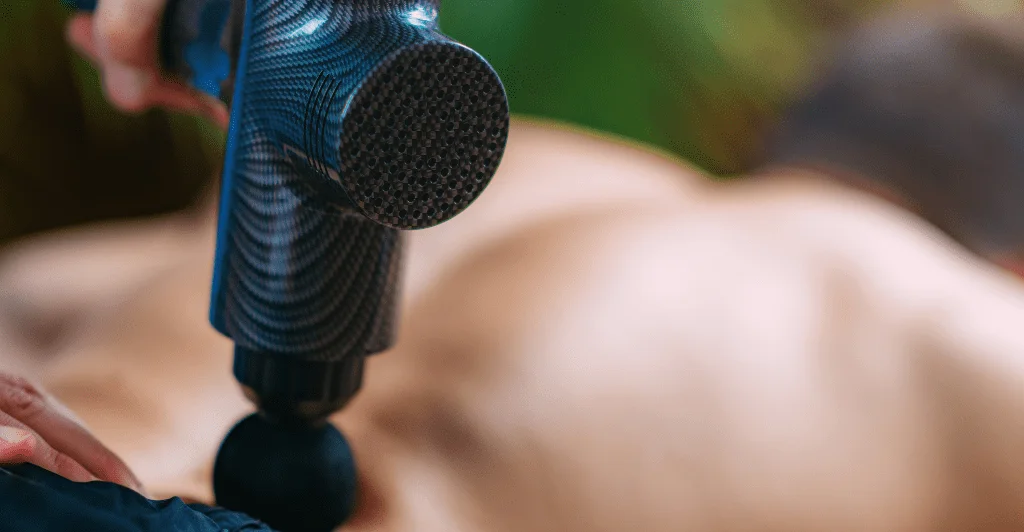
The point is not to use every technique. It is to have the right option available when the area or goal calls for it.
Trusted locally
See current feedback on Google.
Yes. Firm manual work is the foundation. Recovery is the booking name because dry cupping, IASTM and percussion can also be used where appropriate.
You can if massage alone usually works for you. This route is for people who want firm hands-on work with the option to add cupping or IASTM if the same area keeps returning.
The aim is to avoid unnecessary repeat appointments by doing focused work and choosing the right method. We cannot guarantee how many sessions a person needs because training load, posture, sleep, injury history and daily habits all matter.
No. The session can stay hands-on. Additional methods are explained first and only used with your agreement.
Yes. Desk-related neck, shoulder, upper-back and lower-back tension are common reasons for booking a Targeted Recovery session.
Deep tissue & recovery · Hertfordshire
Book 60 minutes for one main region or 90 minutes for several. We will explain whether massage alone is enough or another method is worth adding.




