Skip to content Skip to footer

Can Hijama Cupping Help Combat Black Magic (Sihr)?

Looking to Book Hijama?

We offer Hijama in a private, sterile clinical setting in St Albans. Sessions from £50. Sunnah day slots available.

I get calls and messages about this topic almost every week, and I have done for years. Someone has been struggling, they've seen a raaqi, and they've been told to go and get Hijama done because they have sihr, or ayn, or hasad. Sometimes they've paid a significant amount of money before they even contact me. I want to address this honestly, because I think people dealing with these situations deserve a clear answer rather than something vague.

What follows is my honest perspective as a Muslim practitioner, grounded in what the scholars have actually said.

What is Sihr (Black Magic) in Islam?

Sihr is real. The Quran acknowledges it, and the Prophet ﷺ himself experienced its effects. It refers to the use of spells, incantations, or jinn to cause harm to a person. Ayn, the evil eye, is also real and well established in the texts. So is hasad, the harm that can come from envy. None of this is superstition. But acknowledging that these things exist is different from knowing the correct way to address them. That distinction matters.

The historical accounts: Hijama and Sihr

There are narrations that mention the Prophet ﷺ undergoing Hijama on his head during a period when the effects of sihr were experienced. This is referenced in several classical works. Ibn al-Qayyim (may Allah have mercy on him) mentions it in Zad al-Ma'ad (4/125-126), stating that the Messenger ﷺ was cupped on his head when afflicted with magic, and that it is among the best of cures for this when performed correctly.

The Prophet ﷺ also emphasised the value of Hijama more broadly:

"Indeed, the best of remedies you have is cupping (Hijama)."

Narrated by Anas ibn Maalik (may Allah be pleased with him) – Sahih al-Bukhari 5371

What the scholars actually mean

Here is where it is worth being careful, because the narration about Hijama and sihr is sometimes quoted in isolation in a way that gives the wrong impression. Ibn al-Qayyim, in the same work, is clear that Hijama is a physical therapy. His broader position, which runs throughout Zad al-Ma'ad, is that physical ailments are treated through physical means, and spiritual ailments through spiritual ones. Hijama works on the body. Ruqyah works on the spirit.

Sheikh Muhammad Nasir ad-Din al-Albani held a similar view. While acknowledging the historical account, he was careful to say that Hijama should not be understood as a standalone cure for sihr. The primary prescribed remedy remains Ruqyah: the recitation of specific verses and surahs from the Quran, particularly Surah al-Baqarah, Ayat al-Kursi, and the Mu'awwidhatayn, along with the authenticated duas from the Sunnah.

The nuance that is sometimes acknowledged is that sihr and ayn can leave physical effects on the body. Someone who has been in prolonged distress may be physically depleted, tense and exhausted. In that context, Hijama may support the body while Ruqyah addresses the root. But that is not the same as Hijama being the cure for the spiritual harm itself.

The problem with some raaqis today

I want to say this directly because I have spoken to too many people who have been genuinely harmed by individuals presenting themselves as raaqis.

A legitimate raaqi charges little or nothing. The core of what they do is recite Quran. They teach you how to do self-ruqyah. They do not diagnose you with specific quantities of sihr or tell you exactly which jinn you have and then charge you to return for months. They do not give you a taweez, an amulet containing written verses, symbols or anything else, and tell you to wear it or place it in your home. And they do not use jinn to fight jinn, which is not a legitimate Islamic practice but a form of shirk, seeking assistance from other than Allah in a way that is prohibited.

Ibn Taymiyyah, the teacher of Ibn al-Qayyim, addressed the issue of seeking help from jinn at length. It is a grave matter regardless of how it is framed or what benefit is claimed from it. The ruling does not change because someone labels it healing.

The pattern with exploitative raaqis tends to follow a familiar structure. They tell you the case is serious. They suggest it will take a long time. They charge per session. They may sell items at inflated prices. And the case never quite resolves. Meanwhile, the actual prescribed remedy is available to you right now at no cost. If someone is charging you large amounts of money, creating dependency, giving you physical items to wear, or claiming to use spiritual forces to counter spiritual forces, please speak to a trusted scholar or imam before continuing with them.

Seeking refuge in Allah: the correct approach

The Quran and authentic Sunnah are clear. Recitation of Surah al-Baqarah in the home regularly, consistent morning and evening adhkar, Ayat al-Kursi, the Mu'awwidhatayn. These are the prescribed means. Du'aa directly to Allah, with sincerity and reliance on Him alone. These are accessible to every Muslim, require no specialist, and are what the scholars of the Salaf consistently pointed people towards.

Our page on Hijama and Ruqyah goes into more detail on how the two relate, for those who want to understand the relationship between physical and spiritual wellbeing in the Islamic framework.

What Hijama is good for

Hijama is a Sunnah with well-documented physical benefits. Improved circulation, reduced muscle tension, support for recovery and general wellbeing. Many clients who book for spiritual or emotional reasons report feeling lighter and less burdened after their session. Whether that comes from the physical release, the act of following the Sunnah, or a combination of both, I hear it consistently.

If you want Hijama as a Sunnah practice, for general wellbeing, or to support your body through a difficult period, I am glad to see you. What I will not do is tell you it will resolve sihr or ayn. That would not be honest, and you deserve better than that.

Healing is from Allah

This is something I genuinely believe and try to carry into every session. I am a means. The actual healing, physical or spiritual, is from Allah alone. The Prophet ﷺ used Hijama and recommended it. He also gave us Ruqyah. Both are means He has placed at our disposal. The job is to use the right one for the right situation, with sincerity and tawakkul.

For suspected sihr, ayn or hasad: the prescribed means are Ruqyah, Quran recitation and dua. Seek out a knowledgeable, reputable scholar if you need guidance. Be cautious of anyone who creates dependency, charges heavily, or uses methods outside the Sunnah.

For physical recovery, Sunnah practice and general wellbeing: that is what we are here for.

Hijama Sessions at Herts Cupping, St Albans

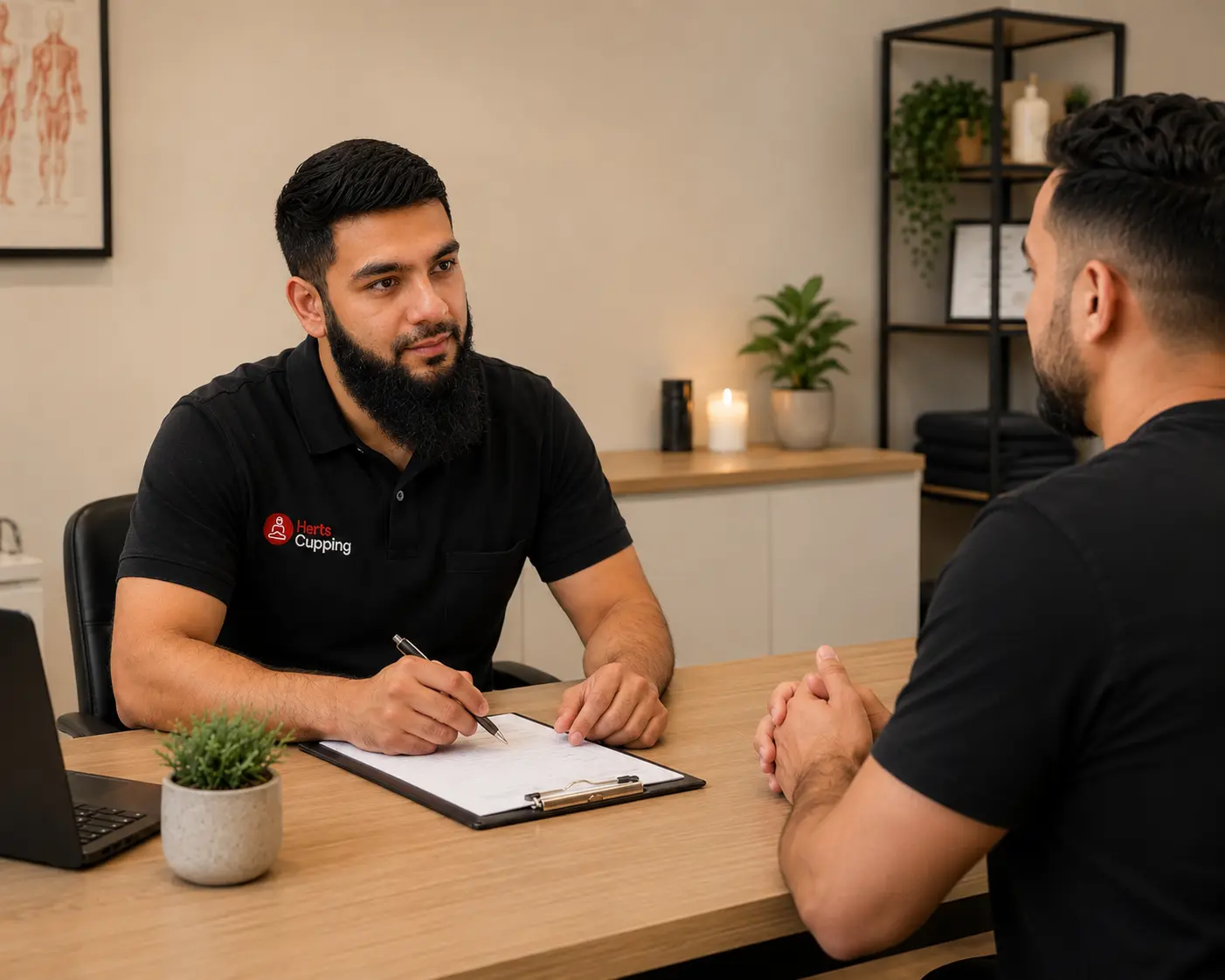
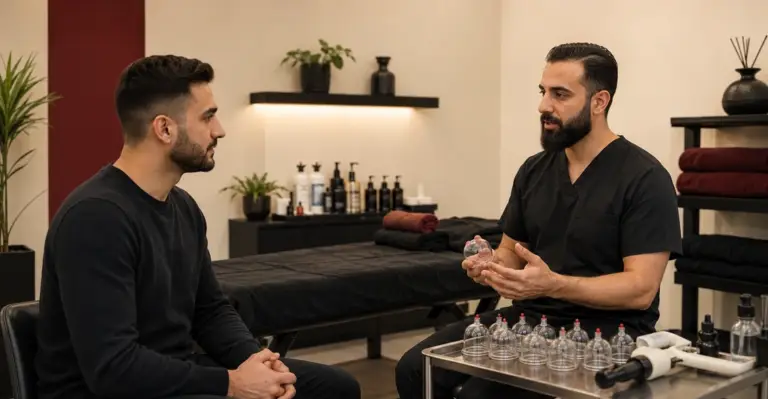
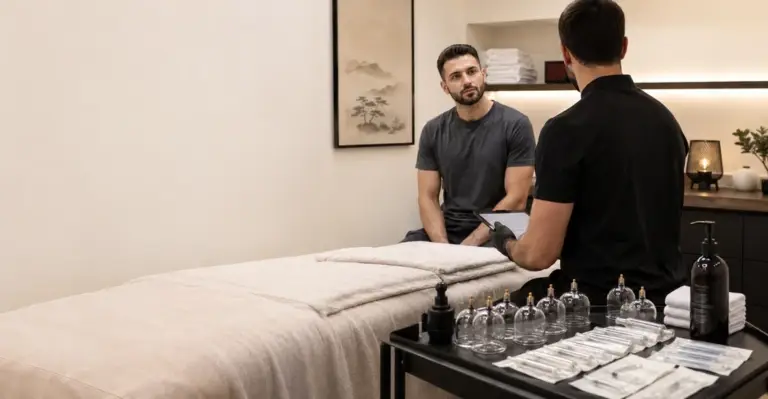
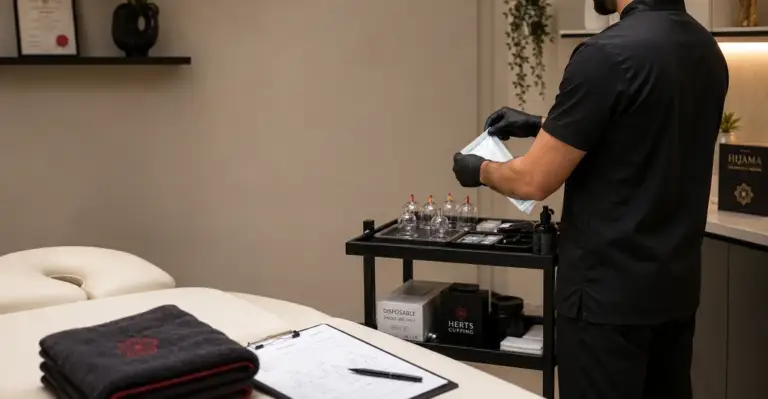
We offer Hijama in a private, one-to-one clinical setting using 100% sterile single-use equipment. Every session includes a full consultation and tailored treatment.

Hijama Pricing

Starter

£50

Up to 5 cups

Most Popular

£65

Up to 10 cups

Advanced

£75

Extended coverage

Female practitioner available upon request. View this month's Sunnah days.

Further Reading

Book Your Hijama Session

Private clinic in St Albans. One practitioner, one client. Sterile single-use equipment.

Leave a comment