In this article
The main difference between Hijama and acupuncture is the technique. Hijama uses cups, suction and superficial scratches to collect a small amount of blood. Acupuncture uses fine needles inserted at selected points. Dry cupping...
The main difference between Hijama and acupuncture is the technique. Hijama uses cups, suction and superficial scratches to collect a small amount of blood. Acupuncture uses fine needles inserted at selected points. Dry cupping uses suction without the scratches or blood collection. These are different treatments, with different experiences, risks and evidence.
Hijama vs acupuncture at a glance
| Question | Hijama | Acupuncture |
|---|---|---|
| What is used? | Cups, suction and sterile single-use sharps | Fine treatment needles |
| Is blood collected? | Yes, as part of wet cupping | Blood collection is not the purpose |
| What might you feel? | Pulling from suction and brief scratching or stinging | Needle insertion and sensations that vary with the technique |
| What may remain afterwards? | Temporary cup marks and small scratches requiring aftercare | Possible temporary soreness, bruising or minor bleeding |
| Religious context? | Hijama has a recognised place in the Islamic Sunnah | Acupuncture is not a form of Hijama or Ruqyah |
How does Hijama work in practice?
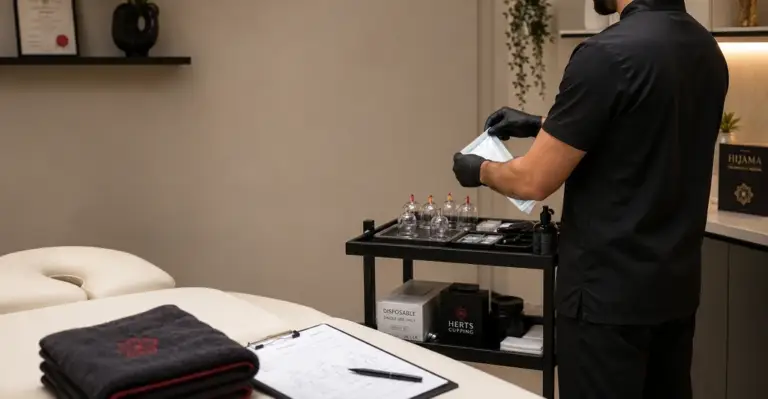
In wet cupping, the practitioner applies suction, makes superficial scratches to the skin and reapplies the cups to collect a small amount of blood. The treatment area and cup coverage depend on suitability and consent. Proper screening, sterile single-use sharps, safe disposal and clear aftercare are essential.
Dry cupping is a separate option. It uses suction on intact skin and does not include blood collection. Someone who wants to explore cupping for muscular tightness does not automatically need Hijama. Our dry cupping versus wet cupping guide explains that distinction.
How is acupuncture different?
Acupuncture involves inserting fine needles into selected points. Traditional Chinese approaches explain point selection through their own theoretical framework; other practitioners use approaches informed by anatomy and pain management. Ask the practitioner which approach they use and why it fits your situation.
The NHS describes acupuncture as a complementary therapy that may be offered for selected problems, including long-term pain and migraine-type headaches. That does not mean it is suitable for every diagnosis or that all complementary therapies have equivalent evidence. See the NHS overview of complementary therapies.
Is one more effective than the other?
There is no useful universal winner. The relevant question is what you want help with, what evidence applies to that problem and whether the treatment is suitable for you. A positive personal experience does not establish that one therapy treats every condition better than another.
The US National Center for Complementary and Integrative Health says cupping may help with pain, but the evidence is not strong, and evidence for other conditions is insufficient. Its cupping evidence and safety summary is a useful starting point. Neither toxins being removed nor an energy blockage being cleared should be presented as an established measurement of a successful session.
What about safety and aftercare?
Discuss medication, pregnancy, skin problems, bleeding risks and relevant medical history with the practitioner before either treatment. Wet cupping adds the need to care for superficial skin breaks. Acupuncture has its own screening and technique requirements. A practitioner should explain their training, equipment and what to do if you have a problem afterwards.
Cupping can cause temporary marks and can also cause burns, infection or other skin injury if performed inappropriately. Wet cupping carries blood-related risks. These are reasons to choose a competent practitioner and avoid trying wet cupping yourself.
Where do massage and recovery therapies fit?
Massage applies hands-on pressure. Cupping applies suction. A massage-led appointment may be a more natural starting point for somebody who wants focused muscular work and does not specifically want wet cupping. Treatment choice should follow the goal and suitability, rather than the idea that a more invasive treatment is automatically stronger or better.
At Herts Cupping, compare sports and deep tissue massage, dry cupping and Hijama appointments. We do not offer acupuncture. If acupuncture is what you want, choose a practitioner trained in that treatment.
Which should you choose?
Start with your reason for seeking treatment. If it is Sunnah wet cupping, explore Hijama. If it is suction without blood collection, explore dry cupping. If it is needle-based treatment, discuss acupuncture with an appropriate practitioner. If symptoms are persistent, unexplained or worsening, get appropriate medical assessment rather than choosing a therapy from its name alone.
You can compare the clinic’s treatment options before deciding, or view appointments when you know which route fits.