In this article
First time having Hijama? Clear practitioner answers on pain, blood, marks, hygiene, preparation, aftercare, suitability and Sunnah days.
If you are looking at Hijama for the first time, the same questions tend to come up before anything else: does it hurt, how much blood is taken, what will the marks look like, and is there anything you need to do beforehand?
I would rather answer those properly before you book than have you arrive expecting something completely different from what Hijama actually involves. These are the first-time questions I am asked most often in the clinic.
1. Does Hijama hurt?
Most clients find the suction more noticeable than the superficial scratches. The cups create a firm pulling sensation and the pressure can be adjusted. When we move to the wet-cupping stage, the scratches are small and controlled. Some people barely notice them; others describe a brief sharp or scratchy feeling.
It should not feel like somebody is trying to make the treatment as painful as possible. I would always rather reduce the suction or adjust the area than have somebody lie there unnecessarily uncomfortable.
2. What actually happens during a Hijama appointment?
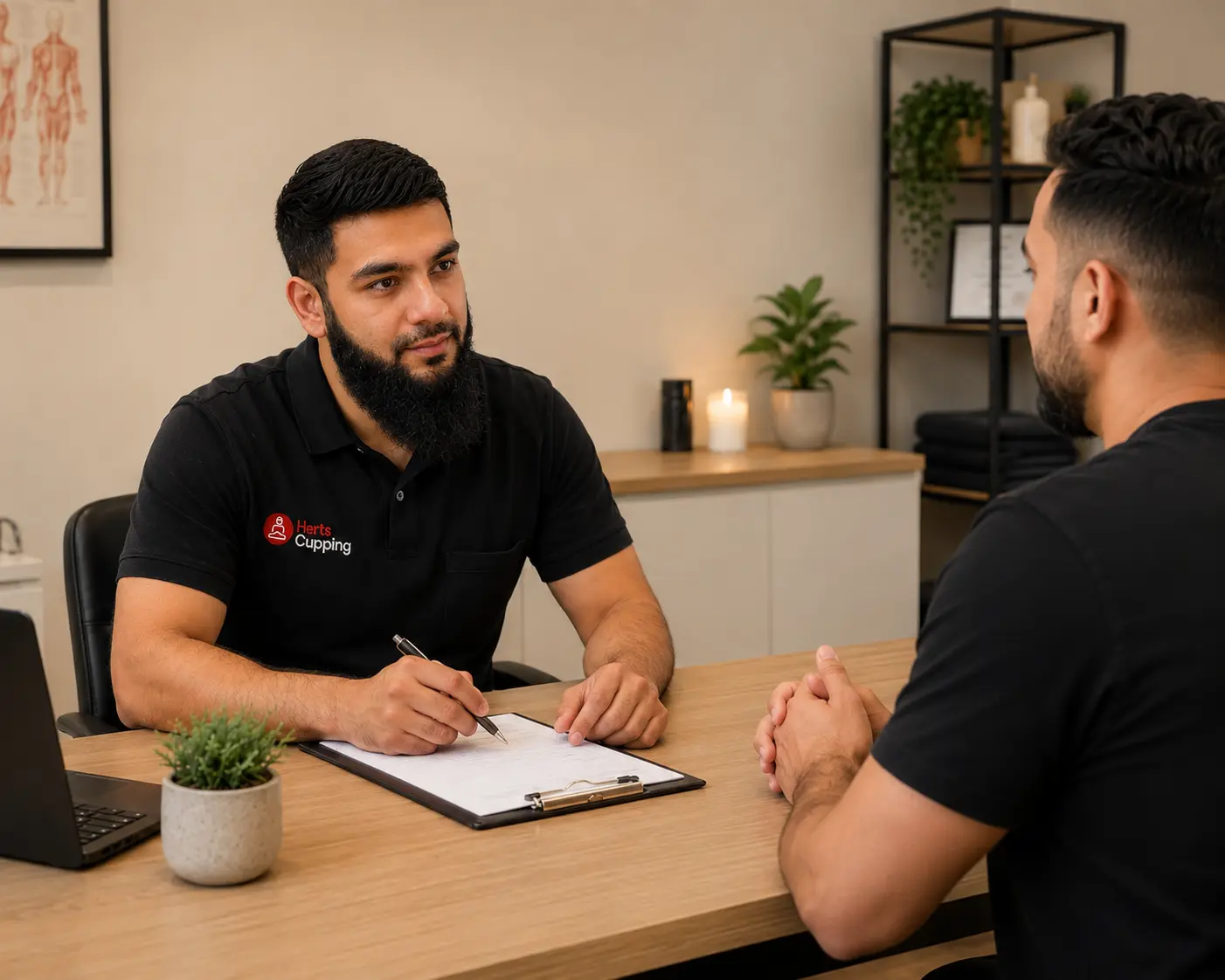
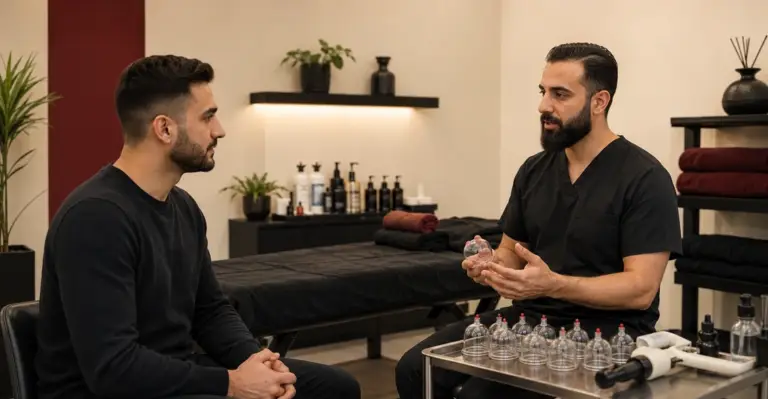
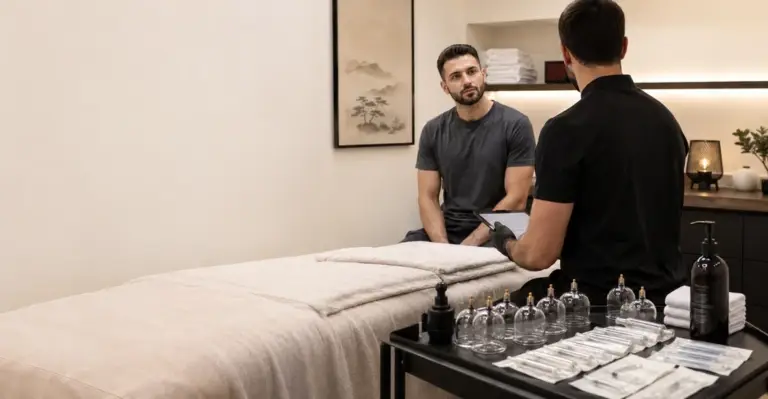
We start by going through why you have booked, the areas you want treated and any health information that affects suitability. Cups are then applied with suction. After that first suction stage, small superficial scratches are made at the selected wet-cupping points and the cups are reapplied so a small amount of blood can collect.
The treated skin is cleaned afterwards and I go through the aftercare before you leave. The number and position of cups depends on the coverage you booked and what is appropriate once we have assessed you.
3. How much blood is removed?
There is no target volume that I try to reach, and more blood does not mean a better Hijama session.
The amount varies considerably between people, cup sites and even between different points on the same person. The aim is controlled wet cupping, not trying to fill cups for the sake of making the treatment look dramatic.
I also do not use the colour or quantity of blood as a diagnostic test. Traditional Hijama language sometimes refers to stagnant or unwanted blood, but the appearance of what collects in a cup does not tell me that you have a particular illness or that “more toxins” have been removed. I explain this in more detail in our guide to what comes out during Hijama.
4. Is Hijama hygienic?
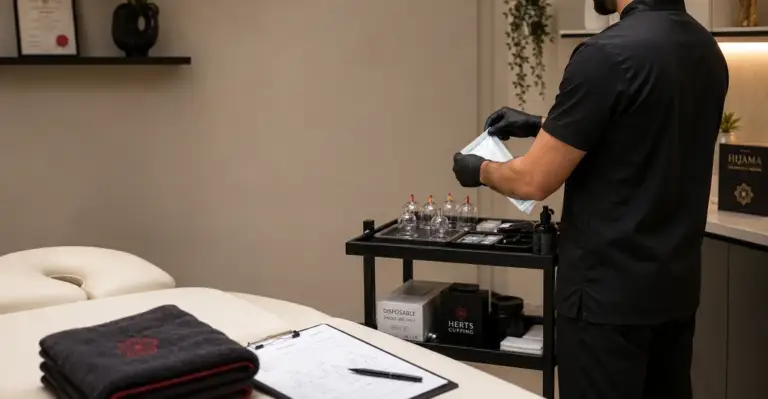
Wet cupping breaks the surface of the skin, so hygiene is one of the parts of the treatment I take most seriously. Sterile single-use sharps and relevant single-use disposables are used, the treatment area and working surfaces are prepared appropriately, and clinical waste and sharps are disposed of through the correct waste route.
If you are comparing practitioners, do not be embarrassed to ask about their infection-control setup. A professional practitioner should be comfortable explaining it.
5. How long does a Hijama session take?
I do not sell standalone Hijama by a fixed number of minutes. It is priced by cup coverage instead.
At Herts Cupping the current options are Starter Hijama, up to 5 cups, £50, Signature Hijama, up to 10 cups, £60, and Advanced Hijama, up to 15 cups, £75. Signature is the option most first-time clients choose because it gives enough flexibility without automatically booking the broadest coverage.
The session takes the time needed to assess you, carry out the selected coverage safely and complete the aftercare. You can see the current Hijama and cupping prices here.
6. How long do the marks and superficial scratches take to settle?
The circular suction marks can vary from light pink to darker red or purple and usually fade gradually over several days. Some people mark very lightly and others mark more obviously. A darker circle is not a sign that the treatment has worked better.
The superficial wet-cupping sites also need time to close and settle. Keep them clean, avoid picking or scratching the area and follow the aftercare given at the appointment. If you are having Hijama before a holiday, wedding, sports event or anything where the marks matter cosmetically, allow enough time for your own skin response.
7. Are there side effects or recovery time?
Temporary marks are expected. Some people can also feel a little tired, tender or light-headed after wet cupping, particularly if they arrived under-hydrated, had a broader session or simply respond strongly to treatment.
I normally advise taking it easy afterwards, staying hydrated and avoiding strenuous exercise for around 24 hours. We also advise avoiding a hot shower on the treated area the same day and sauna or steam for around 24 hours. If anything feels unusual, worsening or significantly different from the expected skin response, contact the clinic or seek appropriate medical advice.
Our Hijama aftercare guide covers this in more detail.
8. What health information do I need to tell you?
Please tell me about relevant medication, bleeding or clotting problems, severe anaemia, diabetes, recent surgery or procedures, active infection, significant skin problems in the treatment area, pregnancy, a strong tendency to faint, or any other condition that could affect skin healing or bleeding.
Blood-thinning medication in particular needs discussing before booking wet cupping. Do not stop prescribed medication for a Hijama appointment unless the clinician who prescribed it has told you to do so.
Hijama is complementary care. New, severe, unexplained or worsening symptoms should be medically assessed rather than assumed to be something cupping should deal with.
9. Do I have to wait for a Sunnah day?
No. Many Muslim clients like to book on the 17th, 19th or 21st of the Hijri month because of the narrations around those dates, but the dates are not something I use to stop a person having an otherwise suitable session.
There is scholarly discussion around the strength and application of the specific date narrations. If Sunnah timing matters to you, our live Sunnah Days page shows the current booking windows. If those dates do not fit, you can still choose another suitable day.
10. Can non-Muslims, women or under-18s have Hijama?
Hijama is open to Muslims and non-Muslims. You do not have to be booking it for a religious reason.
We do not offer Hijama to under-18s. Dry cupping for somebody under 18 may be considered case by case after discussion with a parent or guardian.
What should I do before my first appointment?
Come hydrated and leave at least 2 hours without food before a Hijama session. If that is not appropriate because of diabetes, medication or another health issue, contact us first rather than forcing yourself to fast.
You do not need to choose your exact cup points before you arrive. Choose the amount of coverage that feels closest to what you want, and we can confirm the actual points after the assessment.
If your question is about booking, cancellation, recovery sessions, parking or the clinic rather than Hijama itself, use the main Herts Cupping clinic FAQ. If you are still unsure whether Hijama is suitable, message us before booking and tell us what you are hoping to get from the session.