In this article
Back, neck and shoulder tightness often arrives as one complaint but rarely feels like one isolated dot. I explain how I decide where to spend the session and when one hour is enough.
Why the back, neck and shoulders often feel linked
These areas share a lot of everyday load. Sitting at a computer, driving, carrying children, lifting, pressing in the gym, pulling exercises and long periods on a phone can all leave several parts of the upper body feeling worked at the same time.
That does not mean there is always a complicated underlying problem. It simply means the body does not use the neck, upper back and shoulders in isolation.
A client may describe “neck pain” but have very loaded upper traps and shoulder-blade muscles. Somebody with a tight upper back may also have stiff lats or a shoulder that has been doing more work on one side.
The first thing I want to know is what your day looks like
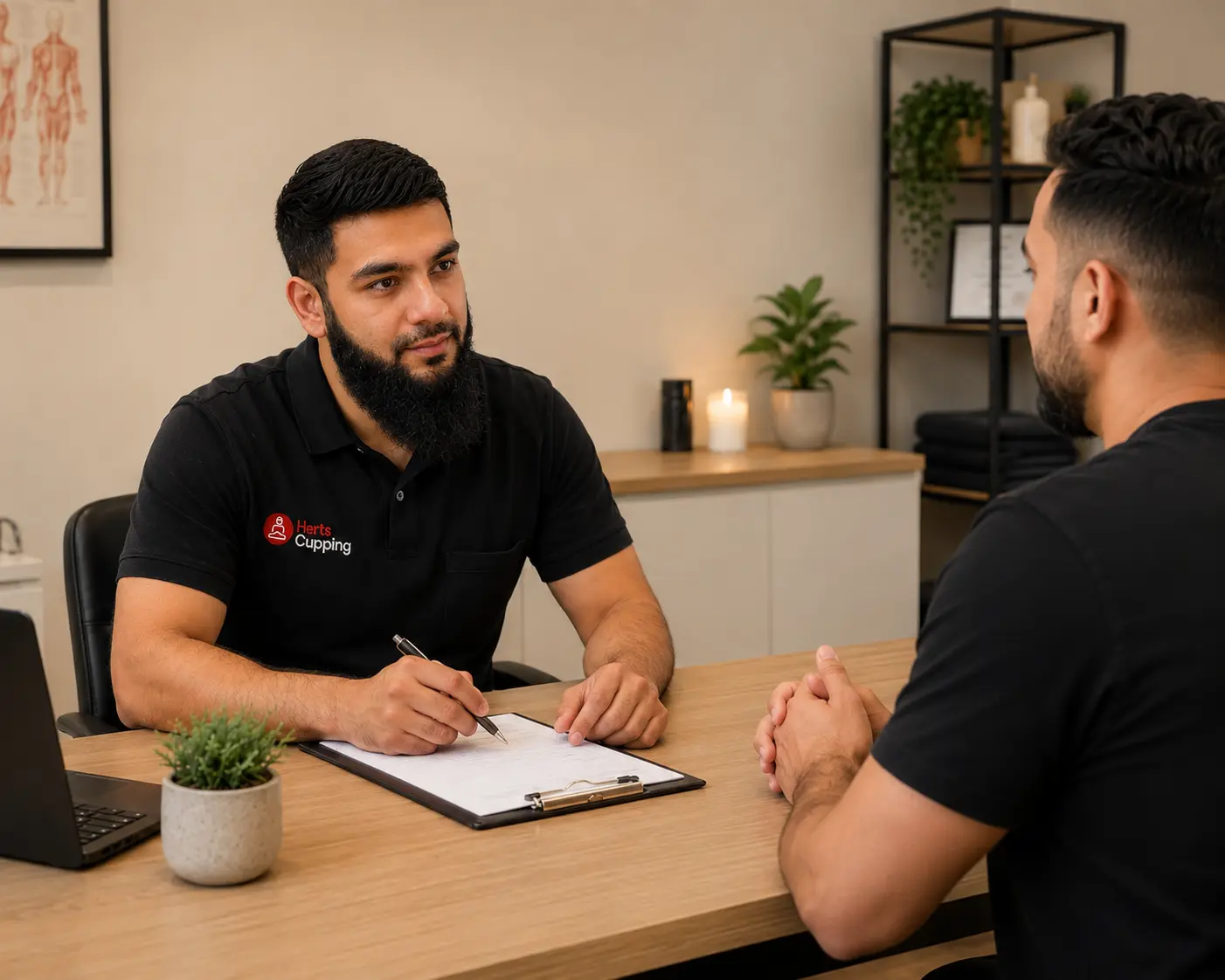
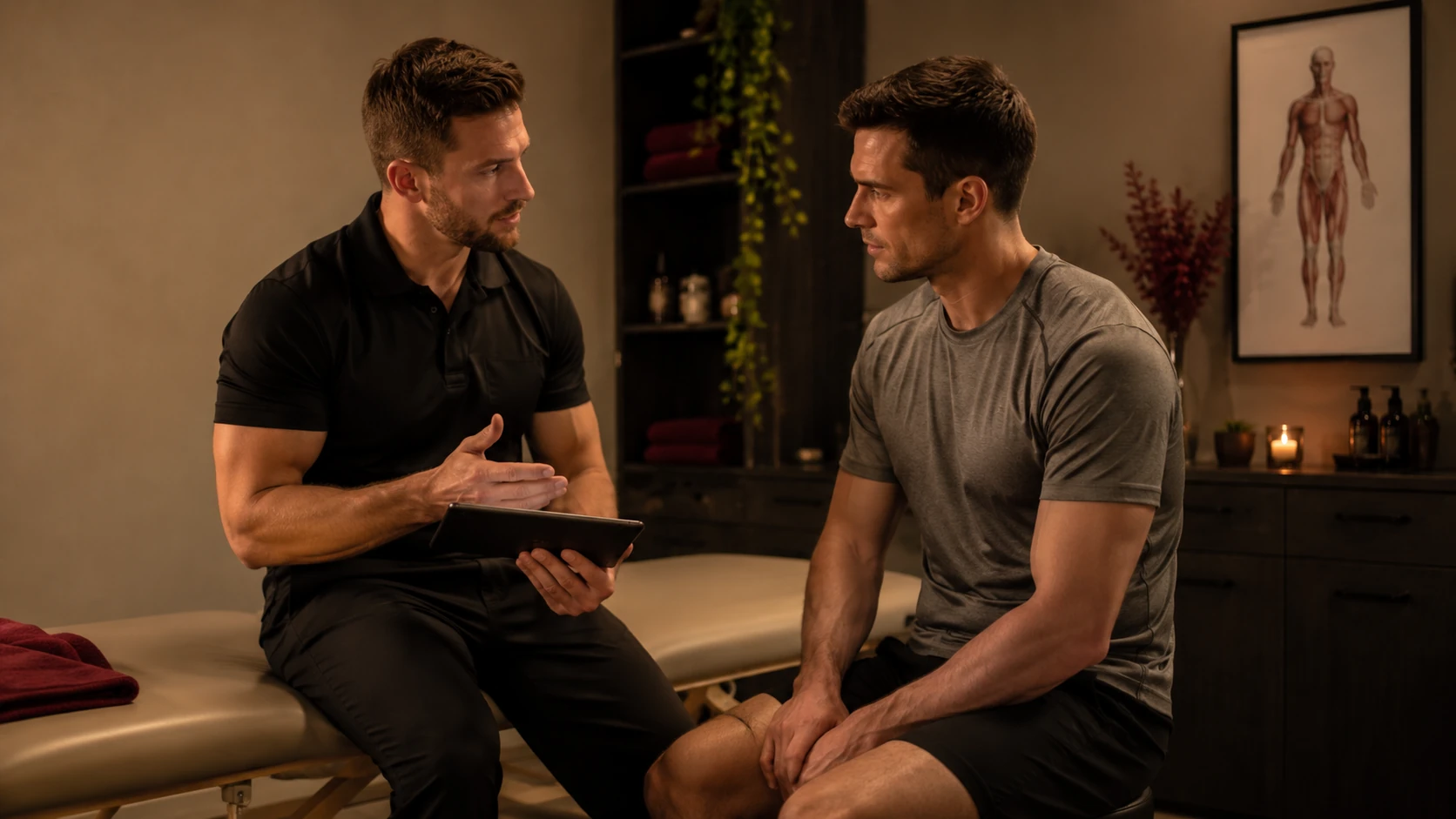
Before I decide where to spend the time, I ask what you actually do.
A desk worker who has gradually become tighter over six months gives me a different picture from somebody whose shoulder became loaded during a new gym programme. A barber, builder, driver or anyone using one arm repeatedly may have a different pattern again.
I am not trying to diagnose from your job title. I am trying to understand what the area has been asked to do repeatedly.
Where I usually start
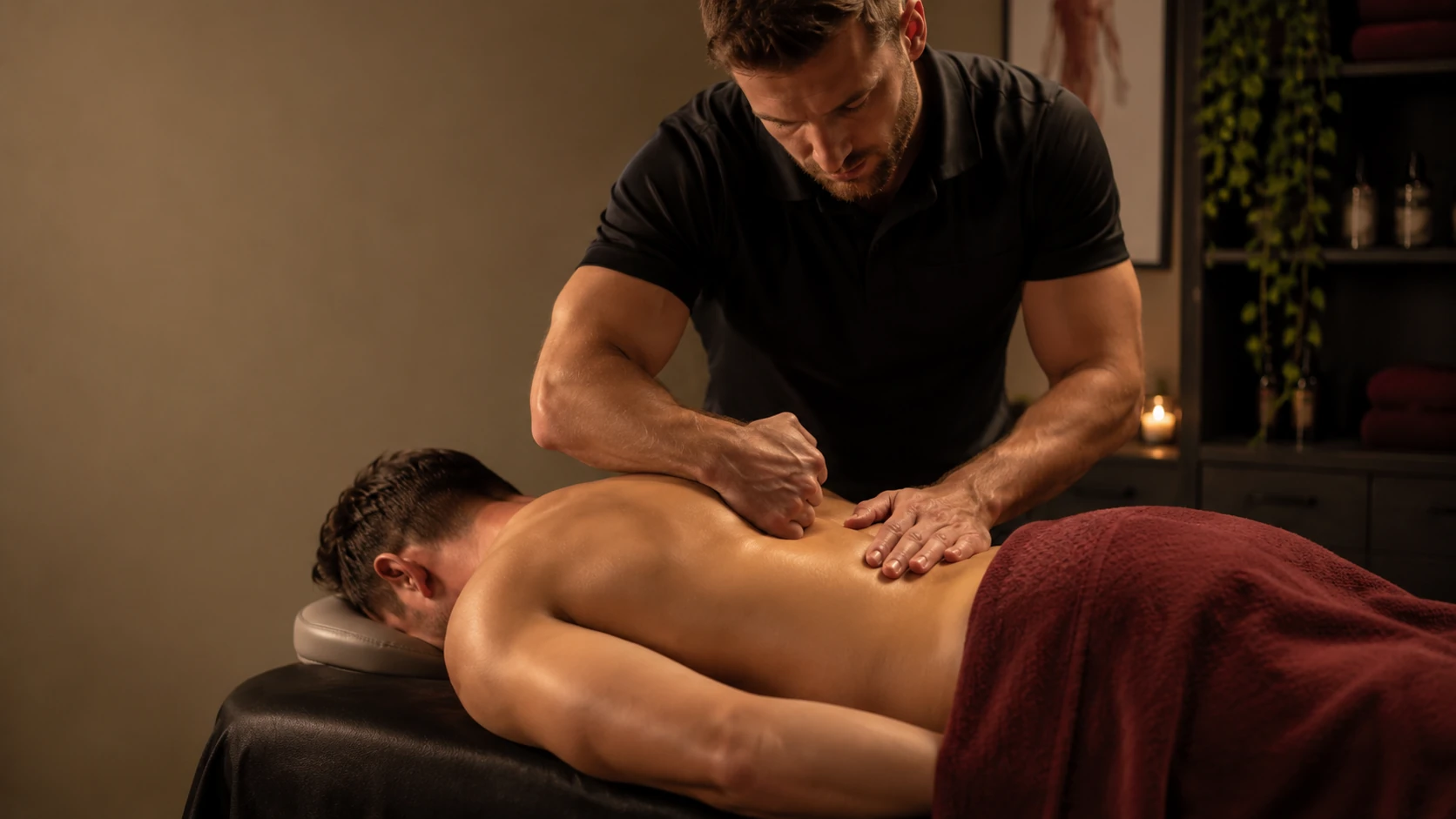
If the main complaint is upper-back, neck and shoulder tension, I normally prioritise the area you feel most, then check the surrounding regions before deciding how much time each needs.
That can include:
- upper and mid back
- traps and the shoulder-blade area
- side of the neck
- rear shoulder
- lats where they contribute to the overall tight feeling
- pec or front-shoulder area when the shoulder is being pulled forward
I do not automatically work every item on that list. The point is to follow the pattern rather than perform a fixed routine.
Does a back, neck and shoulder massage need deep pressure?
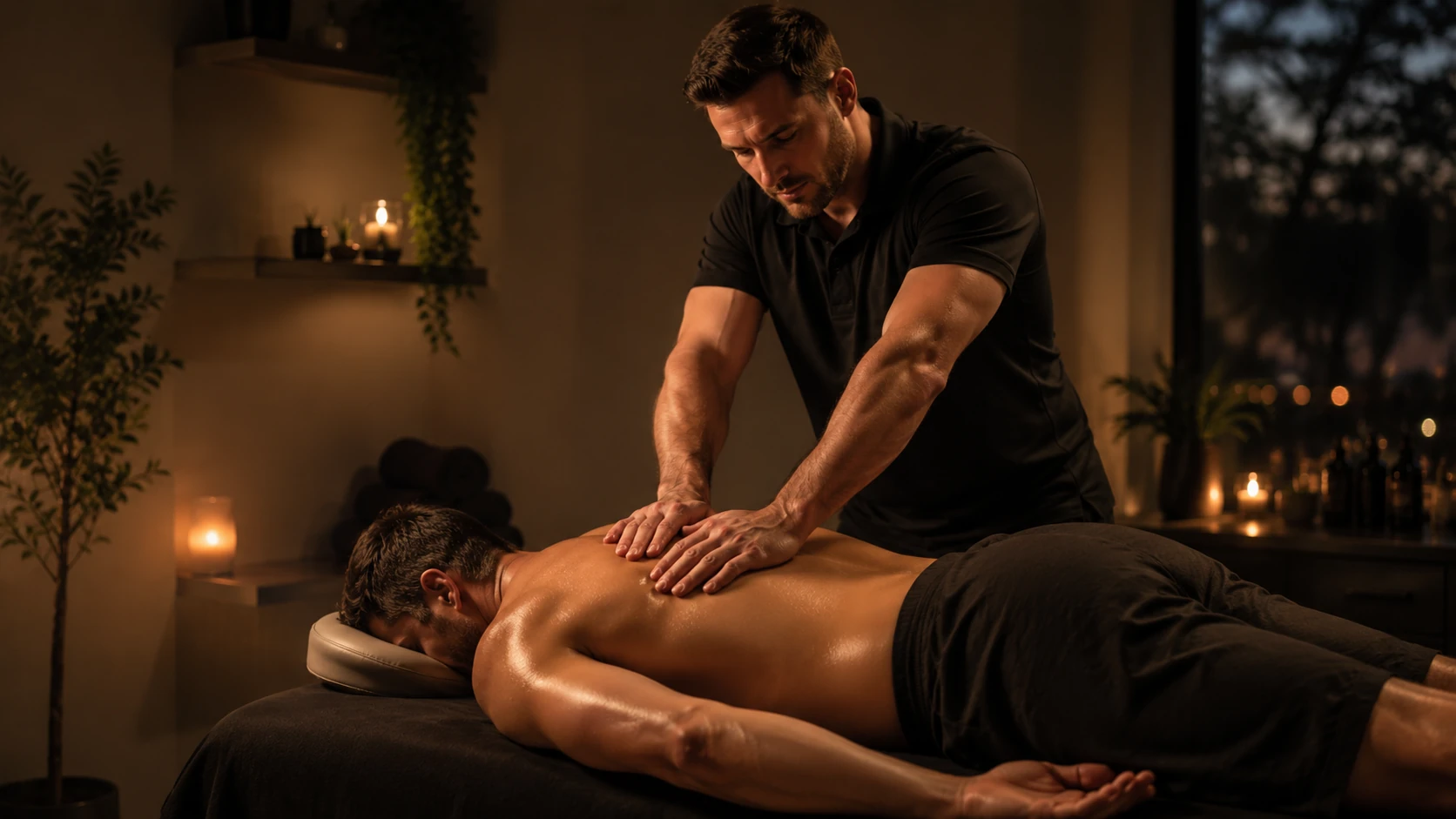
Often people searching for this treatment do want firm pressure. That is fine. I use deeper work where the area tolerates it and lighter or slower work where it does not.
One of the easiest ways to make an upper body more guarded is to attack a sensitive neck or shoulder with pressure it cannot relax into. More pressure is not a substitute for accuracy.
If you are unsure what deep tissue should feel like, I have written separately about how hard deep tissue massage should actually be.
What if one shoulder is much worse than the other?
I see this regularly. One side is the side the client complains about, but the other side can still be carrying a lot of tension because it has been compensating, doing more repetitive work or simply moving differently.
I do not assume dark cupping marks or tenderness prove which side is “the problem”. I use them as information alongside movement, what you feel and what your day or training looks like.
Sometimes the session stays almost entirely on the symptomatic side. Sometimes spending a little time on the opposite side makes the overall treatment more balanced.
When 60 minutes is enough
If the issue is genuinely one connected upper-body region, 60 minutes normally gives enough time to work it properly without rushing.
That is why our one-area deep tissue session is built around one main region rather than pretending to cover the whole body in an hour.
If you want neck, shoulders, full back, glutes and legs all worked deeply, that is no longer one focused area. A longer session is the more realistic option.
When I would use cupping or IASTM
Hands-on massage stays the base. If the tissue is responding well, there is no reason to add anything.
If a local area stays very stubborn, dry cupping can give the tissue a different input through suction. IASTM can be useful when I want a more precise tool-assisted approach over a smaller area.
I do not automatically use either because somebody booked “recovery”. The useful treatment is the one that matches the response in front of me.
When massage is not the right answer
If neck or back symptoms include new weakness, severe pain, significant numbness, unexplained loss of movement, recent trauma or other worrying symptoms, I would rather you have the appropriate assessment than try to press through it.
Massage is for muscular tightness and recovery here. It is not a substitute for diagnosis.
If you are booking for your back, neck or shoulders
Tell me where you feel it most, what makes it worse, whether one side is different and whether you train or spend long periods in one position. That is enough to start.
You do not need to choose every technique beforehand. If you are looking for back, neck and shoulder massage in St Albans, book the amount of area that needs time and we can decide the pressure and methods once I have actually seen how the area responds.