Cupping Therapy in St Albans
Cupping Therapy For Pain, Tension & Recovery
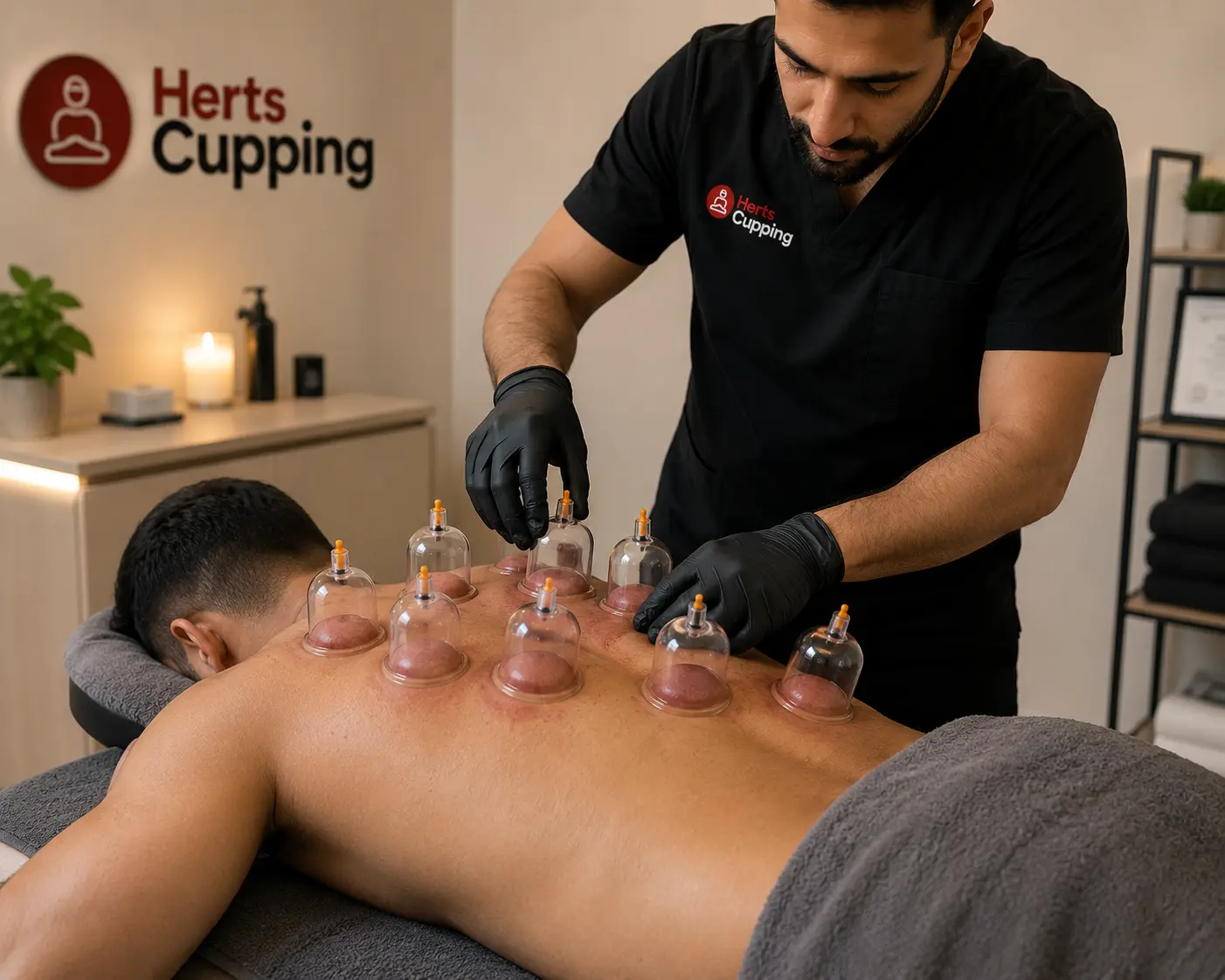
Professional dry cupping, fire cupping, cupping massage and Hijama wet cupping in a private St Albans clinic. Cupping uses suction to lift and decompress soft tissue, making it popular for tight backs, stiff shoulders, neck tension, sports recovery and general muscle heaviness.
What this page covers
What cupping therapy is and how it works
Dry cupping, fire cupping and cupping massage explained
Cupping for back pain, neck tension and sports recovery
Difference between cupping and Hijama
What to book if you are unsure
Quick Answer
What Is Cupping Therapy?
Plain English explanation
Cupping therapy is a hands-on treatment where cups create suction on the skin. Instead of pushing down like massage, cupping gently pulls tissue upward. This decompression effect may help tight muscles, stiff fascia, restricted areas and post-training heaviness feel looser. At Herts Cupping in St Albans, we offer dry cupping, fire cupping, cupping massage and Hijama wet cupping depending on your goal.
Why the suction matters
The visual difference is simple: massage compresses tissue from above, while cupping creates lift. This makes it a useful option when the area feels stuck, heavy or restricted rather than just sore.
Types of Cupping
What Types of Cupping Do We Offer?
Different people search for cupping in different ways: dry cupping, fire cupping, Chinese cupping, vacuum therapy, suction therapy, myofascial cupping or Hijama. These terms overlap, but they are not all the same.
Clinical Dry Cupping
Dry cupping uses plastic or pump cups to create suction without incisions. It is the cleanest starting point for most non-Hijama clients and is commonly used for back tightness, shoulders, legs and gym recovery.
- No incisions
- Adjustable suction
- Good for first-timers
- Often used in recovery sessions
£35 20-30 mins
Book Dry CuppingFire Cupping
Fire cupping uses glass cups and heat to create a vacuum before the cup is placed on the skin. It is the traditional Chinese cupping method and gives a warmer, deeper-feeling treatment.
- Glass cups
- Warm traditional feel
- Good for deep stiffness
- No incisions
£45 20-30 mins
Book Fire CuppingCupping Massage
Cupping massage combines dry cupping with hands-on deep tissue work and IASTM muscle scraping where suitable. This is better if your issue keeps returning or massage alone has not shifted it.
- Cupping plus massage
- Targets stubborn tightness
- Good for back, neck and legs
- Recovery focused
£75 from 60 mins
Book RecoveryHow It Works
Massage Pushes Down. Cupping Pulls Up.
This is the simple difference that makes cupping feel different from massage.
Vacuum suction
The cup creates negative pressure on the skin. This suction lifts the skin, fascia and soft tissue rather than compressing them downward. That is why cupping is often described as decompression therapy or vacuum therapy.
Soft tissue decompression
When tissue feels stuck, tight or restricted, cupping can help create space between layers. Many clients describe a sense of lightness, looseness or easier movement after the cups are removed.
Static or sliding cups
Static cupping means cups stay in one place. Sliding cupping means cups move across oiled skin. Static cups are useful for specific tight spots. Sliding cups cover larger areas like the back, hamstrings and calves.
Temporary cupping marks
Cupping marks are common and usually fade within a few days. They are caused by increased local blood flow and the skin response to suction. Stronger marks do not automatically mean better results.
Why people book cupping
Cupping is searchable because people understand tightness
Many people do not search for Hijama because they are not familiar with the term. They search for cupping, dry cupping, Chinese cupping, vacuum therapy, sports cupping, cupping for back pain or cupping massage because they are trying to solve a physical problem.
This page is built for that wider audience. You do not need to know the Islamic or traditional background to benefit from cupping. If you have a tight back, stiff shoulders, tired legs, gym tension or recurring muscle restriction, cupping is often a sensible first step.
For clients who want traditional wet cupping, Hijama is also available separately. We will guide you clearly so you do not book the wrong session.
Common Reasons
What Do People Use Cupping For?
Cupping is commonly chosen for muscle tension, physical heaviness, tightness and recovery. It should not be presented as a medical cure, but it can be useful as a complementary therapy for many clients.
Cupping for back pain and stiffness
For upper back tightness, lower back stiffness, desk posture strain and recurring back tension. Cupping may help loosen restricted tissue and make the area feel easier to move.
View back pain pageCupping for neck and shoulder tension
For tight traps, stiff neck, desk-work tension, driving posture and headaches linked with muscular tightness around the upper back and base of the skull.
View neck pain pageCupping for sports recovery
For gym-goers, runners, footballers, cricketers and active clients dealing with heavy legs, tight hips, calf tightness, shoulder tension or general training fatigue.
View sports recovery pageCupping for gym tightness
For lifters and regular gym users dealing with tight lats, traps, lower back, glutes, hamstrings or calves. Cupping can be combined with IASTM and deep tissue work.
View gym recovery pageKnow the Difference
Cupping Therapy vs Hijama
This is one of the most common questions. Cupping is the umbrella term. Hijama is one specific type of cupping.
Dry cupping and fire cupping
Method: Suction only
Incisions: No
Blood drawn: No
Common use: Muscle tightness, recovery, stiffness and relaxation
Best starting point: If you want cupping without wet cupping
Hijama wet cupping
Method: Suction plus small superficial scratches
Incisions: Yes, superficial and sterile
Blood drawn: Small amount
Common use: Sunnah practice, traditional wet cupping and general wellbeing
Best starting point: If you specifically want Hijama
Simple Booking Guide
Which Cupping Session Should You Choose?
Most people do not know which type of cupping they need. Use this as a simple guide, then message us if you are still unsure.
First time with cupping
Start with Clinical Dry Cupping if you want a simple, non-invasive introduction with no incisions. It is quick, adjustable and suitable for general tension.
Want traditional Chinese cupping
Choose Fire Cupping if you want the warmer glass-cup method. This suits clients who have had cupping before or prefer a deeper traditional feel.
Pain or tightness keeps returning
Choose a Targeted Recovery Session. This combines cupping with deep tissue work and IASTM muscle scraping so we can work beyond suction alone.
You specifically want Hijama
Book Hijama wet cupping if you want the traditional wet cupping method. This involves small superficial scratches and sterile single-use equipment.
Is cupping therapy safe?
Cupping is generally well tolerated when carried out properly by a trained practitioner. Temporary marks, mild tenderness and tiredness can happen. Cupping may not be suitable over broken skin, active infection, certain skin conditions, recent injury sites, areas with varicose veins, or where there are medical concerns that need assessment first. If you are unsure, message us before booking or speak to your GP.
Prices
Cupping Therapy Prices
This is only a summary so this page stays focused on cupping education. For the full session menu, visit the main pricing page.
Dry Cupping
Suction-only cupping for tension and first-timers.
£35 20-30 minsFire Cupping
Traditional glass cup method with heat-created suction.
£45 20-30 minsCupping Massage
Cupping with deep tissue work and IASTM where suitable.
£75 From 60 minsHijama
Traditional wet cupping with sterile single-use equipment.
£50 From price
Need the full price breakdown?
This page keeps pricing short so the focus stays on choosing the right cupping method. The full menu explains Hijama, dry cupping, fire cupping and recovery session prices together.
View full pricing guide →FAQs
Common Questions About Cupping
Cupping therapy uses suction cups on the skin to lift and decompress soft tissue. It is commonly used for muscle tightness, back tension, neck and shoulder stiffness, sports recovery and general relaxation.
We offer clinical dry cupping, traditional fire cupping, cupping massage, static cupping, sliding cupping and Hijama wet cupping. Dry and fire cupping use suction only. Hijama is wet cupping.
No. Cupping is the broad term. Dry cupping and fire cupping use suction only with no incisions. Hijama is wet cupping, where small superficial scratches allow a small amount of blood to be drawn.
Many clients use cupping for back tightness and stiffness. It may help the area feel looser and easier to move. If your back pain is severe, worsening, unexplained or injury-related, speak to a GP or physiotherapist first.
Cupping is commonly used for neck, shoulder and upper trap tension, especially from desk work, driving, gym training or stress. It may help decompress tight tissue and support relaxation in the treated area.
Yes, it can. Cupping marks are common and usually fade within 2 to 7 days. They are normally not painful. The colour can vary depending on the area, skin response and level of tightness.
Neither is automatically better. Dry cupping is easier to adjust and is commonly used in recovery sessions. Fire cupping uses glass cups and heat to create suction, giving a warmer traditional feel.
Standalone dry cupping starts from £35, fire cupping from £45, and recovery sessions with cupping, deep tissue work and IASTM start from £75. Hijama wet cupping starts from £50.
Book Cupping Therapy in St Albans
Dry cupping, fire cupping, cupping massage and Hijama wet cupping in a private one-to-one clinic. Message us if you are unsure which session to choose.