In this article
Stress can show up physically as raised shoulders, jaw tension, a stiff neck, a loaded upper back or the feeling that your body never fully switches off. Here is where Hijama may fit, where Muscle Recovery may fit better, and where other...
The Hijama-specific route for physical stress tension
This article focuses on people who specifically want wet cupping as part of a wellbeing routine. The main Stress & Body Tension page compares Hijama with massage-led physical recovery.
Compare the physical recovery optionsThe short answer
Hijama can be considered when a stressful period is showing up as physical body tension and you specifically want wet cupping. It is not a treatment for anxiety, depression or the life circumstances creating the stress. The useful question is whether a physical complementary treatment fits the physical symptoms you are noticing.
For many clients, that means separating two different goals: “I specifically want Hijama” and “my neck, shoulders or back feel permanently tight”. Those goals can overlap, but they do not always need the same session.
What stress-related body tension can look like
People rarely walk into clinic saying “my nervous system is dysregulated”. They usually describe something much more practical:
- shoulders that stay raised even when they are sitting still;
- a neck that feels loaded by the end of the working day;
- jaw clenching or facial tension during busy periods;
- an upper back that feels hard to relax;
- headaches that seem to appear alongside neck and shoulder tension;
- a general sense of being physically wound up despite not having a clear injury.
Those patterns can have many causes. The clinic does not diagnose stress from muscle tone, and not every tight shoulder is caused by emotional pressure. The point is that workload, sleep, long static positions, training and ordinary life can all contribute to how the body feels.
Where Hijama may fit
Hijama is wet cupping. Some clients choose it because the Sunnah aspect matters to them. Others already know they prefer wet cupping. During a demanding period, the appeal can also be that it is a defined, private treatment appointment where the client can stop, switch off and focus on one thing for a while.
Some people report feeling lighter, calmer or looser afterwards. That can be a worthwhile subjective response, but it is not proof that a mental-health condition has been treated or that a stress hormone has been medically altered.
If wet cupping is specifically what you want, see the Hijama service options. The session can be targeted rather than automatically using a large number of cups.
When Muscle Recovery may be the better first choice
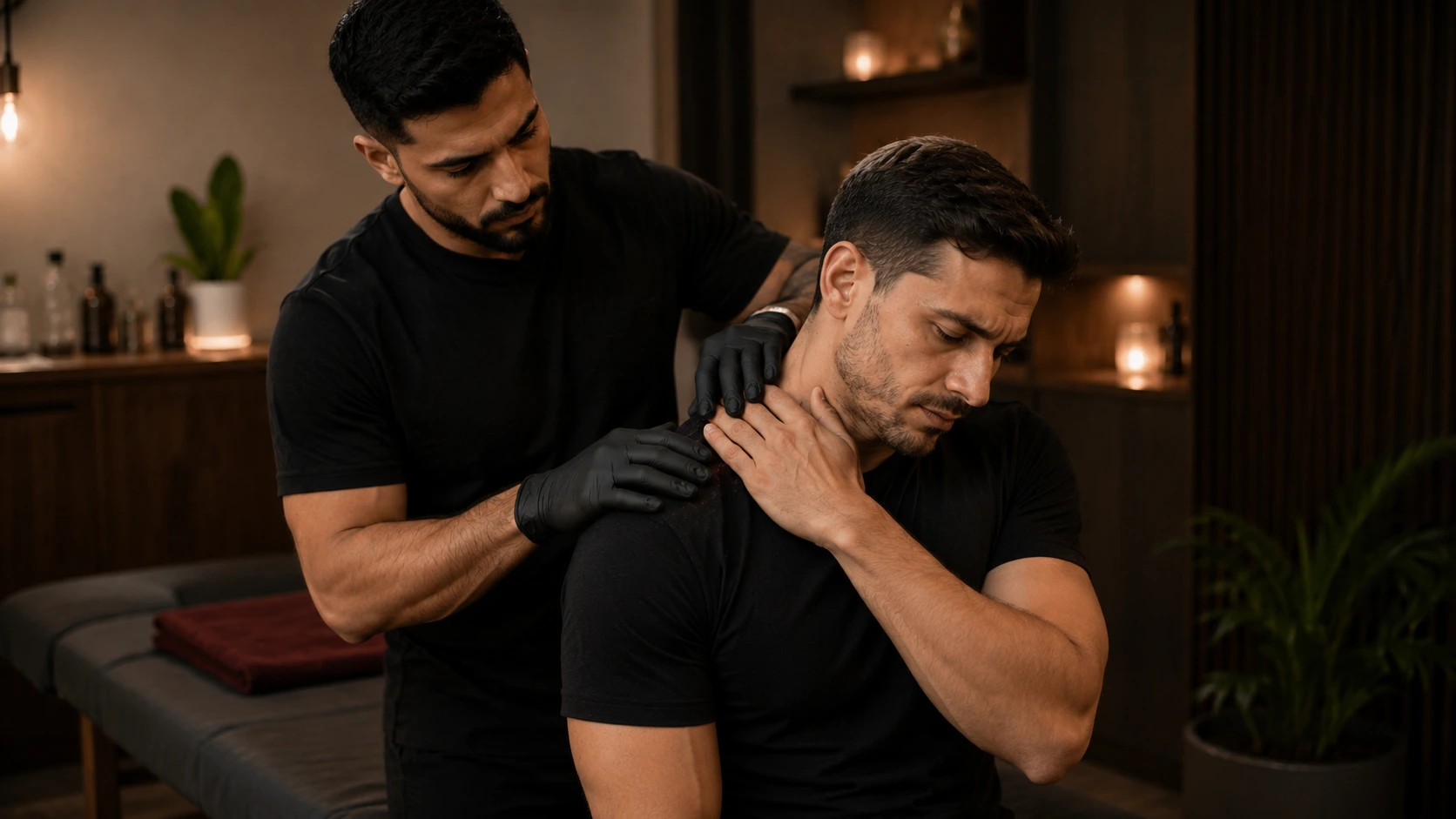
If the main complaint is muscular, hands-on recovery usually gives more time to work directly on it. Someone whose shoulders, neck and upper back are constantly sore may benefit more from a session built around those tissues than from choosing Hijama simply because it is the treatment name they know.
Muscle Recovery can include hands-on work, dry cupping, IASTM muscle scraping or a massage gun when those methods are useful. Hijama can be included in combined options if you want both.
The Stress & Body Tension route explains the difference and is designed for people who do not want to diagnose themselves before booking.
Why shoulders and neck often become the obvious area
Long hours at a laptop, driving, phone use and repeated work in front of the body can make the neck and shoulder region feel continuously loaded. Add poor sleep or a heavy training week and the same area may never get much of a break.
That does not mean posture is a disease or that everybody needs to sit perfectly upright. It means repeated positions matter. A five-minute stretch cannot always compete with ten hours spent in one working position.
When a client says their shoulders “never come down”, we look at the pattern around the complaint rather than immediately attacking the most tender point. Our separate guide on why shoulders stay switched on goes deeper into that pattern.
What I want to know before treating stress-related tension
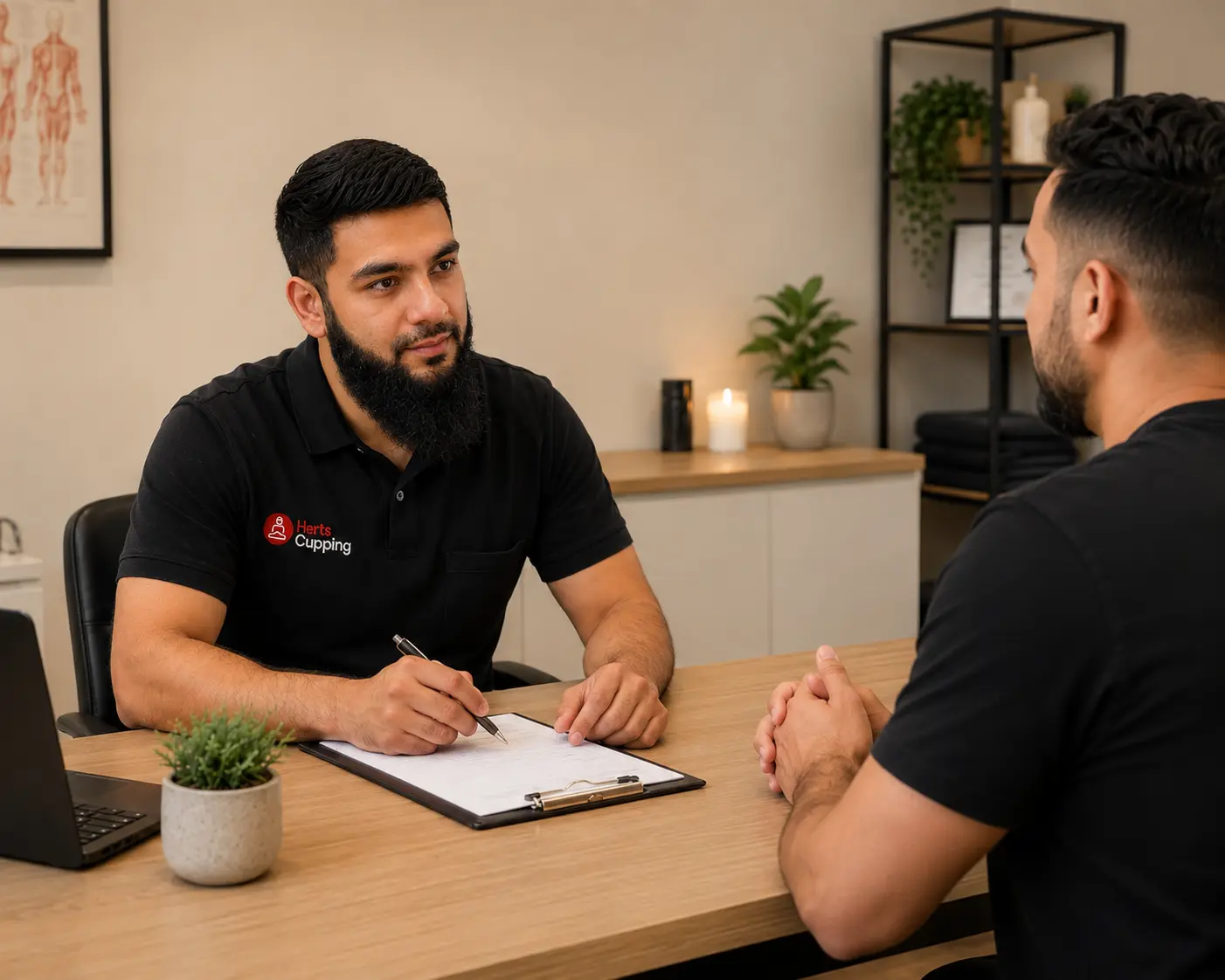
The useful information is often very ordinary. Where do you feel it? When is it worst? What does a normal workday look like? Are you training? How are you sleeping? Does the area feel tight all day or only after certain tasks? Have you already tried massage, stretching or physiotherapy?
That tells us more than trying to label the client with a broad “stress” diagnosis. It also helps decide whether one main area needs 60 minutes or whether several connected areas need a longer session.
The treatment should fit the pattern you are actually living with. It should not become another generic routine that ignores the rest of your week.
What a session can and cannot change
A physical treatment can change how an area feels for a period. It may reduce the sense of tightness, make movement feel easier or simply give the body a break from a repetitive load. It cannot change an employer, fix financial pressure, resolve relationship problems or replace sleep.
This is why the aftercare conversation matters. If the same work setup, training load and sleep pattern immediately return, the body may return to the same strategy as well. Treatment works best when it is part of the bigger picture rather than the only thing being changed.
Simple things to change between appointments
- Break long static periods before the area becomes extremely stiff.
- Change position more often instead of searching for one perfect posture.
- Review whether gym volume is adding load to the same shoulder and back muscles.
- Take sleep seriously when the body feels permanently heavy or sore.
- Use movement that feels comfortable rather than repeatedly forcing aggressive stretches.
These are not miracle fixes. They simply reduce the mismatch between one hour of treatment and the many hours that created the pattern.
When Hijama is not the right response to “stress”
Chest pain, unexplained breathlessness, fainting, new neurological symptoms, severe headaches, panic symptoms, worsening low mood or significant sleep disturbance should not automatically be written off as muscular stress. Those symptoms may need appropriate medical or psychological assessment.
Likewise, if you are taking blood-thinning medication, have a bleeding disorder, significant anaemia or another health issue that could change the safety of wet cupping, message before booking.
How to choose the session without overthinking it
- You specifically want wet cupping: choose Hijama.
- Your main problem is tight neck, shoulders or back: start with Muscle Recovery.
- You want hands-on work and Hijama together: choose a combined Muscle Recovery + Hijama option.
- You are not sure: send the main area, how long it has been bothering you and what you have already tried via WhatsApp.
You can also go directly to the booking page, where the routes are separated before the live calendar.
Common questions
Does Hijama treat anxiety?
No. Hijama is not psychotherapy or a medical treatment for anxiety. Some clients feel relaxed after a session, but that should not be turned into a mental-health treatment claim.
Is Hijama better than massage for stress-related tension?
Not automatically. If the main issue is muscular tightness, hands-on Muscle Recovery may give more direct treatment time. If you specifically want wet cupping, Hijama may be the better fit.
Can I ask for a quieter appointment?
Yes. A proper consultation is still needed, but you can tell us that you prefer minimal conversation during the treatment itself.