In this article
If you have seen cupping online but never tried it, the first appointment is usually far less dramatic than people expect. Here is exactly how I approach dry cupping in the clinic.
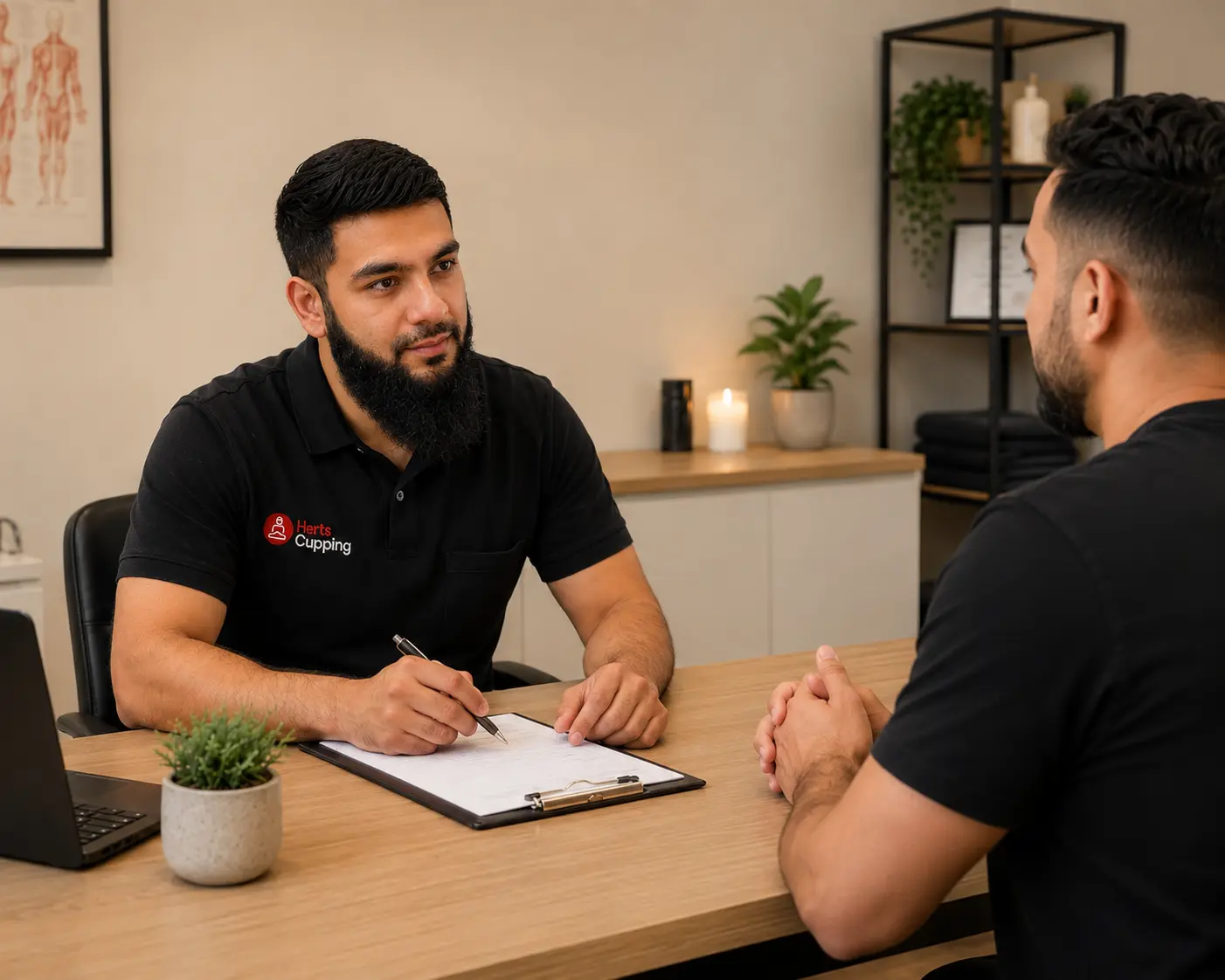
Before any cups go on, I want to know why you booked
I do not start by covering the back in cups because that is what a cupping photograph looks like.
I want to know what area feels tight, how long it has been bothering you, whether it follows training or work, whether you have had cupping before and whether there is anything about your health or skin that could affect treatment.
If the problem sounds unsuitable for bodywork, the right answer may be not to cup it.
What should you wear?
Wear something that makes the treatment area easy to access.
For upper-back and shoulder work, you will normally need the back exposed. For legs, shorts are useful. You are treated privately and only the area being worked on needs to be uncovered.
If you are unsure, normal loose clothing is fine and we can work it out when you arrive.
What does the suction feel like?
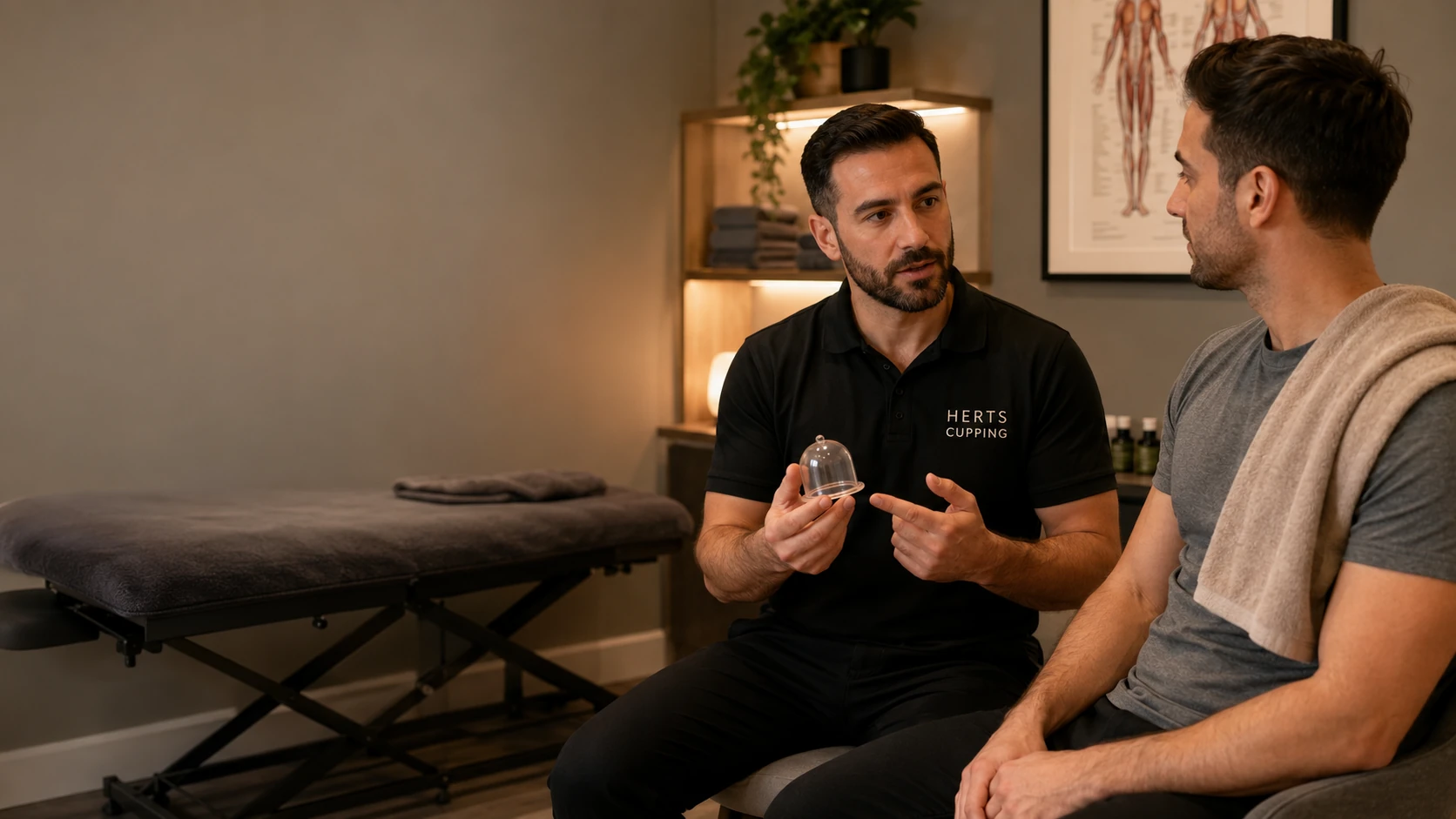
Most people describe a pulling or tight sensation. On a tense area it can feel strong, but it should still feel controlled.
I do not think stronger suction automatically means better cupping. The pressure can be increased or reduced throughout the session.
If you feel sharp pain, burning, numbness or anything that does not feel like ordinary suction, tell me straight away.
Static cups vs moving cups
Dry cupping can be used in more than one way.
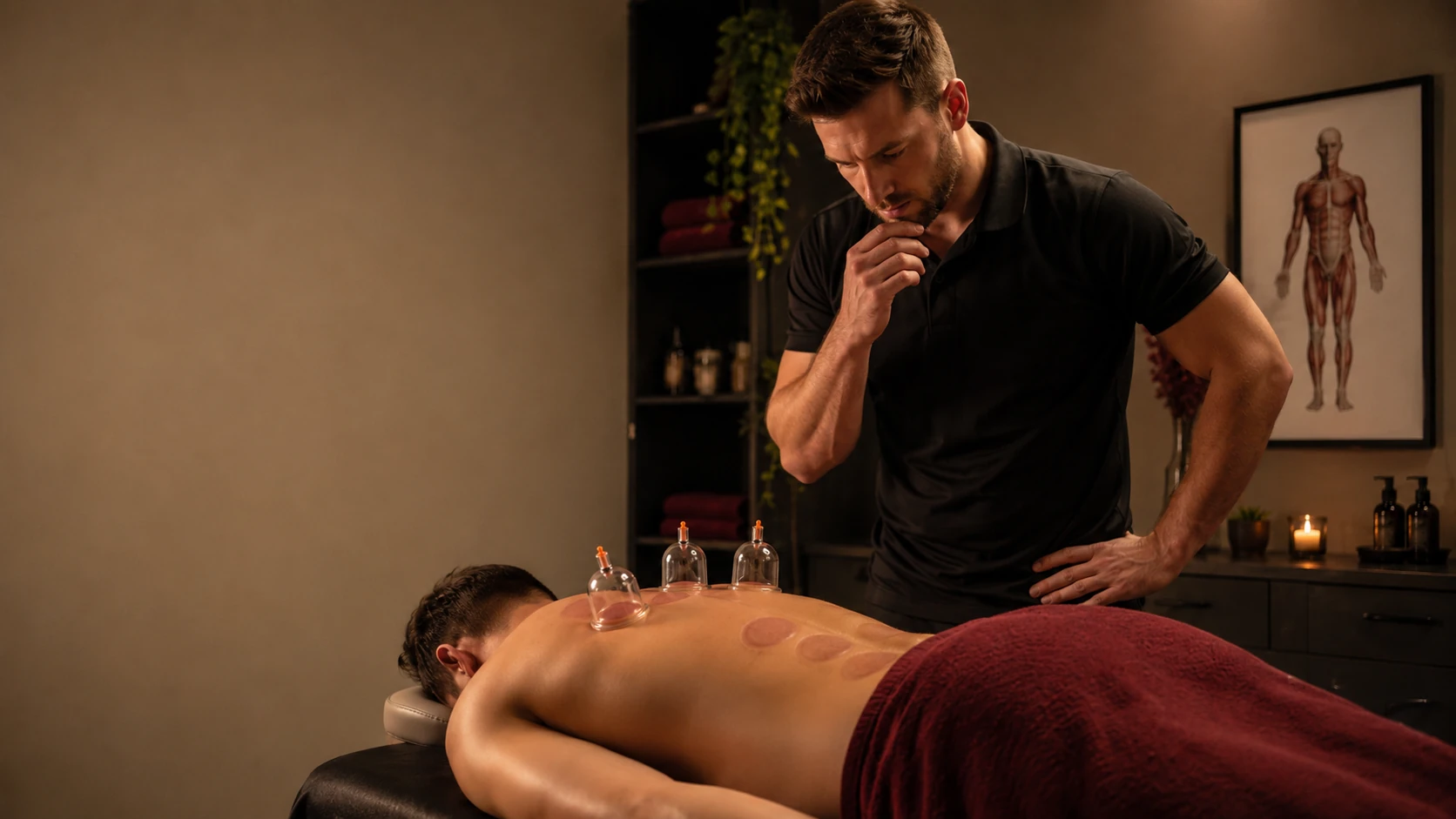
Static cupping means the cup stays in one position for a period of time. This is the style that leaves the familiar circular marks.
Moving or sliding cupping uses a lubricant so the cup can be moved over a broader muscular area. It feels different and is often used more like a massage technique.
Depending on the goal, I may use one or both. The dedicated cupping massage page explains the moving style in more detail.
How long do the cups stay on?
There is no need to keep every cup on for the same amount of time.
I adjust according to the area, suction level, skin response and what we are trying to achieve. A first-time client may need less intensity than somebody who already knows how they respond.
Will you definitely get marks?
You may. Circular marks are common after static cupping and can vary from light pink to darker red or purple.
They usually fade over several days, but everybody is different.
I do not chase dark marks. A light mark does not mean the cup “failed” and a dark one does not prove toxins were pulled out.
Does dry cupping hurt afterwards?
Most clients feel normal or mildly tender in the treated area. Strong suction can leave the skin feeling more sensitive for a short period.
If the session also included firm massage or IASTM, you may feel as though the area has had a proper treatment rather than the sensation coming from the cups alone.
What should you do after dry cupping?
Keep the area clean, stay normally hydrated and avoid unnecessarily irritating the marked skin.
You do not need a complicated detox routine. If you are training later, judge it according to how much muscular work was done in the whole session, not simply the fact cups were used.
If you have had Hijama rather than dry cupping, follow the separate wet-cupping aftercare because the skin has been superficially opened.
Dry cupping is not the same as Hijama
This is the main confusion I see online.
Dry cupping uses suction only. Hijama is wet cupping and involves superficial scratches before a small amount of blood is drawn into the cups.
Some clients specifically want Hijama. Others want the muscular decompression feeling of dry cupping without any skin openings.
If you are unsure which you mean, compare the options on the cupping therapy guide before booking.
What if you are nervous about the first appointment?
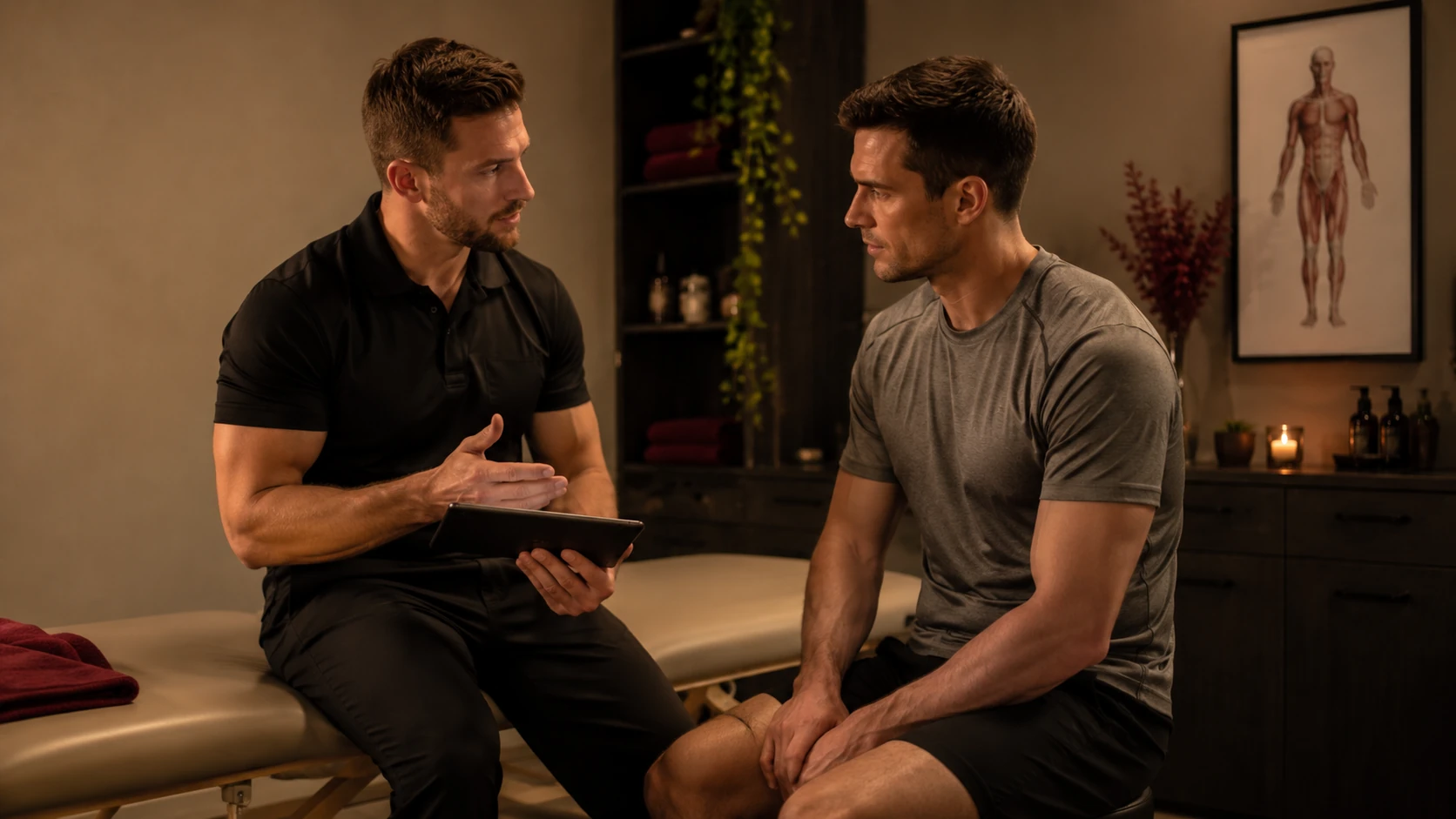
Say so. I would rather know you are unsure about the sensation than turn the suction up because you think you are supposed to tolerate it.
For a first session I can start lighter, use fewer cups and build the pressure gradually.
If you are looking for a first dry cupping appointment in St Albans, you do not need to arrive knowing how many cups you want or where they should go. Tell me what you want help with and I will explain what I am doing before we start.