In this article
How the 17th, 19th and 21st Hijri dates are calculated, why Hijri days begin at Maghrib, and where to check current Sunnah Hijama dates.
This article explains the dates, not the current calendar
Keep this guide for the evidence, Hijri-day calculation and why published dates can differ. For the current 17th, 19th and 21st booking windows, use the live Sunnah Days page.
See current Sunnah Hijama dates →If you are trying to work out the Sunnah days for Hijama, the first thing to know is that the dates are based on the Hijri lunar calendar, not the Gregorian calendar. The dates people usually mean are the 17th, 19th and 21st of the Hijri month.
This page explains how those dates are worked out and why two calendars can occasionally differ by a day. For the actual dates we are currently using for bookings, go to the live Sunnah Hijama dates page.
What are the Sunnah days for Hijama?
There are narrations mentioning cupping on the 17th, 19th and 21st of the lunar month. Scholars have discussed the strength of the individual narrations and how they should be acted upon. Because of that, I do not present those dates as an obligation or tell somebody they must delay an otherwise suitable Hijama appointment just to wait for a particular day.
For clients who want to follow the recommended-date practice, I am happy to help them book around those dates. For somebody who needs treatment on another suitable day, Hijama can still be booked outside that window.
When does a Hijri day actually begin?
This is the part that causes most of the confusion. An Islamic day begins at Maghrib, not at midnight.
So if a calendar says the 17th of the Hijri month falls on a Friday, the Islamic 17th begins at sunset on Thursday evening and continues until sunset on Friday.
The same rule applies to the 19th and 21st. That is why our live Sunnah dates page shows the booking window rather than treating the Gregorian date as if it only starts at 12:00am.
Why do different websites sometimes show a different date?
The Hijri calendar follows the lunar month, and different communities may use different calendar calculations or moon-sighting approaches. A one-day difference does not automatically mean somebody has calculated the date carelessly.
At Herts Cupping we publish the dates we are using for clinic planning and make it clear that somebody following a different local moon-sighting method may need to adjust accordingly. If the Sunnah-date detail is important to you, follow the calendar method you trust religiously rather than treating our booking page as a fatwa.
What if I miss the 17th, 19th or 21st?
You do not need to abandon Hijama for the month. I do not tell clients that wet cupping only “works” on those dates or that the physical treatment becomes ineffective outside them.
Some people prioritise the recommended dates for Sunnah reasons. Others book around work, training, travel, health, menstruation or simple availability. Those are legitimate practical considerations when arranging a session.
What happens during Hijama at Herts Cupping?
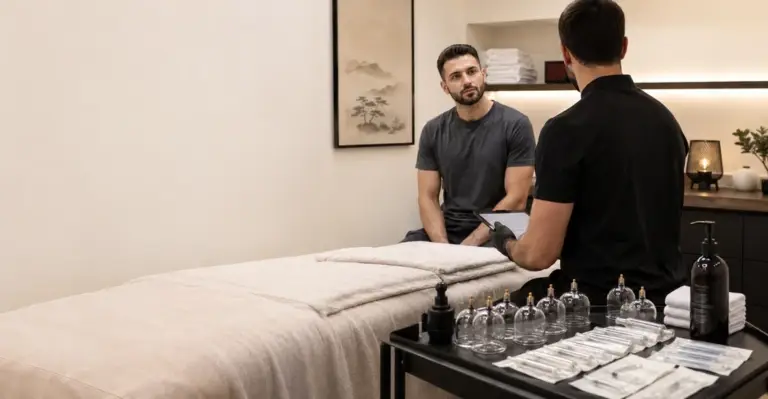
Before treatment starts, we go through the reason you have booked, relevant health information and which areas are appropriate to cup. Suction is applied first. Small controlled superficial scratches are then made at the selected wet-cupping points and the cups are reapplied so a small amount of blood can collect.
I do not use blood colour, cup marks or the amount collected to diagnose disease or tell somebody how many “toxins” they have. The wet-cupping sites are cleaned afterwards and you leave with aftercare guidance.
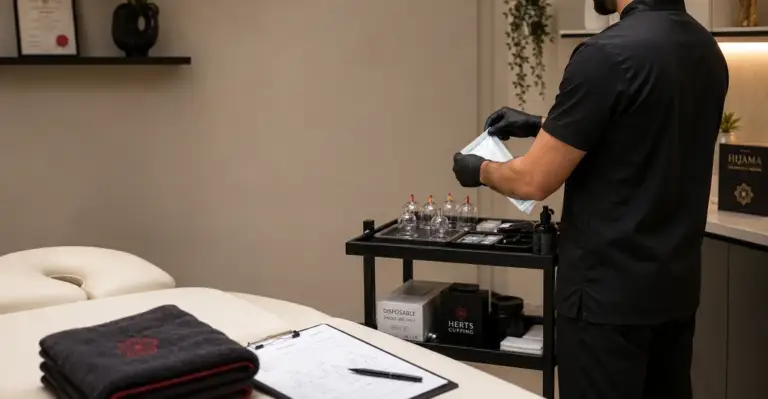
Sessions are private and one-to-one. Sterile single-use sharps and relevant disposables are used for wet cupping.
Current Hijama prices
Standalone Hijama is priced by cup coverage, not by a fixed treatment time:
- Starter Hijama – £50: up to 5 cups
- Signature Hijama – £65: up to 10 cups and the usual all-round choice
- Advanced Hijama – £75: up to 15 cups for broader appropriate coverage
You do not need to choose the exact points yourself. Choose the amount of coverage that feels closest and we will confirm the points after assessment. See the full current price list for Hijama, dry cupping, fire cupping and Muscle Recovery.
A female practitioner is available for Hijama only, with limited availability. Please confirm her availability before booking.
How I suggest using the Sunnah-date information
If the 17th, 19th or 21st matters to you religiously, check the current Sunnah booking dates and plan ahead because those appointments can fill more quickly.
If the dates do not fit your circumstances, do not feel that you have missed your only opportunity to book Hijama. Choose another suitable day, particularly if there is a practical reason not to wait.
For the narrations themselves, see our Hijama hadith and narrations page. For first-time treatment questions, including preparation and aftercare, see the first-time Hijama guide.